Working Principle of Lithium-ion Battery
Today, let’s talk about lithium-ion batteries. I’ll use a common analogy to help you easily understand its working principle: it’s like a busy “lithium-ion porter”, who stores and releases electrical energy by moving lithium ions back and forth between the positive and negative electrodes.
1. Basic structure: an elaborately designed “ionic apartment”
Lithium-ion batteries mainly consist of four parts:
Positive electrode (+): It typically employs lithium-containing metal oxide materials, which can be regarded as the “source” or “starting point” of lithium ions.
Negative electrode (-): It is generally composed of carbon materials such as graphite, serving as a “temporary residence” for lithium ions during the charging and discharging process.
Electrolyte: Located between the positive and negative electrodes, it is a liquid or solid medium that allows ions to pass through, serving as a “dedicated channel” for lithium ion movement.
Separator: A layer of polymer film with microporous structure, which serves to isolate the positive and negative electrodes. It acts like a “smart door”, allowing only lithium ions to pass through while blocking direct electron transfer, thus preventing short circuits.

II. Discharge process (during power supply): Lithium ions “return” from the negative electrode to the positive electrode
When you use a device, such as turning on a mobile phone or starting an electric vehicle, the battery begins to discharge.
The lithium ions located at the negative electrode leave the graphite structure driven by chemical potential, “embarking on their return journey”.
They migrate back to the cathode material through the electrolyte channel and the micropores of the separator.
Key mechanism: The positively charged lithium ions move towards the positive electrode. To maintain electrical neutrality, electrons are forced to flow through an external circuit (i.e., the electrical device), thereby generating current and outputting electrical energy.
III. Charging process (when plugged in): Lithium ions are “sent back” to the negative electrode
After connecting to an external power source, electrons are forcibly “pushed” into the negative electrode.
The negative electrode accumulates negative charges, attracting lithium ions from the positive electrode.
Lithium ions once again pass through the electrolyte and separator, “returning” to the anode and intercalating into the graphite layers.
In this way, electric energy is converted into chemical energy and stored.
IV. Main advantages:
High energy density: It can store more electric energy in the same volume or weight, which is conducive to lightweight equipment and long battery life.
No memory effect: Can be charged at any time, no need to fully discharge, making it more convenient to use.
Low self-discharge: The battery loses charge more slowly when idle.
Long cycle life: Supports hundreds or even thousands of charge and discharge cycles.
V. Existing shortcomings:
High cost: The electrode materials and production process contribute to the relatively high price.
Sensitive to charging and discharging status: Both overcharging and deep discharging can affect lifespan and safety, necessitating a supporting protection circuit.
Temperature sensitivity: High temperature environments may accelerate aging or trigger thermal runaway; low temperatures can lead to significant performance degradation.
Natural aging: As time goes by and the number of uses increases, the capacity will gradually decrease.
Safety risks: In extreme situations such as internal short circuits, impacts, or manufacturing defects, there may be a risk of thermal runaway and even fire or explosion. Therefore, an excellent battery management system is crucial.
Summary:
Lithium-ion batteries are like efficient “porters”, driving the orderly movement of lithium ions between the two poles. During charging, under the influence of an external power source, the ions return to the negative electrode to store energy; during discharging, the ions return to the positive electrode, prompting electrons to flow through the external circuit to output electrical energy. Despite their advantages of high energy density, long lifespan, and ease of use, it is important to avoid overcharging and overdischarging, extreme temperatures, and to prioritize safety design.
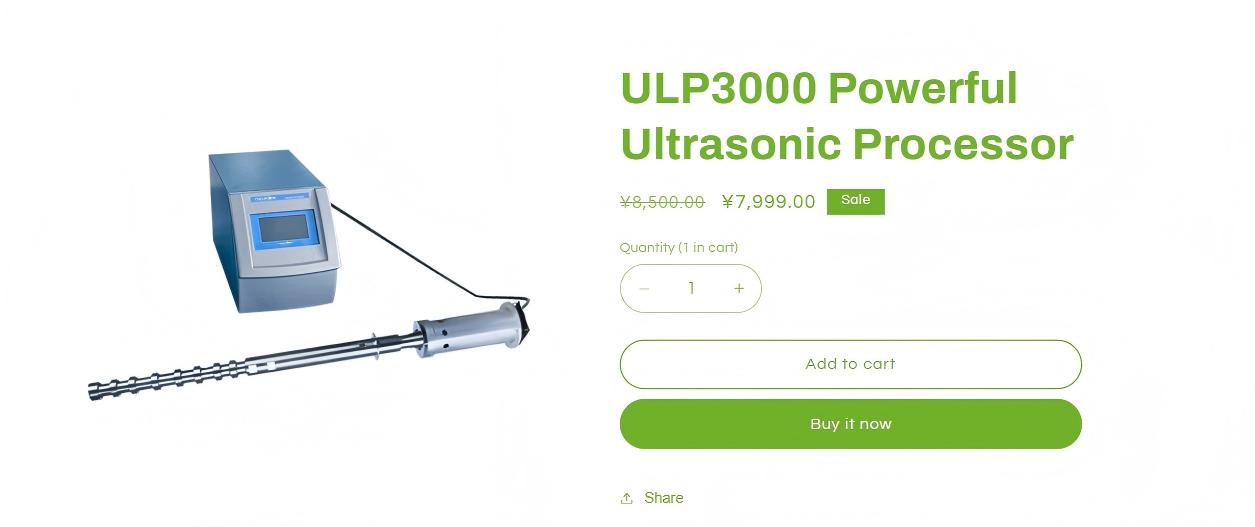
Ultrasonic Dispersion of Lithium Battery Slurry
The dispersion quality of lithium battery slurry directly determines the electrode performance and battery capacity. Ultrasonic dispersion equipment, with its unique advantages, has become a core process equipment in this field. It generates a “cavitation effect” in the slurry through high-frequency mechanical vibration (typically 20-40kHz), forming a large number of tiny bubbles that instantly collapse, releasing energy that can efficiently break the agglomerated particles of active materials, conductive agents, and binders, achieving nanoscale uniform dispersion.
Compared to traditional mechanical mixing, this equipment eliminates the need for high-speed shearing, reducing the breakage of active material particles and minimizing viscosity fluctuations in the slurry. This significantly enhances the stability of the slurry, extending the settling and stratification time by over 30%. In process applications, it can accommodate slurries with different solid contents (30%-70%). By adjusting the amplitude and processing time, the dispersion effect can be precisely controlled, ensuring that the uniformity error of the electrode coating is within 5%. This, in turn, improves the battery’s cycle life and capacity retention. Currently, this equipment has been widely used in the large-scale production of power batteries, providing reliable technical support for enhancing battery energy density and production efficiency.