
What Industries are Ultrasonic Soldering Applied in?
What Industries are Ultrasonic Soldering Applied in? Sonic4Lab
In the fields of electronic manufacturing and metal processing, we often need to put a thin “tin coating” on metal components – this process is called “tinning” or “tinning”. The purpose is to improve the weldability of the metal, prevent oxidation, or prepare for subsequent welding. However, a common challenge lies ahead: most metals quickly form a dense oxide film on their surface in air, which acts like an “invisible raincoat” that prevents melted tin from intimately bonding with the pure metal body.
The traditional solution usually relies on chemical flux to break through this layer of “raincoat”. However, this method has complex procedures, high costs, and the flux may contain corrosive substances or produce small bubbles, which affect long-term reliability. Its use and cleaning process also bring environmental pressure.
So, is there a more efficient and environmentally friendly solution? Ultrasonic tinning technology has emerged, cleverly solving this problem.
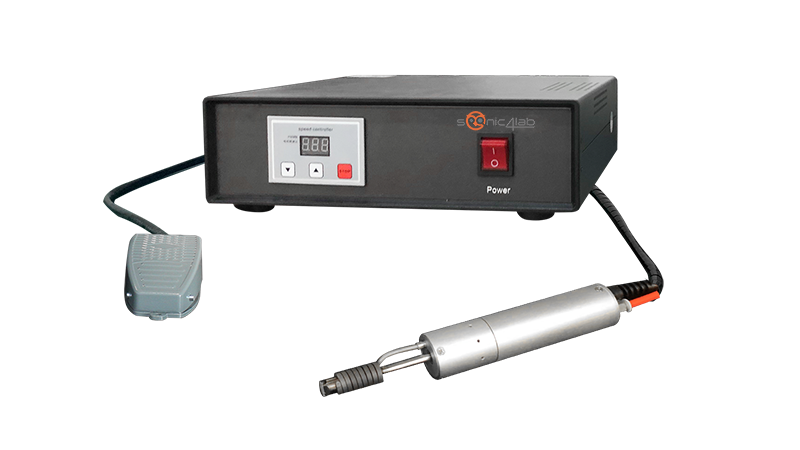
Technical principle: How can ultrasound transform into a “super cleaner”?
The core mystery of ultrasonic tinning lies in the use of a physical force – ultrasonic cavitation effect.
The process is very ingenious: immerse the metal part to be processed into a container containing molten tin, and apply high-frequency ultrasonic vibration to the inside of the tin. These sound waves, which we cannot hear, excite countless tiny bubbles (known as “cavitation bubbles”) that instantly appear and disappear in the tin solution.
At the moment of rupture, these bubbles will generate locally extremely strong shock waves and high-speed microjets. This force acts on the metal surface like an invisible team of ultra precision high-pressure water guns, capable of:
1. Thoroughly clean: Crush and peel off the oxide film on the metal surface completely.
2. Instant removal: Utilizing the accompanying “acoustic flow” effect, the stripped oxide debris is instantly washed away.
In this way, the pure metal surface is exposed, and the molten tin can be evenly spread and firmly adhered to it without obstruction, forming a dense and smooth “tin coat”.
Three outstanding characteristics of ultrasonic tinning
This technology not only has clever principles, but also brings tangible disruptive advantages:
1. Green and environmentally friendly solutions
- Say goodbye to harmful chemicals: There is no need to use any soldering flux during the entire process, thus fundamentally eliminating water and air pollution caused by the use and cleaning of soldering flux.
- Ensuring personnel health: The working environment no longer emits irritating chemical gases, providing safer and healthier working conditions for operators.
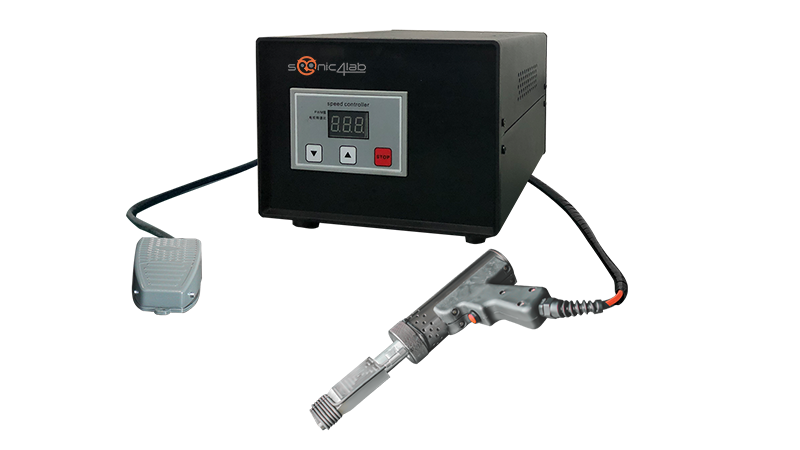
2. Achieve almost perfect welding quality
- Eliminate internal defects: Traditional methods can easily generate tiny bubbles inside solder joints due to residual flux, which may become the source of cracks over time and lead to failure. Ultrasonic tinning eliminates this hidden danger from the source.
- Extremely strong penetration: Ultrasonic vibration endows tin liquid with extraordinary penetration ability, which can fully fill the micro gaps on the metal surface, forming dense and pore free welded joints, especially suitable for applications with high sealing requirements.
- The joint is firm and reliable: due to its pure metal to metal bonding, there is no risk of corrosion, and the mechanical strength and long-term reliability of the joint are significantly improved.
3. Save costs and improve efficiency
- Simplified process: It eliminates multiple processes such as flux coating, subsequent cleaning, and related environmental treatment, greatly simplifying the production process.
- Reducing overall costs: This not only saves material costs for purchasing soldering flux and cleaning agents, but also reduces corresponding equipment investment and labor operation costs, thereby improving overall production efficiency.
In summary, ultrasonic tinning technology is becoming a highly valuable key process in modern precision manufacturing due to its green, high-quality, and efficient characteristics. It not only solves the long-standing problem of oxide layer treatment in the industry, but also leads the development of electronic welding technology towards a more reliable and environmentally friendly direction.
If you want to purchase equipment, please click here

