
Ultrasonic Treatment Technology for Waste Liquid
Ultrasonic liquid treatment equipment can indeed achieve emulsion breaking and organic pollutant degradation through ultrasonic cavitation effect, which is one of the efficient technologies in the field of waste liquid treatment.
The specific mechanism of the core role
The treatment effect of ultrasound on waste liquids containing emulsified oil and polymer chelating agents is mainly achieved through the synergistic effects of “high temperature effect” and “free radical effect”, with clear division of labor and mutual cooperation between the two.
- Demulsification mechanism: The stability of emulsified oil depends on the emulsion film (mostly composed of surfactants) and the dispersed state of oil droplets. When ultrasonic cavitation bubbles rupture, high temperatures above 5000K will be generated locally, directly damaging the molecular structure of the emulsion film and causing the oil droplets to lose protection; At the same time, the intense disturbance of the liquid caused by high temperature will promote the collision and aggregation of dispersed small oil droplets into large oil droplets, ultimately facilitating subsequent settling or separation.
- Organic degradation mechanism: Polymer chelating agents (such as EDTA, citric acid, etc.) have stable structures and are difficult to decompose by conventional methods. The OH radicals generated by ultrasonic cavitation have extremely strong oxidation ability (oxidation potential of 2.8V) and can directly attack chemical bonds in polymer chains (such as C-C bonds and C-N bonds), breaking them into small molecular fragments; At the same time, high temperature can also assist in breaking down the structure of large molecules, making it easier for OH radicals to contact the internal active sites, ultimately degrading some polymer chelating agents into harmless substances such as CO ₂ and H ₂ O, or converting them into small molecules that are easily biodegradable.
Key control factors for practical applications
To maximize the effectiveness of ultrasound treatment, it is necessary to control three core parameters in a targeted manner to avoid insufficient results or energy waste.
- Ultrasonic power and time: When processing high concentration emulsified oil or stubborn chelating agents, the power needs to be increased to 500-800W and the processing time is 10-20 minutes; If the concentration of the waste liquid is low, 300-500W and 5-10 minutes are sufficient. Low power cannot effectively generate cavitation effect, while high power may cause local overheating of waste liquid and increase energy consumption.
- PH value of waste liquid: Under acidic conditions (pH 3-5), more OH radicals are generated, resulting in higher efficiency in degrading organic matter; Neutral or weakly alkaline conditions (pH 6-8) are more conducive to the demulsification of emulsified oil. Priority should be given to adjusting the pH value based on the primary and secondary ratios of “emulsified oil” and “polymer chelating agent” in the waste liquid.
- Collaborative additive: A small amount of Fe ²+, TiO ₂ and other catalysts can be added to form a “Fenton like reaction” or “photocatalytic ultrasound synergistic effect” with the OH radicals generated by ultrasound, which can improve the degradation efficiency of organic matter by 20% -40% while reducing the ultrasound treatment time.
The core advantage of ultrasound technology in the treatment of complex waste liquids is that the high temperature and OH radicals generated by ultrasound cavitation are the key to solving the stability problem of emulsified oil and degrading organic pollutants, which can clear the obstacles for subsequent deep treatment of waste liquids.
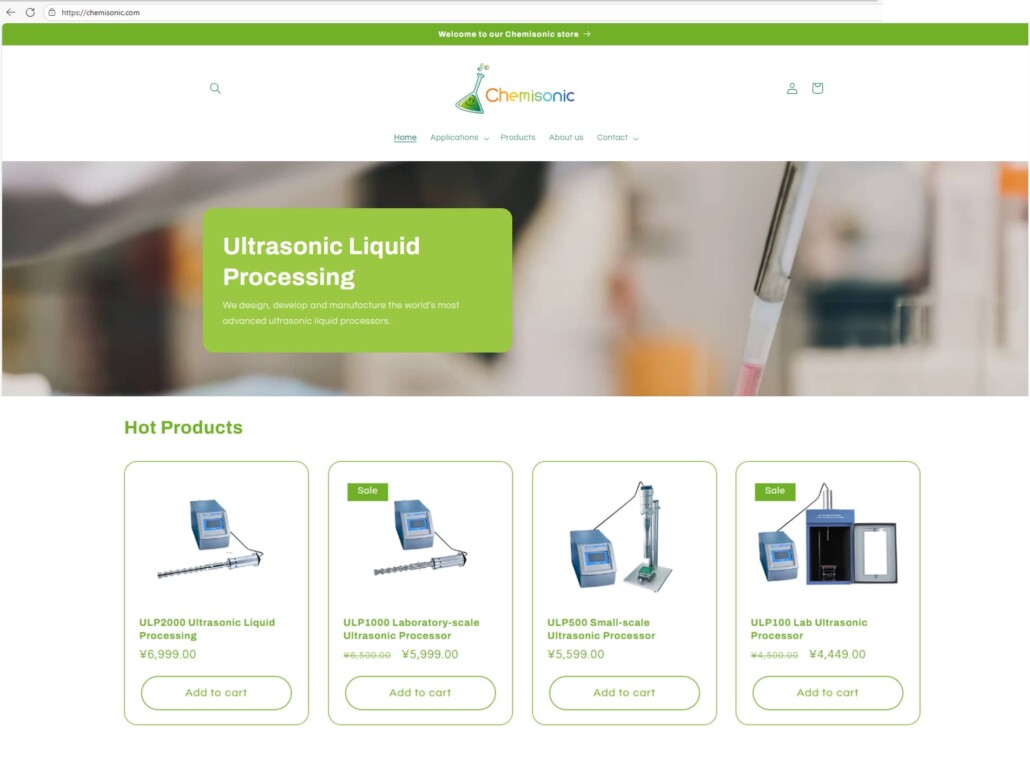
Chemisonic specializes in ultrasonic liquid processing technology. For decades, we have dedicated to designing, developing, and manufacturing ultrasonic liquid processors independently, from laboratory application to industrial level. Cutting-edge ultrasonic technology, high quality device and easy-to-use operating system are the fundamentals for our company to achieve continued business growth.
