
Ultrasonic Spraying for Solar Cell Backsheets
Ultrasonic Spraying for Solar Cell Backsheets | Cheersonic
In the global wave of energy structure transformation towards green and low-carbon practices, the solar photovoltaic industry, as a core pillar of clean energy, is constantly pursuing higher power generation efficiency and lower manufacturing costs. As a key protective component ensuring the long-term stable operation of solar cell modules, the innovation of its manufacturing process directly affects the performance and lifespan of photovoltaic products. Ultrasonic spraying technology, with its core advantages of precision, controllability, high efficiency, and environmental friendliness, is gradually becoming the preferred solution for solar cell backsheet coating preparation, injecting new momentum into the high-quality development of the photovoltaic industry.
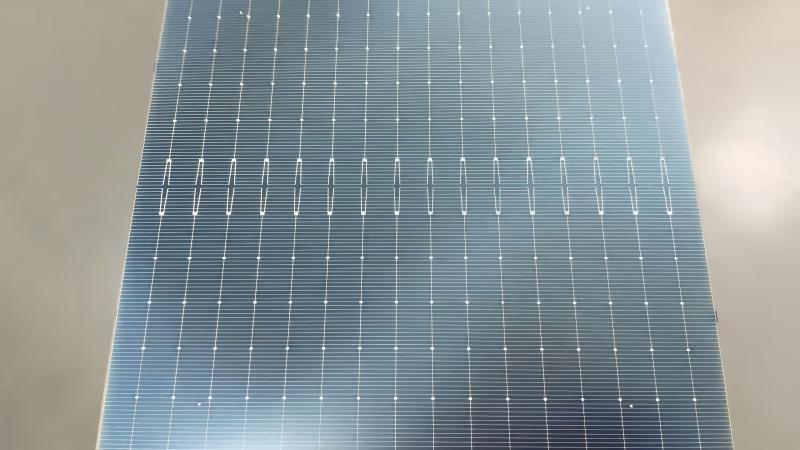
The core principle of ultrasonic spraying technology is to achieve precise material deposition through high-frequency sound wave energy. This technology uses a piezoelectric transducer to convert high-frequency electrical energy into mechanical vibration. The vibration energy is transmitted to the nozzle tip, causing the flowing coating material solution to form uniform droplets at the micron or even nanometer scale. These droplets, guided by a slight carrier gas, precisely fly to the surface of the backsheet substrate, where solvent evaporation or subsequent heat treatment forms a dense and uniform functional coating. Compared with traditional spraying processes, ultrasonic spraying eliminates the high-pressure gas-broken liquid mode, fundamentally solving the problems of uneven droplets and large coating thickness fluctuations in traditional processes.
Applying ultrasonic spraying technology to the fabrication of solar cell backsheets enables several performance breakthroughs. Firstly, it significantly improves coating uniformity. This technology can control the backsheet coating thickness at the sub-micron level, with a uniformity error of less than 5%, effectively avoiding the protective failure caused by localized over-thickness or under-thickness of the coating in traditional processes. This ensures comprehensive protection against external erosion such as moisture and ultraviolet radiation. Secondly, it greatly improves material utilization. The precise guidance of ultrasonic spraying increases material utilization to over 90%, far exceeding traditional spraying processes. This not only reduces the consumption of precious metals or special coating materials but also reduces the environmental pressure from waste disposal.
Ultrasonic spraying technology exhibits unique advantages in process adaptability and application flexibility. It is compatible with various backsheet coating materials, including PVC-based corrosion-resistant materials and functional materials such as transparent conductive oxides (TCOs), meeting the performance requirements of different types of solar cell backsheets. Meanwhile, this technology supports spraying operations on flexible substrates and large-area substrates. Through multi-nozzle array combinations and intelligent trajectory control, it can adapt to the production of backsheets of different sizes, providing technical support for emerging application scenarios such as building-integrated photovoltaics (BIPV). Furthermore, the non-contact spraying characteristic of ultrasonic spraying avoids physical damage to the substrate, making it particularly suitable for the fabrication of fragile thin-film solar cell backsheets.
From an industry value perspective, ultrasonic spraying technology promotes the greening and large-scale development of solar cell backsheet fabrication. Traditional spraying processes suffer from significant material waste and high pollutant emissions, while ultrasonic spraying requires no high-pressure gas assistance, has low noise, and minimal pollutant emissions, aligning with green production principles. In terms of production cost control, this technology not only reduces material waste, but its equipment investment cost is only a fraction of that of traditional vapor deposition processes. It also simplifies subsequent polishing and repair processes, significantly reducing the unit manufacturing cost of backsheets.
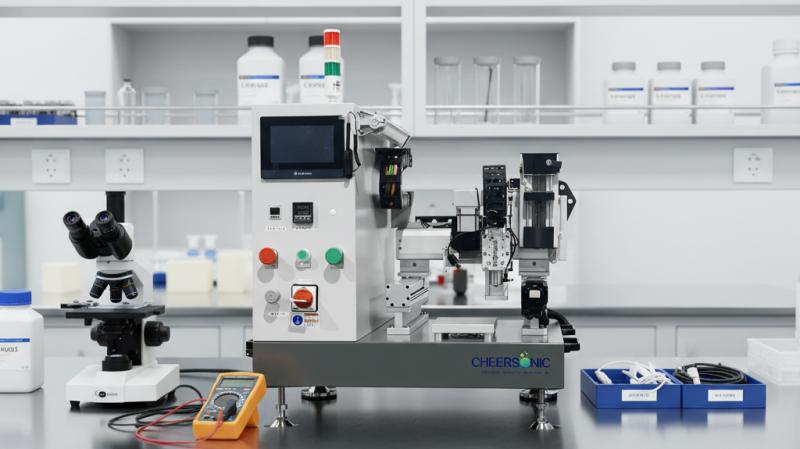
As photovoltaic technology iterates towards new types of cells such as perovskite and flexible thin films, higher demands are placed on the precision and multifunctionality of backsheet coatings. Ultrasonic spraying technology, through precise parameter control, enables the orderly deposition of multi-layer composite coatings, facilitating the development of high-performance backsheets with multiple functions such as corrosion resistance, insulation, and UV protection. In the future, with the intelligent upgrading of ultrasonic spraying equipment and continuous optimization of process parameters, this technology will further improve the stability of coating performance, expand its application boundaries in the preparation of high-efficiency solar cell backsheets, and provide a more solid technical guarantee for the photovoltaic industry to achieve its goal of “cost reduction and efficiency improvement.”
About Cheersonic
Cheersonic is the leading developer and manufacturer of ultrasonic coating systems for applying precise, thin film coatings to protect, strengthen or smooth surfaces on parts and components for the microelectronics/electronics, alternative energy, medical and industrial markets, including specialized glass applications in construction and automotive.
Our coating solutions are environmentally-friendly, efficient and highly reliable, and enable dramatic reductions in overspray, savings in raw material, water and energy usage and provide improved process repeatability, transfer efficiency, high uniformity and reduced emissions.
Chinese Website: Cheersonic Provides Professional Coating Solutions