
Ultrasonic Sprayed Iridium-Based Titanium Metal Oxide Anodes
Ultrasonic spraying of iridium/naphthalene-based titanium-based metal oxide anodes
In electrochemical industrial systems, the performance of the anode material directly determines electrolysis efficiency, energy consumption, and equipment service life. Titanium-based metal oxide anodes, also known as size-stable anodes, have become key components in modern chlor-alkali production, electroplating, water treatment, and cathodic protection due to their unique structure and catalytic mechanism. These anodes use industrially pure titanium as the supporting substrate, with a platinum group metal mixed oxide catalytic layer loaded onto the surface through a specific process. This maintains the excellent conductivity and mechanical strength of titanium while endowing the electrode with outstanding electrochemical activity.
Currently, the two most widely used systems in the industry are ruthenium-based chlorine-evolving anodes and iridium-based oxygen-evolving anodes. Although both belong to the category of noble metal oxide coatings, their application scenarios are clearly distinct. Ruthenium-based anodes, with ruthenium oxide as the catalytic active center, exhibit extremely high selectivity and catalytic efficiency in chloride ion evolution reactions, making them suitable for chloride evolution environments such as hydrochloric acid electrolysis, seawater desalination, and sodium hypochlorite generation. Iridium-based anodes, with iridium oxide as the main component, possess lower overpotentials and superior stability in oxygen evolution reactions, and are widely used in electroplating, electrodialysis, organic pollutant degradation, and oxygen evolution processes in acidic media. This division between the two systems not only reflects the differences in the intrinsic catalytic properties of precious metal elements but also reflects the technical demand for precise adaptation to electrolysis conditions.
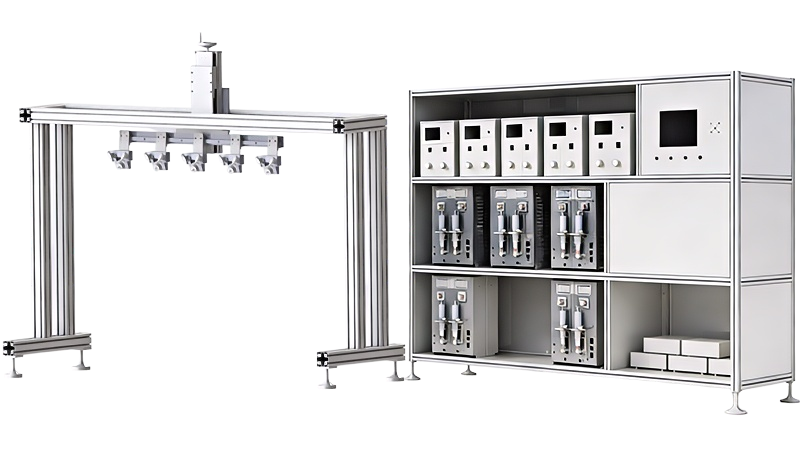
In the field of coating preparation technology, the introduction of ultrasonic spraying represents a significant advancement in anode manufacturing. Compared to traditional manual coating methods, ultrasonic spraying utilizes high-frequency mechanical oscillations to atomize the precious metal precursor solution into micron-sized uniform droplets, which are then transported to the titanium substrate surface via a carrier gas to form a dense, uniformly thick liquid film. This technology significantly improves the uniformity and batch reproducibility of coating component distribution, especially for iridium and ruthenium-based multi-component oxide systems, effectively suppressing differences in catalytic activity caused by local enrichment or depletion. Furthermore, ultrasonic spraying allows for precise control of the coating amount per unit area, reducing the loss of precious metal raw materials and lowering internal stress within the coating, thus laying a good interfacial foundation for subsequent high-temperature sintering processes.
The complete coating preparation process involves two core stages: precursor coating and segmented high-temperature thermal oxidation sintering. Precursor coating solutions, such as chloroiridium acid and chlororuthenium acid, are dissolved in specific organic solvents and uniformly applied to the surface of a sandblasted titanium plate using ultrasonic spraying or assisted brushing. Subsequently, the workpiece enters a programmable high-temperature furnace, where a multi-temperature gradient sintering process is performed in an oxygen-containing atmosphere: the low-temperature stage promotes solvent evaporation and organic matter decomposition; the medium-temperature stage achieves the conversion of precious metal salts into oxides; and the high-temperature stage drives grain growth and phase structure reconstruction. After repeated coating-sintering cycles, a mixed oxide film layer with a rutile crystal structure—ruthenium oxide or iridium oxide solid solution—is finally formed on the surface of the titanium substrate. The unique open lattice structure of the rutile phase provides abundant active sites, while the thermal expansion matching between the titanium substrate and the oxide layer ensures the adhesion and anti-peeling ability of the coating during long-term electrolysis.
It is worth noting that although traditional brushing processes are simple to operate, they are greatly affected by human factors, resulting in significant coating thickness fluctuations and edge effects. Ultrasonic spraying, combined with a precise motion control system, can achieve contour-following uniform coating on irregularly shaped or large-sized electrode surfaces, fully adapting to the development needs of modern industry for larger and more complex anodes. By optimizing spraying parameters and sintering regimes, the enhanced electrolysis life of iridium-based and ruthenium-based anodes can reach thousands or even tens of thousands of hours, fully meeting the stringent requirements for electrode stability under different electrolysis conditions.
In summary, the performance advantages of titanium-based metal oxide anodes are rooted in the synergistic effect of the precise selection of the two systems and advanced coating preparation technology. Ultrasonic spraying, with its uniformity, controllability, and economy, is gradually replacing traditional manual coating methods and becoming an important technological path for manufacturing high-quality iridium and ruthenium anodes. With the continued advancement of surface engineering and electrocatalysis theory, this field is expected to achieve further breakthroughs in reducing precious metal loading, extending anode life, and expanding applications under extreme conditions.
About Cheersonic
Cheersonic is the leading developer and manufacturer of ultrasonic coating systems for applying precise, thin film coatings to protect, strengthen or smooth surfaces on parts and components for the microelectronics/electronics, alternative energy, medical and industrial markets, including specialized glass applications in construction and automotive.
Our coating solutions are environmentally-friendly, efficient and highly reliable, and enable dramatic reductions in overspray, savings in raw material, water and energy usage and provide improved process repeatability, transfer efficiency, high uniformity and reduced emissions.
Chinese Website: Cheersonic Provides Professional Coating Solutions