Ultrasonic Soldering FPC and PCB Bonding
In the wave of miniaturization in electronic manufacturing, the reliable connection between flexible circuit boards and rigid circuit boards is a key factor determining product performance. Ultrasonic soldering technology, with its unique physical properties, has become the core process for solving this connection problem, providing strong support for the miniaturization and high reliability development of electronic devices.
The traditional welding process always faces a bottleneck that is difficult to break through in the connection between flexible circuit boards and rigid circuit boards. The hot pressing process can easily cause deformation of the polyimide substrate of flexible circuit boards due to high temperatures, with a defect rate often exceeding 3%; The heat affected zone of laser welding can reach over 0.5mm, which can easily damage surrounding precision components; Manual operation suffers from significant intensity fluctuations and poor consistency, making it difficult to meet the demands of large-scale production. These limitations are more prominent in electronic devices with high-density wiring, becoming a key factor restricting product yield.
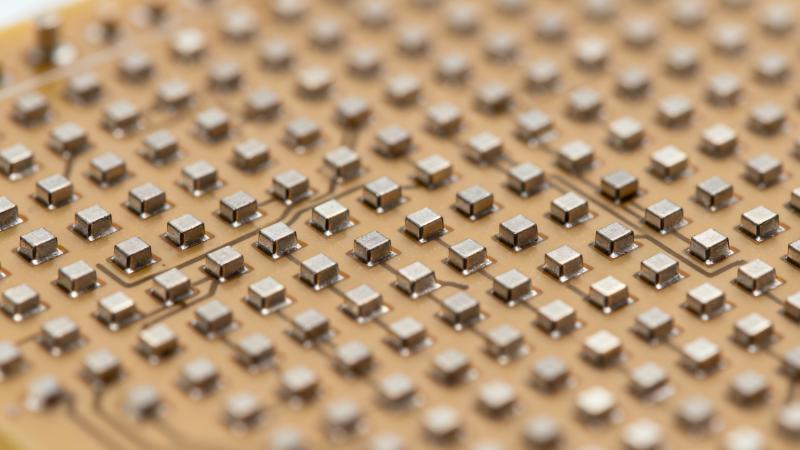
Ultrasonic soldering technology achieves connection through high-frequency mechanical vibration, breaking through the limitations of traditional processes in principle. Its core lies in converting electrical energy into high-frequency vibrations of 20kHz-40kHz, which are transmitted to the soldering interface through the soldering head, and using friction effects to achieve solder infiltration and bonding. The entire soldering process is carried out at a temperature below 80 ℃, far below the temperature resistance limit of flexible circuit boards. This “cold welding” characteristic controls the heat affected zone within 0.1mm, effectively avoiding carbonization or deformation of the substrate. The measured deformation rate of the substrate can be as low as 0.05% or less.
Ultrasonic soldering exhibits significant advantages in connection quality and reliability. By utilizing the ultrasonic cavitation effect, soldering can automatically remove the surface oxide layer of the material, achieving a tight bond without the need for soldering flux. This not only avoids the risk of corrosion caused by chemical residues, but also eliminates joint defects caused by bubbles.
Intelligence and efficiency make this technology more suitable for the needs of modern production lines. Paired with an AI visual positioning system, it can achieve a repeatability accuracy of ± 0.01mm. Real time impedance monitoring can accurately control welding quality, and all data can be integrated with the MES system to achieve full process traceability. The dual station design shortens the welding cycle to 2 seconds per point, and the quick changeover function can complete the switching of different flexible circuit board models within 5 minutes, greatly improving production flexibility.
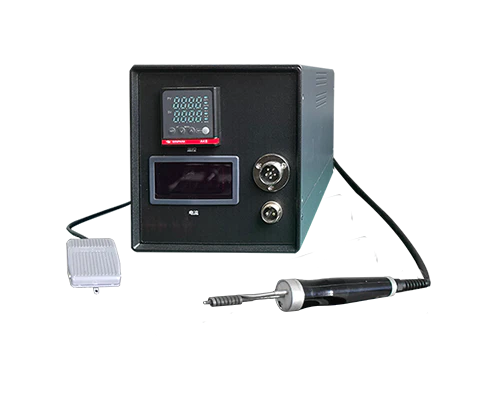
Ultrasonic soldering is becoming the core connection technology in electronic manufacturing, from the ultra-thin flexible circuit board connection of smart wearable devices to the integrated process of power batteries. It solves the process pain points of connecting flexible circuit boards and rigid circuit boards with its non-destructive, reliable, and efficient characteristics, laying a solid foundation for the development of electronic devices towards thinner, more precise, and more reliable directions.
About Sonic4Lab
Sonic4Lab was founded to ultrasonic instruments including ultrasonic soldering iron, ultrasonic impact treatment, ultrasonic knife and so on. Our customers are Research and Development laboratories and companies for production applications. We use state-of-the-art equipment and in-depth experience to develop accessible solutions for emerging applications.