
Ultrasonic Preparation of Anthocyanin Complex Wax Based Gel
This scheme aims to use the cavitation effect and mechanical effect of ultrasound to efficiently compound the natural active ingredient anthocyanin and wax matrix (such as beeswax, candelilla wax, etc.) to prepare a gel with stable structure and potential for sustained or targeted release.
Basic principles
1. Anthocyanins: A water-soluble flavonoid pigment with excellent antioxidant, anti-inflammatory, and other biological activities, but sensitive to light, heat, and pH, with poor chemical stability and low bioavailability.
2. Wax based matrix: Natural wax (such as beeswax, Brazilian palm wax) has the characteristics of good biocompatibility, biodegradability, and suitable melting point. After heating and melting, it can be used as a lipid carrier to encapsulate hydrophobic or hydrophilic components.
3. The function of ultrasound:
* Cavitation effect: Ultrasonic waves generate countless tiny bubbles (cavitation bubbles) in liquids, which instantly collapse and produce locally high temperatures (~5000K), pressures (~1000 atm), and strong shock waves.
* Nano emulsification and dispersion: the huge shear force generated by the cavitation effect can tear the molten wax into nanoscale droplets, and evenly disperse anthocyanins or their premixed solutions, forming extremely fine lotion or dispersions.
* Promoting recombination: High intensity ultrasound can destroy the crystal structure of wax, increase its disorder, and facilitate the embedding of anthocyanin molecules into the wax matrix, forming more stable complexes.
* Accelerated cooling and curing: ultrasonic treatment can promote uniform nucleation of wax in the subsequent cooling process, forming a finer and uniform gel network structure.
Experimental materials and equipment
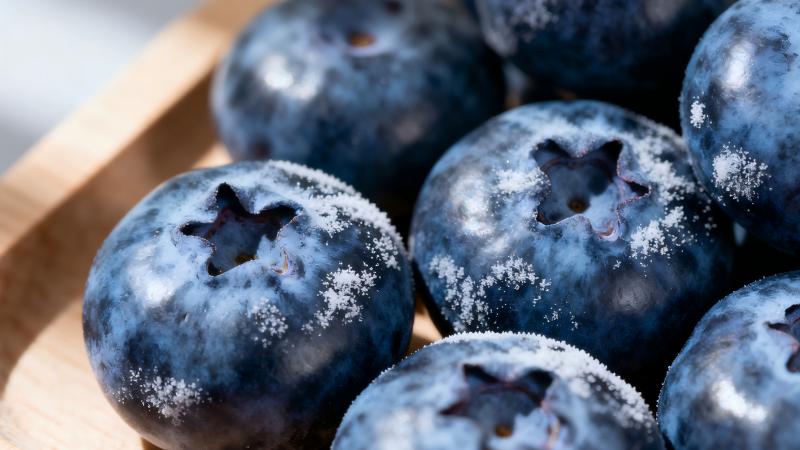
1. Active ingredients: Anthocyanin extract (or plant powder rich in anthocyanins, such as blueberry powder, purple sweet potato powder).
2. Wax materials: beeswax, candle wax, Brazilian palm wax, etc. (can be used alone or in combination).
3. Oil phase: optional, used to adjust the hardness and encapsulation efficiency of the matrix, such as medium chain triglycerides (MCT oil), olive oil, jojoba oil, etc.
4. Aqueous phase/surfactant: If it is necessary to prepare oil in water (O/W) or water in oil (W/O) lotion gel, deionized water and appropriate emulsifiers (such as Tween 80, Span 80, lecithin, etc.) are required.
5. Equipment:
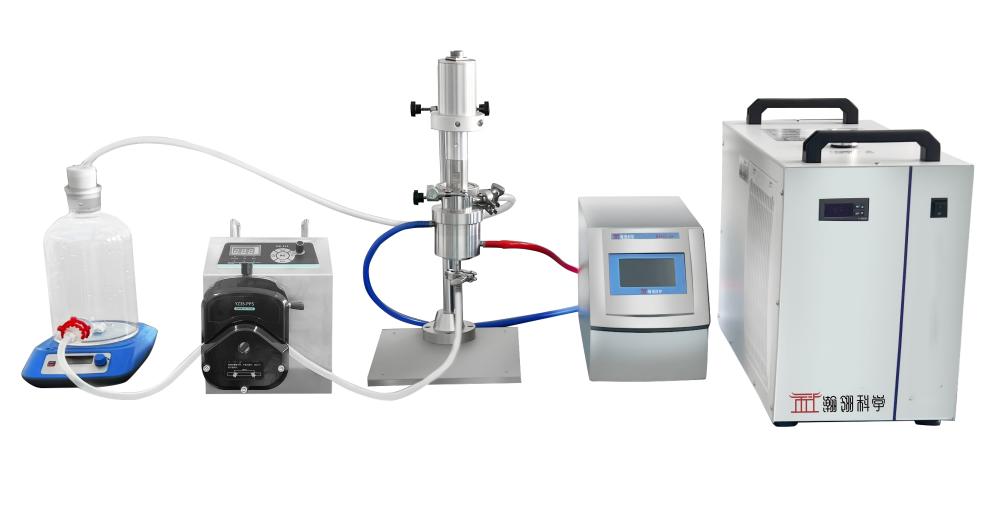
* Ultrasonic cell disruptor/ultrasonic processor: equipped with titanium alloy probe, adjustable power (usually 200W-1000W and above).
* Magnetic stirring heating plate: used for the melting and mixing of materials in the early stage.
* Thermostatic water bath: used to control the cooling and solidification temperature.
* Temperature gauge: Real time monitoring of temperature.
* Glass vessels such as beakers and flasks.
Preparation process flow
The following is a typical ultrasonic assisted emulsification gel process:
Step 1: Oil phase preparation
Place one or more selected waxes in a beaker with possible added oils in a certain ratio (such as beeswax: MCT oil=1:1~4:1), and heat them on a magnetic stirring heating plate to 10-15 ° C (such as 75-80 ° C) above the melting point of the wax, allowing them to melt completely and mix evenly.
Step 2: Preparation of aqueous/anthocyanin phase
* Option A (direct dispersion): Add anthocyanin powder directly into a small amount of preheated water or oil (depending on the target system) for initial dispersion.
* Scheme B (aqueous solution): if it is necessary to prepare aqueous gel, dissolve anthocyanins in the preheated aqueous phase and add emulsifiers.
Step 3: Colostruation
Under high-speed stirring (using a magnetic stirrer or high-speed homogenizer), the aqueous phase/anthocyanin phase is slowly added to the molten oil phase to form a coarse lotion.
Step 4: Ultrasonic treatment (core step)
* Keep the above crude lotion in melting state (~70 ° C).
* Immerse the preheated ultrasound probe about 1-2 centimeters below the liquid level.
* Set ultrasound parameters and process them:
- Power: usually 30% -70% of the total power (e.g. for a 400W instrument, use 120-280W). Optimization is needed to avoid overheating.
- Working mode: It is recommended to use pulse mode (such as on for 5 seconds and off for 2 seconds) to prevent a sharp increase in sample temperature and protect anthocyanin activity.
- Processing time: usually 2-10 minutes. Long term exposure may lead to anthocyanin degradation and excessive wax crystallization.
- Maintain gentle stirring throughout the process to ensure even processing.
Step 5: Cooling and solidification
The fine lotion after ultrasonic treatment is quickly transferred to a constant temperature water bath at a preset temperature (such as 25 ° C), and is left to cool. In this process, the wax will recrystallize to form a three-dimensional network structure, encapsulate anthocyanins, and finally form a solid gel.
Step 6: Post processing and Storage
The prepared gel agent is taken out of the mold and can be vacuumed as required. Store in a dark, sealed container at 4 ° C or room temperature.
Key parameters and optimization strategies
1. Ultrasonic power and time:
* Too low: insufficient dispersion, large droplet size, rough gel structure, low encapsulation efficiency.
* Excessive/too long: The local high temperature generated may cause anthocyanin oxidation and degradation, resulting in loss of activity; It may also destroy the crystal structure of wax and affect the strength of gel. We need to find the optimal equilibrium point through experiments.
2. Types and proportions of wax:
* The crystallization behavior and gel forming ability of different waxes are different. Beeswax has good flexibility, while small candle tree wax has high hardness. The hardness, melting point and release performance of gel can be adjusted by compounding.
* The higher the proportion of wax, the harder the gel is generally, and the slower the drug release may be.
3. Temperature control:
* The temperature throughout the entire process is crucial. The melting temperature should ensure complete liquefaction of the wax, but should not be too high. Ultrasound and temperature during cooling directly affect the nucleation and crystallization process, thus determining the final microstructure and properties of gel.
4. Concentration and form of anthocyanins:
* The concentration of anthocyanins can affect their distribution and encapsulation efficiency in the matrix.
* It is easier to obtain a uniform dispersion system using anthocyanin extract than plant powder.
Product characterization and performance evaluation
1. Microstructure: use scanning electron microscope (SEM) or polarizing microscope to observe the cross-section morphology and crystal network of gel.
2. Particle size distribution: conduct laser particle size analysis on lotion to evaluate the emulsification effect of ultrasound.
3. Rheological characteristics: use a rheometer to measure the hardness, viscoelasticity (storage modulus G ‘and loss modulus G’), thixotropy, etc. of gel.
4. Encapsulation rate and drug load: free anthocyanins are separated by centrifugation, dialysis and other methods, and the content of anthocyanins encapsulated in the gel is determined by ultraviolet visible spectrophotometer or HPLC.
5. In vitro release study: Investigate the release curve of anthocyanins in a release medium that simulates the skin or gastrointestinal environment, and evaluate their sustained release performance.
6. Stability study: investigate the physical stability of gel under light and different temperatures and the chemical stability of anthocyanins.
Advantages and Potential Applications
Advantage:
* Efficient: The ultrasonic process is rapid and can form a nanoscale dispersion system within a few minutes.
* Green: Reduce the amount of chemical emulsifiers used.
* Controllable structure: gel with specific microstructure and release behavior can be prepared by adjusting parameters.
* Protective activity: The wax matrix and rapid preparation process help protect anthocyanins from degradation by environmental factors.
Potential applications:
* Cosmetics: as the carrier of active ingredients, it is used for anti-aging, whitening, restorative face cream, lotion and lipstick.
* Food: used as a functional food ingredient or for active packaging films.
* Medicine: As a local drug delivery system, used for the treatment of skin diseases (such as utilizing the anti-inflammatory properties of anthocyanins).
In conclusion, ultrasonic preparation of anthocyanin complex wax based gel is an advanced technology with broad prospects. Through fine control of ultrasonic parameters and formula composition, “precise design” of gel structure and performance can be achieved, providing an effective technical path for the high-value utilization of anthocyanins.
Chemisonic specializes in ultrasonic liquid processing technology. For decades, we have dedicated to designing, developing, and manufacturing ultrasonic liquid processors independently, from laboratory application to industrial level. Cutting-edge ultrasonic technology, high quality device and easy-to-use operating system are the fundamentals for our company to achieve continued business growth.