
Ultrasonic Dispersion of Alumina Slurry
Alumina slurry, as a key material, plays an irreplaceable role in many cutting-edge fields. From high-frequency circuit boards in electronic substrates, to abrasives, refractory materials, and transparent ceramics such as sapphire windows, the presence of alumina slurry is ubiquitous. The quality and performance of these products are directly affected by their performance.
However, the dispersion problem has always plagued the relevant industries in the preparation and use of alumina slurry. Taking α – Al ₂ O3 particles as an example, their surface is rich in hydroxyl groups. These hydroxyl groups are highly prone to form hard aggregates through hydrogen bonding interactions. This aggregation structure is very stable, and traditional stirring methods are difficult to effectively disperse it. The direct consequence is that the viscosity of the slurry increases significantly and the fluidity becomes extremely poor. In processes such as casting, this can lead to significant deviations in the thickness of the blank, seriously affecting the consistency of the product. More importantly, after sintering, due to the presence of agglomerates, the density is uneven and the porosity significantly increases. For electronic substrates, this will reduce their thermal conductivity and affect their heat dissipation performance; For transparent ceramics, an increase in porosity can seriously impair their transparency, making them unable to meet the stringent requirements of optical applications.
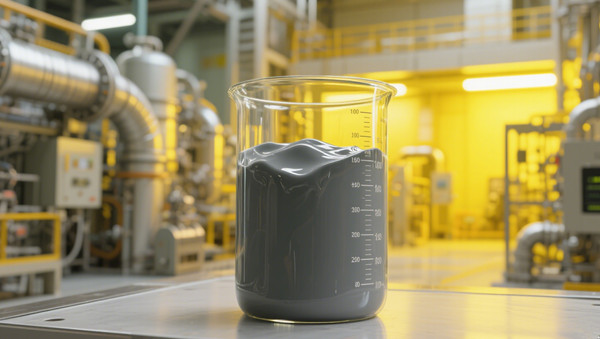
Fortunately, the emergence of ultrasound technology has brought hope to solve this problem. When ultrasound propagates in liquid media, it produces a unique cavitation effect. Under the action of cavitation, shock waves of up to thousands of atmospheres and strong shear forces are generated instantly. These energies can precisely act on micrometer sized aggregates, shattering them. After ultrasonic treatment, alumina particles can be successfully dispersed to the sub micron or even nanometer level, and uniformly suspended in the slurry system. This change is intuitively reflected in the significant decrease in viscosity of the slurry. For example, when the solid content is 50%, the viscosity of the slurry can significantly decrease from over 10000 cP to less than 3000 cP.
At the same time, the thickness deviation of the cast formed blank can be controlled within<5%, greatly improving the forming quality. In addition to breaking down agglomeration, ultrasound also has a positive promoting effect on the sintering process of alumina slurry. The uniform slurry treated with ultrasonic dispersion has a significant increase in density after sintering. Due to the uniform dispersion of particles, the porosity can be reduced by 30% -50%. In electronic substrates, this enables thermal conductivity to approach theoretical values, greatly improving heat dissipation efficiency and ensuring stable operation of electronic devices. For transparent ceramics such as (Y, Gd) ₂ O3: Eu scintillation ceramics, their transmittance can reach over 80% through ultrasonic dispersion, achieving high transparency and meeting the needs of high-end optical fields.
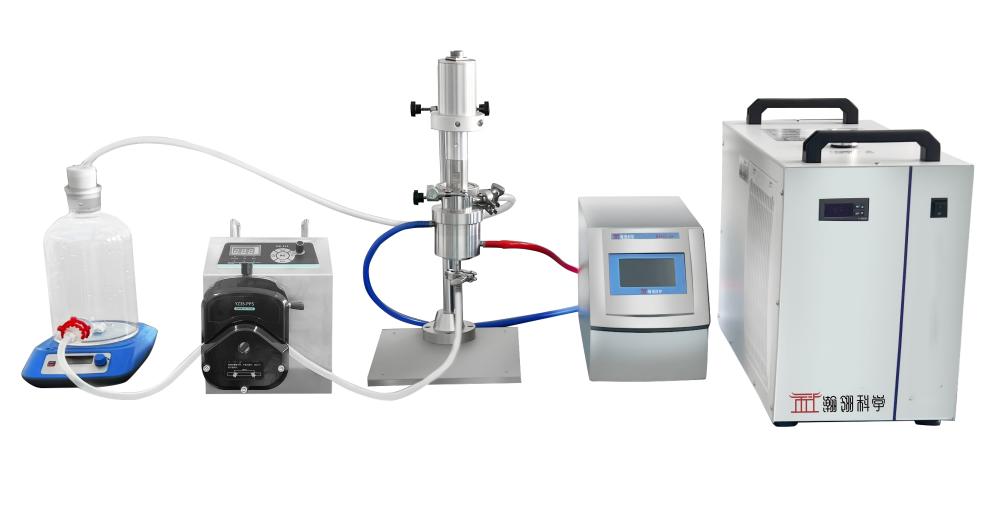
Ultrasonic technology, with its significant advantages in breaking agglomeration and promoting sintering, provides powerful assistance for improving the performance of alumina slurry. With the continuous advancement of technology, it is believed that ultrasonic technology will play a more important role in alumina slurry and related fields, promoting the continuous development of the industry.
Chemisonic specializes in ultrasonic liquid processing technology. For decades, we have dedicated to designing, developing, and manufacturing ultrasonic liquid processors independently, from laboratory application to industrial level. Cutting-edge ultrasonic technology, high quality device and easy-to-use operating system are the fundamentals for our company to achieve continued business growth.
