
Ultrasonic Crush Technology for Plant Cell Walls
In the field of plant resource development and biological research, the fragmentation of plant cell walls has always been a critical step. The plant cell wall is composed of components such as cellulose, hemicellulose, and pectin, forming a tough mesh structure that not only provides protection for the cell, but also serves as a “natural barrier” for extracting effective components from the cell. Traditional crushing methods such as mechanical grinding and chemical reagent treatment often have problems such as low efficiency, easy damage to target components, or pollution. The emergence of ultrasonic plant cell wall crushing technology provides an efficient and environmentally friendly solution to this problem.
The core principle of ultrasonic plant cell wall disruption technology is to utilize the “cavitation effect” generated when ultrasonic waves propagate in liquid media. When ultrasound is applied to a solution containing plant cells, it can cause a drastic change in the internal pressure of the medium, forming a large number of tiny bubbles. These bubbles rapidly expand and rupture in a very short period of time, releasing enormous energy, creating local high temperature, high pressure environments, and strong shock waves. This energy can directly act on the plant cell wall, causing cracks in the mesh structure of the cell wall, which then gradually disintegrates, ultimately achieving the release of cell contents. Compared with traditional methods, ultrasound technology has a more targeted effect. By adjusting the frequency, power, and processing time of ultrasound, the degree of fragmentation can be accurately controlled to avoid excessive damage to the target active substance.
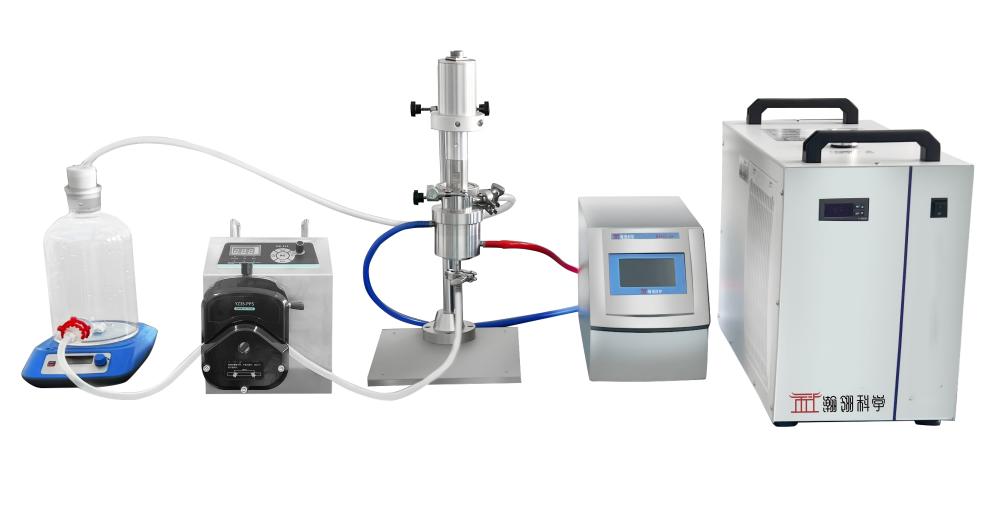
The significant advantages of this technology have shown broad application prospects in multiple fields. In the food industry, ultrasonic crushing can be used for the extraction of nutrients such as plant proteins and polysaccharides. For example, when extracting plant protein from soybeans, ultrasonic treatment can significantly shorten the extraction time, improve protein yield, while preserving the natural structure and functional properties of the protein, and avoiding the impact of chemical reagent residues on food safety. In the field of pharmaceutical research and development, for plants containing medicinal ingredients, such as traditional Chinese medicine, ultrasonic disruption can efficiently release effective ingredients from cells, improve extraction efficiency, and provide technical support for modern production of traditional Chinese medicine. In addition, in the field of bioenergy, ultrasonic crushing can also be used for pretreatment of lignocellulosic plant materials, breaking their dense structure and creating favorable conditions for subsequent enzymatic conversion into energy substances such as bioethanol.
With the deepening of environmental protection concepts and continuous iteration of technology, ultrasonic plant cell wall disruption technology is still developing towards higher efficiency and energy conservation. Researchers further reduce energy consumption and improve crushing efficiency by optimizing equipment structure and process parameters. At the same time, the combination of this technology with other extraction and separation technologies, such as supercritical extraction and membrane separation, is forming a more efficient and environmentally friendly comprehensive utilization system for plant resources.
Ultrasonic plant cell wall disruption technology, with its advantages of high efficiency, environmental friendliness, and strong controllability, has become an important technical means in the field of plant resource development and biological research. In the future, with the continuous innovation and improvement of technology, its application scope will be further expanded, providing stronger technical support for the development of industries such as food, medicine, and bioenergy, and promoting the efficient utilization and sustainable development of plant resources.
Chemisonic specializes in ultrasonic liquid processing technology. For decades, we have dedicated to designing, developing, and manufacturing ultrasonic liquid processors independently, from laboratory application to industrial level. Cutting-edge ultrasonic technology, high quality device and easy-to-use operating system are the fundamentals for our company to achieve continued business growth.
