
Ultrasonic Coating for Biopsy Needles
Ultrasonic Coating for Biopsy Needles | Medical Device Coating | Cheersonic
In the world of medicine, some revolutions occur silently. When a biopsy needle—this slender “pathfinder” that determines the direction of diagnosis—penetrates tissue, a microscopic battle concerning precision, safety, and patient experience has already begun. The key to victory often lies in the micron-thin, almost invisible lubricating coating on the needle’s surface. Ultrasonic coating technology, with its precise energy control, is quietly forging an unprecedented weapon for this battle, redefining the boundaries of interventional medicine.
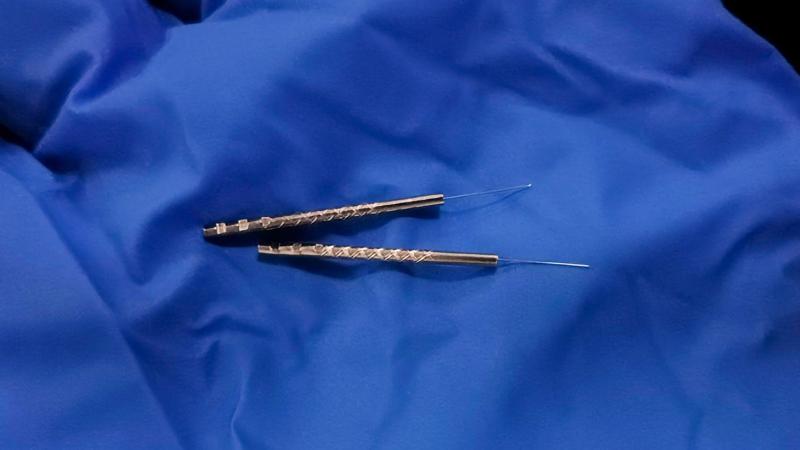
Traditional coating methods are like splashing ink; uneven coating thickness, weak adhesion, or material waste plague the manufacturing of precision medical devices like ghosts. Ultrasonic coating technology, on the other hand, is like a master micro-sculptor. Its core lies in using high-frequency ultrasonic energy to transform liquid coating material into extremely uniform and delicate micron-sized droplet “clouds” on the surface of the atomizing head. This controllable cloud of mist, under precise guidance, gently and evenly coats the needle. Unlike simple dipping or spraying, ultrasonic energy ensures that each droplet has a highly uniform size, achieving an extremely uniform distribution of the coating on the complex geometry of the needle (including sharp needle tips and narrow lumens). This “silent” coating method lays the physical foundation for high-performance lubricating coatings.
For biopsy needles, the core mission of the lubricating coating is to minimize puncture resistance while ensuring the integrity of the cell sample. Ultrasonic coating technology primarily produces next-generation hydrophilic lubricating coatings. Their magic lies in their “slippery upon contact with water”: they adhere firmly in a dry state, and upon contact with tissue fluid or blood, the coating’s polymer chains rapidly hydrate, forming a stable hydrated lubricating layer on the needle surface. This near-zero friction interface brings several revolutionary advantages:
* A qualitative leap in the puncture experience: The doctor experiences significantly reduced needle insertion resistance, resulting in smoother and more precise procedures, especially for deep or fibrotic tissue biopsies, effectively reducing tissue compression and displacement.
* Protection of sample quality: Less friction means less mechanical trauma to the target tissue. This directly impacts the quality of the obtained cell or tissue strips—more complete and representative, significantly reducing the risk of misdiagnosis or diagnostic uncertainty due to compression artifacts.
* Minimize patient trauma: A smooth puncture path reduces collateral damage to healthy tissue along the way, helping to reduce postoperative pain, bleeding risks, and potentially lowering the probability of rare needle tract implantation metastasis.
However, applying ultrasonic coating to ultra-precise instruments like biopsy needles is akin to sculpting a hair. The primary challenge lies in the extremely precise control of parameters: ultrasonic frequency, amplitude, atomization volume, needle movement or rotation speed, and even ambient temperature and humidity must all be within an extremely narrow “golden window.” Any minute deviation can lead to uneven coating thickness, defects, or unnecessary fluid accumulation at critical needle tips. Coating thickness typically needs to be precisely controlled between 1 and 10 micrometers—too thin and the lubrication life is insufficient; too thick and it may affect needle rigidity or increase the risk of detachment.
Secondly, there is the crucial aspect of ensuring a strong bond between the coating material and the substrate. Biopsy needles endure complex axial and radial stresses when penetrating tissue, requiring coatings with superior adhesion and flexibility to prevent peeling throughout the procedure. This necessitates meticulous pretreatment of the needle’s metal surface and a perfect balance of lubricity, durability, and biocompatibility in the coating formulation design.
Solving these challenges relies on a highly collaborative, precision closed-loop manufacturing system. From automated needle loading and plasma-activated surface cleaning to ultrasonic atomization coating in a clean environment, to precisely temperature and humidity-controlled curing, and finally, 100% online thickness and defect detection using machine vision or laser microscopy, every step is densely packed with sensors, providing real-time data feedback and fine-tuning process parameters. It is this ability to translate physicochemical principles into repeatable, traceable, digital industrial processes that has enabled ultrasonic coating to move from the laboratory to reliable mass production.
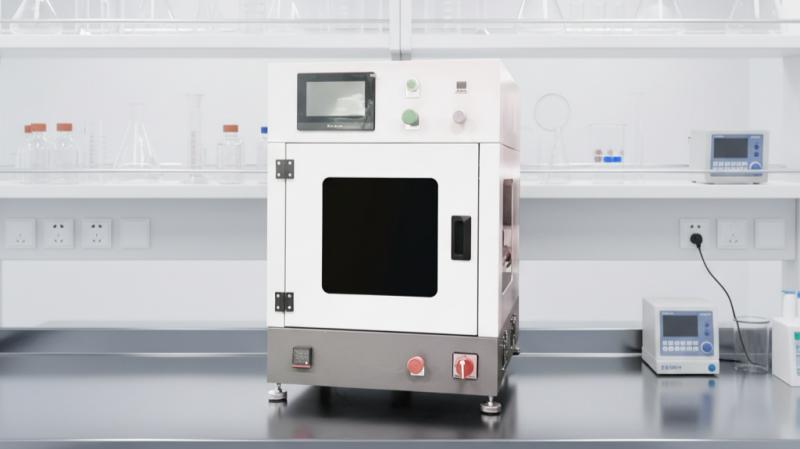
Looking to the future, the potential of ultrasonic coating technology for biopsy needle lubrication coatings extends far beyond the current focus on drag reduction. Functional integration is a clear trend: future coatings may be able to load antibacterial components, reducing the risk of infection; or combine with temperature-sensitive and pH-responsive materials to alter properties in specific tissues; or even integrate micro-contrast agents to provide clearer needle visualization under image guidance. Furthermore, with advancements in biodegradable biomaterials, it will become possible to develop temporary lubricating coatings that can be safely metabolized in vivo after sampling, further enhancing the biosafety of devices.
From microscopic, uniform droplets to macroscopic clinical benefits, ultrasonic coating technology is rewriting the performance standards of biopsy needles. It gives a cold metal needle an intelligent “skin,” allowing for more conclusive evidence at a lower cost in the journey to uncover the truth of life. This silent lubricating coating is not only a technological victory but also a profound extension of medical humanism to the microscopic scale—making diagnostics more gentle and accurate. In this silent evolution, we see engineering and medicine joining hands to make a more precise and safer commitment to life and health.
About Cheersonic
Cheersonic is the leading developer and manufacturer of ultrasonic coating systems for applying precise, thin film coatings to protect, strengthen or smooth surfaces on parts and components for the microelectronics/electronics, alternative energy, medical and industrial markets, including specialized glass applications in construction and automotive.
Our coating solutions are environmentally-friendly, efficient and highly reliable, and enable dramatic reductions in overspray, savings in raw material, water and energy usage and provide improved process repeatability, transfer efficiency, high uniformity and reduced emissions.
Chinese Website: Cheersonic Provides Professional Coating Solutions