
Ultrasonic Brazing in the Production of Aluminum Heat Exchangers
Ultrasonic Brazing in the Production of Aluminum Heat Exchangers – Cheersonic
With the continuous advancement of the automotive industry and home appliance refrigeration technology, the heat exchangers used in automotive air conditioning systems and refrigerators, especially evaporators, are becoming increasingly mature in terms of manufacturing processes and structural design. In order to further achieve product lightweighting and effectively control costs, the industry is gradually shifting from traditional copper tube aluminum fin structures to aluminum tube aluminum fin designs made entirely of aluminum materials. This trend is particularly evident in the manufacturing of light vehicles and fluorine free refrigerators that meet environmental requirements.
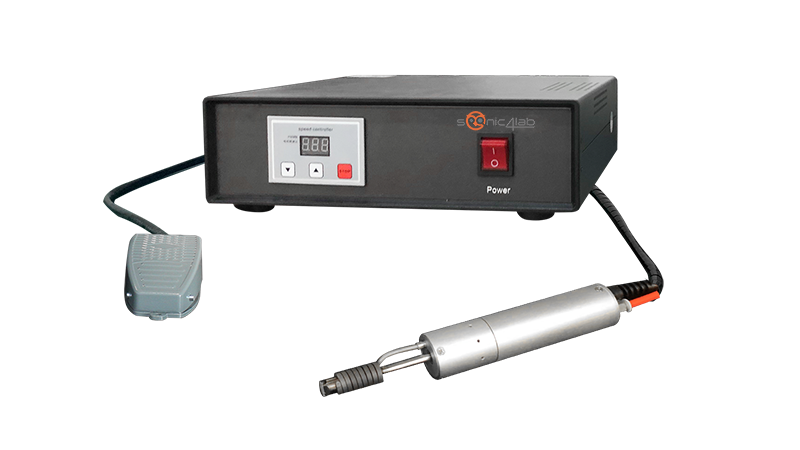
The comprehensive use of aluminum not only helps to reduce product weight, but also better meets the needs of green manufacturing and resource conservation. In order to meet the requirements of large-scale production of aluminum evaporators and ensure that the product appearance is clean, the structure is reliable, and the performance is excellent, ultrasonic aluminum brazing technology has gradually become one of the key processes in the mass manufacturing process.
Ultrasonic aluminum brazing is an efficient solid-phase bonding technique. The core principle is to use the energy generated by high-frequency ultrasonic vibration to directly destroy and remove the dense oxide film on the surface of aluminum under the combined action of pressure and heating. Aluminum and its alloys are prone to form a layer of aluminum oxide film on their surface, which has a very high melting point and can hinder the wetting and spreading of liquid brazing materials on the base material. Ultrasonic energy is transmitted to the brazing area through the welding head, and its high-frequency micro vibration can effectively break this oxide film, exposing the pure aluminum substrate. At the same time, the aluminum silicon brazing material with a melting point lower than that of the aluminum base material melts under heating and fills the gaps to be connected under capillary action. Due to the removal of the oxide film, the melted brazing material can achieve good metallurgical bonding with the pure aluminum surface, and after cooling, a dense and firm brazed joint is formed.
The advantages of this process are very significant. Firstly, it is usually carried out at a temperature lower than the melting point of the aluminum base material (the brazing temperature range is controllable), greatly reducing the impact on the mechanical properties of the aluminum material itself, avoiding overheating deformation of the workpiece, and ensuring the shape integrity of the evaporator fins and the dimensional accuracy of the pipeline. Secondly, the entire process does not require the use of corrosive flux, which is essential in traditional brazing, thus completely avoiding potential corrosion problems caused by residual flux, significantly improving the long-term reliability and service life of the product, and also being more environmentally friendly. Furthermore, ultrasonic brazing has fast speed, small heat affected zone, and is easy to achieve automated control, making it very suitable for fast-paced and consistent assembly line mass production. In the manufacturing of evaporators, it ensures that thousands of connection points between each aluminum tube and numerous aluminum fins have uniform and consistent welding strength and airtightness.
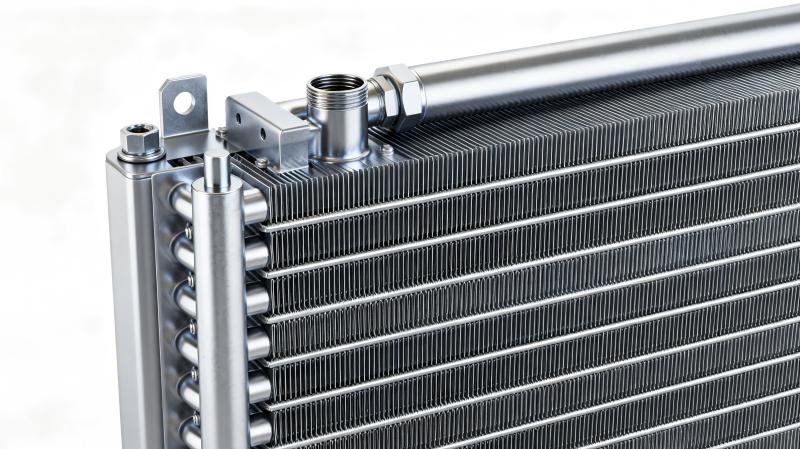
Therefore, this technology can achieve high-strength connections between aluminum parts in low-temperature environments, effectively avoiding the adverse effects of material surface oxidation, thereby ensuring the overall performance stability and lifespan improvement of the heat exchanger. It is very suitable for the efficient and high-quality production needs of modern assembly lines.
If you want to purchase equipment, please click here

