
Ultrasonic Brazing Connection of Dissimilar Materials
Ultrasonic Brazing Connection of Dissimilar Materials – Sonic4Lab
In modern manufacturing, firmly and reliably connecting materials of different properties together is a key link in promoting technological innovation. From lightweight cars to high-end electronic products, the combination of different materials can fully leverage their respective advantages and achieve optimal performance. However, due to the significant differences in physical properties (such as thermal expansion coefficient) and chemical properties (such as crystal structure) among different materials, their connection has always been a huge challenge faced by the manufacturing industry. Traditional welding methods are often helpless, and ultrasonic brazing technology has emerged as a highly promising solution in this context.
The principle of ultrasonic brazing: the combination of energy and ingenuity
Ultrasonic brazing is an efficient and green solid-state bonding technology. Its core secret lies in using high-frequency ultrasonic vibration energy (usually exceeding 20000 Hz) to solve the biggest obstacle in the connection process – the oxide film on the metal surface.
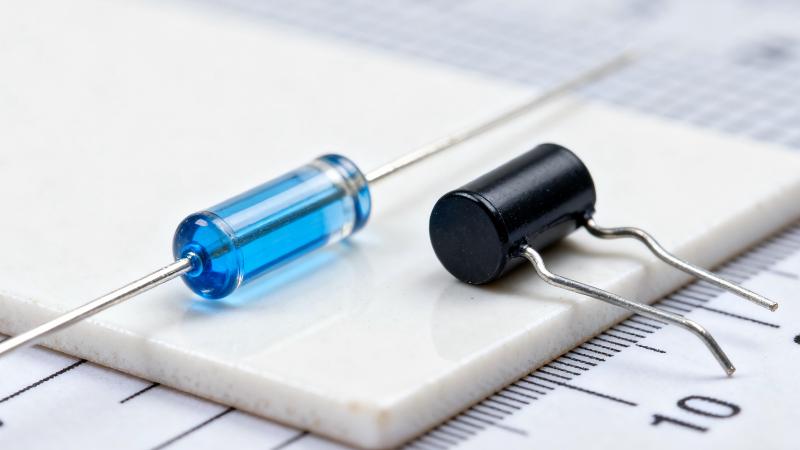
We can summarize its principle in three simple steps:
1. Breaking down barriers: Most metals (such as aluminum and titanium) will instantly form a very thin but very dense oxide film in the air. This layer of film has a very high melting point, like a layer of “armor”, which will prevent the liquid solder from coming into close contact with the base material. During ultrasonic brazing, a special welding head will transmit high-frequency vibrations to the brazing area, and the “sonic hammer” effect generated by this micro vibration can effectively break and remove the oxide film layer.
2. Capillary spreading: While applying pressure, the workpiece is heated, but the temperature is strictly controlled within the range below the melting point of the base material and above the melting point of the brazing material. At this point, the pre placed brazing material (a metal alloy with a lower melting point) will melt.
3. Metallurgical bonding: When the oxide film is “cleaned” by ultrasonic waves, the pure surface of the base material is exposed, and the melted brazing material can smoothly wet the base material, flow into the joint gap through capillary action, undergo metallurgical reaction with the base material, and form a dense and firm connection after cooling.
The most crucial thing is that the entire process usually does not require the use of brazing agents. Traditional brazing relies on chemical flux to remove oxide films, but residual flux may cause corrosion and is not environmentally friendly. Ultrasonic brazing solves this problem from a physical perspective, resulting in cleaner and more reliable joint connections.
A versatile approach to connecting dissimilar materials: latest research overview
The unique advantages of ultrasonic brazing make it shine in the field of dissimilar material connections, and research results are constantly emerging
- The connection between aluminum and copper: This is a hot topic in the power electronics and refrigeration industries. Direct welding of aluminum and copper can easily generate brittle intermetallic compounds, which affect conductivity and strength. Research has shown that by precisely controlling the duration, temperature, and pressure of ultrasonic waves, the excessive growth of compound layers can be effectively suppressed, resulting in joints with good conductivity and excellent mechanical properties.
- The connection between aluminum and titanium is urgently needed in the aerospace industry. Ultrasonic waves can effectively break the oxide film on the surface of aluminum and titanium. By using suitable aluminum based brazing materials, high-strength connections can be achieved at relatively low temperatures, providing a new approach for the manufacturing of lightweight high-temperature structural components.
- The connection between aluminum and stainless steel: The properties of aluminum and stainless steel differ greatly. Research has found that ultrasound assistance can significantly improve the wettability of brazing materials on stainless steel, and form a strong bond through instantaneous interface reactions, which may bring possibilities for the manufacturing of household appliances and chemical equipment.
- The connection between metal and non-metal (such as aluminum glass, copper ceramic): This is a huge technological breakthrough. By inducing interface reactions through ultrasound, metallurgical chemical composite connections between metals and non metals such as glass and ceramics can be achieved at low temperatures, which is of great significance for the manufacturing of advanced packaging, sensors, and vacuum devices.
- Special alloy connections (such as nickel titanium): Nickel titanium alloys are widely used in medical devices due to their shape memory effect. The low-temperature characteristics of ultrasonic brazing can avoid damage to the functionality of the base material, providing a reliable solution for the assembly of precision medical devices.
Cross border Integration: Collaborative Innovation with Other Technologies
To further enhance the capability boundary, ultrasonic brazing actively combines with other advanced manufacturing technologies to form a composite process:
- Ultrasonic laser composite technology: Laser is responsible for providing precise and localized heat sources, while ultrasonic is responsible for interface cleaning and promoting element diffusion. This “photoacoustic synergy” is particularly suitable for welding or brazing in precision fields such as microelectronic packaging.
- Ultrasonic resistance composite welding: using the heat generated by resistance welding to quickly heat the workpiece, while applying ultrasonic vibration, can improve efficiency and joint quality, and has potential applications in the spot welding field of the automotive industry.
- Ultrasonic plug welding: mainly used to drill holes and fill brazing materials on existing components, repair or add accessories through ultrasonic vibration, and has unique value in the fields of maintenance and aerospace.
Future prospects: Key research directions
Although ultrasonic brazing technology has broad prospects, there are still many challenges to be solved, and future research focus may be on:
1. Process monitoring and intelligence: Develop real-time monitoring technology for ultrasonic process parameters (such as amplitude, power) and interface reactions, achieve closed-loop control and intelligence of the process, and ensure the stability and repeatability of every connection.
2. Deep exploration of interface reaction mechanism: With the help of advanced characterization methods such as high-resolution electron microscopy, in-depth research is conducted on the diffusion, reaction, and compound formation laws at the atomic scale of heterogeneous material interfaces under the action of ultrasound, providing a theoretical foundation for material selection and process optimization.
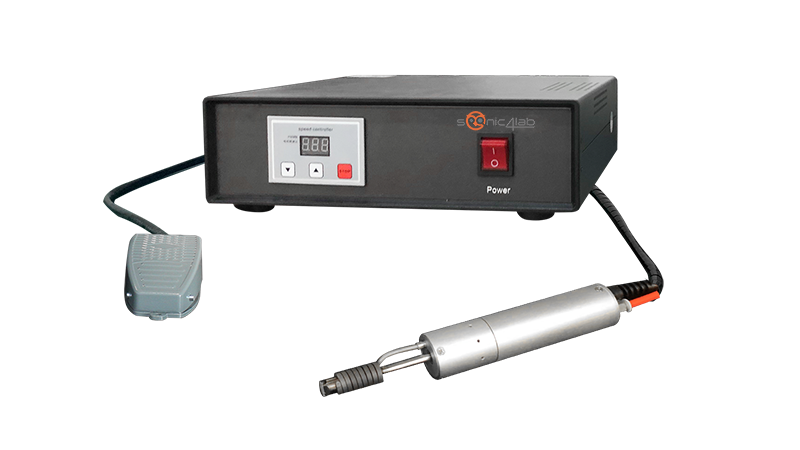
3. Development of specialized brazing materials and equipment: Design and develop specialized brazing material systems for different material combinations. At the same time, we will develop more precise and power adjustable ultrasonic brazing equipment to meet the needs of different scenarios, from microelectronics to large structural components.
4. Expansion of broader material systems: Further expand the application scope to more cutting-edge heterostructure connections such as metal and composite materials, new semiconductor materials, etc.
In summary, ultrasonic brazing, as a green, efficient, and adaptable connection technology, is constantly breaking through the boundaries of material connections. With the deepening of research and the maturity of technology, it will play an increasingly important role as a “cross-border craftsman” in advanced manufacturing in the future, laying a solid technological foundation for innovation in many high-tech fields.
If you want to purchase equipment, please click here

