
Ultrasonic Atomization Drying Technology
Temperature Control and Applications in Ultrasonic Atomization Drying Technology
In the field of powder preparation, ultrasonic atomization drying technology occupies an important position due to its high efficiency and superior product quality. The key to converting atomized solutions into dry powder lies in precisely controlling the process temperature within the range of 200–300 °C. This temperature window is not arbitrarily chosen; rather, it represents an optimal parameter set derived from the material characteristics and the underlying technical principles, directly determining the purity, activity, and application value of the final powder product.
The core principle of ultrasonic atomization is to disperse liquid materials into micron-sized droplets through high-frequency vibration. These droplets experience a sharp increase in surface area, providing the basis for rapid drying. Once the atomized droplets enter the drying chamber, the thermal environment of 200–300 °C begins to take effect. This temperature range ensures that moisture within the droplets vaporizes rapidly—achieving evaporation rates 3 to 5 times higher than under lower-temperature conditions—while avoiding excessive temperatures that could degrade the material components. Many solutions to be dried contain heat-sensitive ingredients; temperatures above 300 °C readily cause carbonization, oxidation, or deactivation of active substances, while temperatures below 200 °C prolong the drying cycle, reducing production efficiency and potentially inducing compositional changes due to prolonged heating.
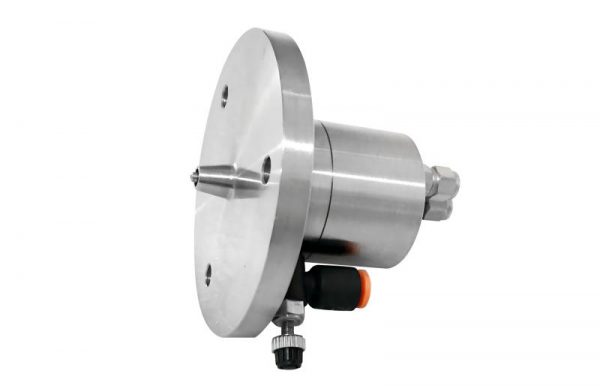
In actual production, temperature control within 200–300 °C must be coordinated with parameters such as airflow velocity and atomization frequency. The hot gas stream passes over the surface of the atomized droplets at a specific speed, simultaneously carrying away vaporized moisture and maintaining a stable temperature field. This ensures that every droplet undergoes drying under the same thermal conditions, thereby guaranteeing uniform particle size and consistent powder quality. This precise temperature control enables the technology to find wide application across multiple fields. For example, in the pharmaceutical industry, it can produce high‑purity medicinal powders with excellent solubility; in the food industry, it preserves nutritional components in raw materials to yield high‑quality food additives; and in advanced materials, it can produce ceramic or metal powders with uniform particle size distribution.
Moreover, the 200–300 °C range also offers a balance between energy consumption and safety. Compared to higher‑temperature drying processes, this range effectively reduces energy usage, aligning with energy‑saving and environmentally friendly production requirements. At the same time, the thermal environment at these temperatures is relatively stable, minimizing risks of combustion or thermal decomposition of materials, thus providing reliable safeguards for industrial‑scale production. With ongoing technological advances, the precision of temperature control in ultrasonic atomization drying continues to improve, and in the future it will be better equipped to meet the drying needs of diverse materials, driving higher‑quality development in the powder preparation industry.
About Cheersonic
Cheersonic is the leading developer and manufacturer of ultrasonic coating systems for applying precise, thin film coatings to protect, strengthen or smooth surfaces on parts and components for the microelectronics/electronics, alternative energy, medical and industrial markets, including specialized glass applications in construction and automotive.
Our coating solutions are environmentally-friendly, efficient and highly reliable, and enable dramatic reductions in overspray, savings in raw material, water and energy usage and provide improved process repeatability, transfer efficiency, high uniformity and reduced emissions.
Chinese Website: Cheersonic Provides Professional Coating Solutions
