
Research Progress on High-Thermal-Conductivity Graphite Films Derived from Polyimide
In recent years, as electronic devices continue to evolve toward miniaturization and lightweighting, high-thermal-conductivity graphite film materials have gradually become a research hotspot. This paper systematically reviews the preparation methods of graphite film materials based on polyimide (PI), with a focus on analyzing key factors affecting graphite film performance, including molecular structure, molecular orientation, and the inducing effects of other materials. It also summarizes research progress and relevant patents concerning graphite film composites, and finally offers suggestions and prospects for future research directions in this field.
Driven by rapid technological development, electronic information products are increasingly compact in structure and high in performance, yet they commonly face issues such as high heat generation, limited heat resistance of chips, and inadequate heat dissipation. Heat accumulation can severely affect the operational stability and service life of electronic devices. To address these issues, researchers have developed a series of heat-dissipation materials primarily based on lightweight, high-thermal-conductivity carbon materials. Among them, graphite films exhibit significant advantages in microelectronic packaging and integration due to their excellent electrical conductivity, thermal conductivity, and thinness.
Polyimide (PI), as a specialty engineering material, is widely used in aviation, aerospace, microelectronics, and other fields, and is renowned as a “problem solver.” As early as the 1970s, some researchers treated PI films at high temperatures of 2800–3200 °C to obtain highly oriented graphite films. Since then, numerous scholars have conducted in-depth studies on the carbonization–graphitization behavior and mechanisms of PI films. Although graphite films prepared from PI substrates outperform most thermally conductive materials in terms of performance, challenges remain, such as the need for further improvement in thermal conductivity and poor flexural resistance. To this end, researchers have further explored the key factors influencing graphite film performance and conducted in-depth investigations into enhancing specific properties such as thermal and electrical conductivity. Although research in China on PI-based graphite films started relatively late, significant progress has been made in recent years in both academic exploration and patent portfolio. This paper aims to systematically summarize the relevant research on preparing high-thermal-conductivity graphite films using PI as the substrate.
Preparation Routes for Graphite Films
Currently, the preparation of high-thermal-conductivity graphite films mainly involves four technical routes: the expanded graphite rolling method, the graphene oxide (GO) reduction method (also known as the solution-chemical method), chemical vapor deposition (CVD), and the carbonization–graphitization method of PI-type films. The expanded graphite rolling method uses natural flake graphite as raw material, which is expanded and then rolled. The GO reduction method employs chemical reagents to obtain graphene through redox reactions. CVD grows graphene on substrates such as copper or nickel using gaseous carbon sources. The PI-film carbonization–graphitization method uses polymer precursors (such as PI, polyacrylonitrile, etc.) and involves preforming, carbonization, and high-temperature graphitization to produce high-performance graphene heat spreaders or fibers. Table 1 provides a comprehensive comparison of these four technical routes.
Compared with other methods, the PI-film carbonization–graphitization route shows clear advantages in producing graphite films with high crystallinity and high orientation, making it easier to achieve high thermal conductivity. This process mainly consists of two stages: carbonization and graphitization. Carbonization is typically carried out under reduced pressure or in a nitrogen atmosphere at temperatures ranging from 800 to 1500 °C, during which appropriate pressure may be applied to prevent film wrinkling. Graphitization is performed under reduced pressure or in an inert gas atmosphere (e.g., argon or helium) at temperatures between 1800 and 3000 °C.
Early studies often used commercial PI films as substrates to investigate the carbonization–graphitization transition. For example, some researchers carbonized commercial PI films with a thickness of 25 μm and then graphitized them at various temperatures, observing cross-sectional structural changes. They found that in the 550–1000 °C range, C–N and C=O bonds break, generating and releasing CO, CO₂, and N₂, with the film mass decreasing rapidly and then stabilizing. In the 1000–2000 °C stage, the film gradually forms a turbostratic structure, non‑carbon atoms are progressively expelled, and crystallite boundaries become blurred. At 2000–2500 °C, crystallites aggregate to form graphite crystals, and the film exhibits partial graphitization characteristics. Above 2500 °C, the lattice tends to become perfect, the turbostratic structure gradually transforms into an ordered hexagonal graphite network, and the film displays highly graphitized features. Comparative experiments also revealed that a higher oxygen content in the PI molecule led to smaller initial crystallite sizes and correspondingly weaker graphitization ability. Other studies tracked the graphitization process of PI‑based carbon films from 1800 to 3200 °C and found that the structural order of graphite gradually increased with rising temperature.
Subsequently, domestic scholars conducted more detailed investigations into the carbonization process of PI films. For instance, one study analyzed the pyrolytic structural evolution of three domestic PI films heated from room temperature to 1000 °C in high‑purity nitrogen. It was found that the carbon content gradually increased with temperature, especially in the 550–700 °C range, which may be related to thermal polycondensation reactions and the cleavage of C–O and C–N bonds accompanied by new bond formation. Oxygen content decreased continuously before 800 °C, attributed to C–O bond scission and the release of oxygen as CO. Another study examined the thermal decomposition behavior of PI films heated to 1000 °C in nitrogen and found that mass loss and dimensional shrinkage were mainly concentrated in the 500–800 °C range, with changes leveling off above 800 °C.
Other scholars systematically studied the evolution of the internal structure of PI films at different carbonization temperatures and its effect on performance. The results were consistent with earlier findings: significant mass loss occurred in the 500–650 °C range; before 700 °C, the imide ring broke along C–N bonds and underwent decarboxylation, generating benzene‑ring compounds containing conjugated nitrile and isonitrile groups, which reduced oxygen content. After 700 °C, heterocyclic ring merging and removal of nitrogen and oxygen residues occurred, forming large aromatic heterocyclic polycyclic compounds, which subsequently underwent further aromatization, with graphitic hexagonal carbon network planes forming and growing. The study also found that around 700 °C, the mechanical and electrical properties of the film showed a turning point, corresponding to the structural transformation process.
Key Factors Affecting Graphite Film Performance
To broaden the research scope, scholars have moved beyond commercial PI films and started using self‑synthesized monomers to prepare PI films. They found that the main factors affecting graphitization performance include chemical structure, molecular orientation, and the catalytic effects of dopants.
Effect of Molecular Structure
In one study, two typical aromatic PI films (structures shown in Figure 1) were graphitized at 3000 °C, and a magnetic field was applied perpendicularly in a liquid‑nitrogen environment. The transverse magnetoresistance was measured to analyze the effect of heating rate on graphite film performance. The results showed that the graphitization degree of the first PI film increased with heating rate, while the crystallinity of the second film reached a maximum at 2 °C/min, indicating that conformational changes in the PI molecule are a key factor affecting graphite crystallization.
Another study prepared PI substrates from monomers in a specific ratio (structures shown in Figure 2). The films were slowly heated to 900 °C in nitrogen and held, then stepwise heated to 3200 °C in argon for graphitization. The obtained graphite films exhibited quality comparable to highly oriented pyrolytic graphite.
Other scholars converted different polyamic acids into polyamide esters, which were then imidized and subsequently carbonized–graphitized, systematically comparing the effects of different PI precursor structures on the final product properties. The results showed that PI films derived from specific monomers via esterification exhibited higher graphitization ability, and the orientation of the graphitized films increased with the esterification ratio. In addition, the size of the leaving group and the tensile modulus of the PI film also affected the orientation degree of the final graphite films, whereas certain monomer combinations forming polyamide esters showed no significant effect on the orientation of graphitized films after imidization.
Effect of Molecular Orientation
Studies have shown that the thickness of the PI substrate significantly affects its graphitization behavior: a smaller film thickness leads to higher in‑plane molecular orientation and consequently higher crystallinity of the resulting graphite film.
Another study compared the graphitization performance of three rigid‑chain PI films subjected to uniaxial and biaxial pre‑stretching treatments at the polyamic acid stage. It was found that the ordered crystalline structure of the polyamic acid films played a key role in forming highly graphitized films during the carbonization–graphitization process. Biaxial stretching effectively improved graphite crystallinity and graphitization degree, whereas uniaxially stretched samples, having more structural defects, exhibited lower magnetoresistance and electrical conductivity than both biaxially stretched and unstretched samples.
Catalytic Effects of Other Dopants
Introducing small amounts of catalysts is an effective way to promote graphitization and enhance the graphitization degree. Commonly used catalysts include metals, non‑metals, and their compounds.
Metal catalysts
In one study, iron complexes were introduced into a polyamic acid solution, and after thermal imidization, iron‑containing PI films were obtained. Carbonization at 600–1200 °C revealed that iron promoted the carbonization process and increased electrical conductivity. However, above 1200 °C, the iron particles underwent a magnetic transition, and the conductivity of the iron‑containing and pure PI carbon films converged. Other experiments showed that under nickel catalysis, PI films carbonized at 1600 °C could form near‑perfect graphite crystal structures, indicating that nickel particles play an important role in enhancing the graphitization degree.
Non‑metal and compound catalysts
Boron atoms can form solid solutions with carbon. Some researchers graphitized boron‑containing PI films at 1200–2600 °C and found that B–N bonds formed at about 800 °C, subsequently broke at 1200 °C, and partially substituted carbon sites. Boron diffused through interstices to connect carbon atoms across fault planes, reducing interlayer spacing, but also increased structural disorder, which was detrimental to graphite structure development and also affected the electrical conductivity of the carbon films.
In another study, silicon carbide nanoparticles were added to polyamic acid to prepare PI films, which were carbonized at various temperatures and graphitized at 2300 °C. It was found that with increasing SiC content, both graphitization degree and crystallite size improved. At a 3% SiC loading, the sheet resistance of the graphitized films dropped to 0.96 Ω, confirming that SiC nanoparticles have both catalytic and reinforcing effects on the carbonization–graphitization of PI films. At high temperatures, SiC undergoes a crystalline transformation and decomposes, releasing silicon vapor and easily graphitizable carbon, thereby enhancing the graphitization degree of the material.
Other scholars introduced reduced graphene oxide (RGO) suspensions at different ratios into polyamic acid to prepare RGO/PI composite films. After carbonization and graphitization at 2300 °C, the graphite film containing 3% RGO showed a graphitization degree of 37.2%, indicating that RGO sheets have a significant inducing effect during graphitization.
Research on Graphite Film Composites in Thermal Conduction
Table 2 compares the key parameters of commonly used thermally conductive materials. Compared with other materials, PI‑based graphite films offer advantages such as low density, light weight, and high melting point, making them suitable for a wide range of applications. However, the following issues remain:
1. Thermal conductivity still has room for improvement. Although their thermal conductivity surpasses that of most materials, interlayer gaps limit further optimization.
2. Poor toughness and flexural resistance. The breakage and recombination of chemical bonds at high temperatures, along with the escape of non‑carbon atoms, create microscopic defects that reduce material toughness.
3. High energy consumption in processing. Carbonization and graphitization are performed in separate steps, consuming significant energy, and intermittent production leads to low efficiency.
To address these issues, researchers have proposed compounding PI with other lightweight, highly thermally conductive carbon materials, offering new approaches to solving the above problems.
Graphite Films Prepared with Polyimide as the Main Component
In one study, graphene oxide and reduced graphene oxide were separately incorporated into polyamic acid solutions, and composite films were obtained after thermal imidization and high‑temperature carbonization. The results showed that after carbonization at 1500 °C, the composite film containing 2% GO achieved a thermal conductivity of 172.69 W/(m·K), which was 112% and 184% higher than those of the corresponding RGO composite and pure PI films, respectively. The study indicated that the hydroxyl and carboxyl groups on GO can form covalent bonds with monomers, helping to fill defects in the carbon film and guiding the polymer toward a turbostratic structure during carbonization, thereby improving thermal conductivity. In contrast, RGO is mainly incorporated through physical doping, and its disordered distribution results in lower thermal and flexural performance compared to the GO system.
Other scholars constructed a three‑dimensional GO hybrid structure on a PI skeleton via a dip‑coating method, followed by high‑temperature annealing and rolling to obtain flexible graphene/PI composite films. This material exhibited excellent flexibility, high tensile strength, and elastic modulus, with in‑plane and through‑plane thermal conductivities reaching 150 W/(m·K) and 1428 W/(m·K), respectively. A foldable origami heat sink developed from this material demonstrated heat dissipation capability surpassing that of copper, providing a new solution for thermal management of high‑power flexible devices.
Graphite Films Composites with Other Carbon Materials as the Main Component
A “molecular welding” strategy was proposed, using PI as a “solder” to covalently connect graphene sheets, and g‑GO/PI hybrid films were prepared via carbonization–graphitization. The preliminary preparation route is shown in Figure 4, where GO/PAA films were obtained by evaporation‑induced self‑assembly, followed by imidization and high‑temperature treatment to convert them into graphite films. With only 1% PI addition, the thermal conductivity of the composite film increased by 21.9%. To address the issue of non‑uniform PI dispersion, an improved route (Figure 5) employed a grafting strategy to introduce active sites onto GO, followed by in‑situ polymerization to form composite films. The final g‑GO/PI‑7% film exhibited a thermal conductivity of 52 W/(m·K), an increase of 92.3% over that of pure graphene film, along with excellent flexural resistance.
Overall, graphite films prepared from PI combined with carbon materials outperform single‑component systems in both thermal and mechanical properties. In composite systems with PI as the main component and GO as the filler, the introduction of a small amount of GO not only induces PI carbonization and lowers the processing temperature but also fills structural defects, thereby significantly enhancing thermal conductivity.
Summary and Outlook
The preparation of graphite films via carbonization–graphitization of PI‑type films has established a relatively systematic theoretical framework, and various approaches have been proposed to improve thermal conductivity. Nevertheless, the field still faces the following challenges:
1. Research directions are relatively concentrated, with most work focusing on improving thermal conductivity through compounding with carbon materials.
2. Most achievements remain at the laboratory stage and have not yet reached large‑scale or industrial application.
Given the growing market demand and quality requirements for graphite films, future research should not only improve the quality of PI substrates and the thermal conductivity of graphite films but also focus on reducing production costs and simplifying process flows, so as to provide new pathways and methods for promoting the industrial application of high‑thermal‑conductivity graphite films.
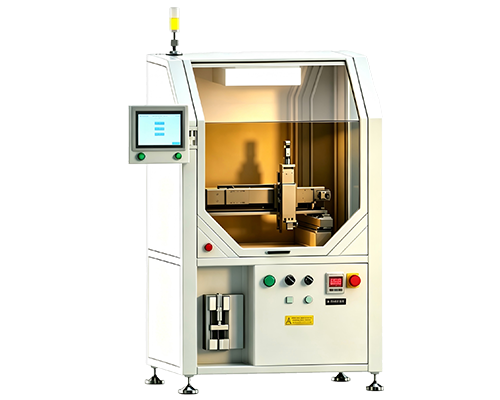
At present, the preparation of PI‑based composite graphite films mostly employs dip‑coating or solution‑blending processes, which suffer from agglomeration of nanofillers, uneven coating thickness, and high internal porosity, limiting the thermal and mechanical performance of the graphite films. Ultrasonic spraying technology can atomize polyamic acid, graphene oxide, and nano‑catalytic particle suspensions, enabling the preparation of ultra‑thin, uniform, and agglomeration‑free precursor coatings. By constructing a well‑organized hybrid carbon three‑dimensional network through layer‑by‑layer controllable spraying, this approach ensures high molecular orientation of PI while reducing microscopic defects in the graphite film and lowering the energy consumption of high‑temperature heat treatment. It represents a highly promising novel coating method for optimizing the preparation process of PI‑based high‑thermal‑conductivity graphite films.
About Cheersonic
Cheersonic is the leading developer and manufacturer of ultrasonic coating systems for applying precise, thin film coatings to protect, strengthen or smooth surfaces on parts and components for the microelectronics/electronics, alternative energy, medical and industrial markets, including specialized glass applications in construction and automotive.
Our coating solutions are environmentally-friendly, efficient and highly reliable, and enable dramatic reductions in overspray, savings in raw material, water and energy usage and provide improved process repeatability, transfer efficiency, high uniformity and reduced emissions.
Chinese Website: Cheersonic Provides Professional Coating Solutions
