Reasons for Poor Lithium Deposition in Lithium-ion Battery Cells
Reasons for poor lithium deposition in lithium-ion cells and their improvement
Lithium plating refers to the phenomenon where lithium ions undergo a reduction reaction on the surface of the negative electrode, resulting in the deposition of metallic lithium. This process differs from the normal intercalation of lithium ions into the layered structure of the negative electrode material. It can be understood as a situation where some lithium atoms fail to intercalate in a timely manner and are “trapped” on the electrode surface, gradually forming metallic dendrites.
The following systematically elaborates on the main causes of lithium deposition and improvement strategies from four dimensions: cell design, material system, manufacturing process, and usage conditions.
Cell design and material system
1. Insufficient negative electrode redundancy capacity (low N/P ratio)
- Reason: When the N/P ratio (negative electrode to positive electrode capacity ratio) is too low (such as <1.1), the negative electrode cannot fully accommodate the lithium ions released from the positive electrode, especially at the end of charging, where excess lithium ions are prone to depositing on the surface.
- Improvement strategies:
– Reasonably increase the N/P ratio (such as 1.1–1.2 or higher) to provide sufficient capacity redundancy for the negative electrode;
– Utilize high-capacity anode materials (such as silicon-carbon composite materials) to provide more lithium storage sites within a limited volume/mass.

2. Mismatch of electrolyte system
- Reason: The composition of the electrolyte (lithium salt, solvent, additives) affects the ionic conductivity and the quality of the solid electrolyte interface (SEI) film. Poor film formation or low conductivity can easily lead to increased polarization, triggering lithium deposition.
- Improvement strategies:
– Introduce excellent film-forming additives (such as FEC, VC) to construct a dense and stable SEI film, promoting uniform insertion of lithium ions;
– Optimize the ratio of lithium salt to solvent, enhance the conductivity of the electrolyte, and improve ion transport;
– Develop new lithium salts (such as LiFSI) to enhance thermal stability and low-temperature performance.
3. Insufficient kinetic performance of anode material
- Reason: For example, the lithium insertion rate of graphite anode is slow under low temperature or high rate conditions, and surface deposition occurs before lithium ions are inserted in time.
- Improvement strategies:
– Surface modification (coating, oxidation, doping) of graphite to enhance ionic conductivity and lithium insertion kinetics;
– Develop and apply fast-charging anode materials (such as lithium titanate), which have stable structures and fast ion diffusion, and can significantly inhibit lithium deposition. However, it is important to note their characteristics of high voltage platform and low energy density.
Manufacturing Process
1. Uneven surface density of the pole piece
- Reason: Uneven coating results in locally low areal density, leading to excessively high current density in that area. This makes it difficult for lithium ions to be inserted in a concentrated manner, resulting in lithium deposition.
- Improvement strategies:
– Improve the consistency of the coating process and strictly control the fluctuations in areal density and compaction density;
– Introduce online monitoring methods (such as X-ray and beta-ray detection) to screen unqualified electrode sheets in real time.
2. Insufficient electrolyte wetting
- Reason: Improper liquid injection or aging process, insufficient penetration of electrolyte into the electrode and separator, high ion transmission resistance, and increased local polarization.
- Improvement strategies:
– Optimize the infiltration conditions, such as using vacuum infusion, multi-stage aging, temperature-controlled infiltration, etc;
– Balance energy density and cost, and design a reasonable electrolyte inventory.
3. The rolling process is too strong
- Reason: Although excessive rolling can increase energy density, it can damage the graphite structure, reduce porosity, hinder lithium ion transport, and potentially damage the existing SEI film.
- Improvement strategies:
– Optimize the roll pressing parameters to balance the compaction density and electrode kinetic performance, while maintaining an appropriate pore structure.
Conditions of use
1. Charging at low temperature
- Reason: At low temperatures, the viscosity of the electrolyte increases and the conductivity decreases. Simultaneously, the kinetics of lithium insertion in the negative electrode slows down significantly, leading to a substantial increase in the tendency for lithium deposition.
- Improvement strategies:
– Implement temperature-sensing charging control through BMS, limiting charging current or prohibiting charging in low temperature environments;
– Equipped with a preheating device, enabling the battery to be charged within a suitable temperature range (such as 10–25°C).
2. High-rate charging
- Reason: High current causes a large influx of lithium ions to the negative electrode in a short period of time, exceeding its upper limit of insertion rate, resulting in surface accumulation.
- Improvement strategies:
– Design intelligent charging protocols (such as multi-stage CC-CV, pulse charging), with current reduction and slow charging in the high-voltage stage;
– Fundamentally enhance the fast-charging performance of anode materials and the conductivity of electrolytes.
3. Overcharging
- Reason: The voltage exceeds the design upper limit, leading to excessive delithiation of the positive electrode, which far exceeds the accommodation capacity of the negative electrode, inevitably causing severe lithium deposition.
- Improvement strategies:
– Strengthen the real-time monitoring and protection of voltage by BMS to resolutely prevent overcharging.
How to determine whether lithium precipitation has occurred?
– Disassembly observation: After cycling, a grayish-white metallic luster area appears on the surface of the negative electrode (normally copper-gold or black);
– Electrical performance degradation: rapid capacity decay and significant increase in internal resistance;
– Differential capacity (dV/dQ) analysis: The charge-discharge curve is abnormal, exhibiting non-characteristic peaks or plateaus;
– Characteristics after the drop in electrostatic voltage: The appearance of a plateau in the voltage relaxation curve after low-temperature charging is a typical signal of lithium deposition.
Lithium precipitation is often the result of multiple factors working together, necessitating systematic measures and comprehensive prevention and control from three aspects: material design, process manufacturing, and usage management.
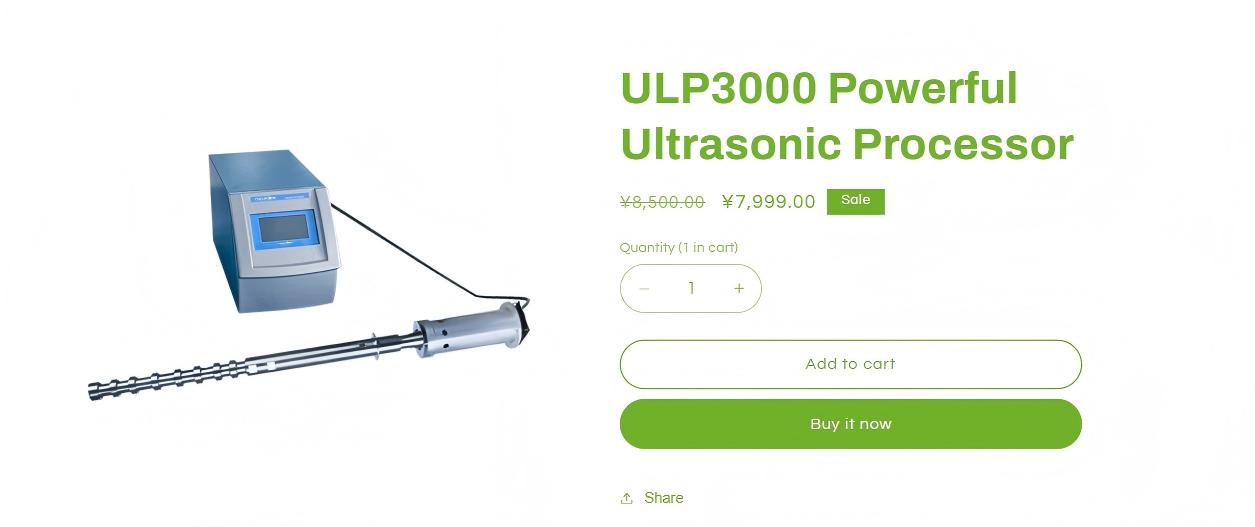
Ultrasonic dispersion of lithium battery slurry
The dispersion quality of lithium battery slurry directly determines the electrode performance and battery capacity. Ultrasonic dispersion equipment, with its unique advantages, has become a core process equipment in this field. It generates a “cavitation effect” in the slurry through high-frequency mechanical vibration (typically 20-40kHz), forming a large number of tiny bubbles that instantly collapse, releasing energy that can efficiently break the agglomerated particles of active materials, conductive agents, and binders, achieving nanoscale uniform dispersion.
Compared to traditional mechanical mixing, this equipment eliminates the need for high-speed shearing, reducing the breakage of active material particles and minimizing viscosity fluctuations in the slurry. This significantly enhances the stability of the slurry, extending the settling and stratification time by over 30%. In process applications, it can accommodate slurries with different solid contents (30%-70%). By adjusting the amplitude and processing time, the dispersion effect can be precisely controlled, ensuring that the uniformity error of the electrode coating is within 5%. This, in turn, improves the battery’s cycle life and capacity retention. Currently, this equipment has been widely used in the large-scale production of power batteries, providing reliable technical support for enhancing battery energy density and production efficiency.