
PTFE Coating for Medical Catheter
Medical catheter coatings are functional films prepared on the surface of catheter substrates such as PU, PEBAX, PE, PP, silicone, and PEEK. They primarily address clinical problems such as high friction during insertion, vascular endothelial damage, thrombosis, bacterial colonization and infection, and drug release. They are widely used in vascular interventional, urological, neurological, central venous, and balloon catheters.
Mainstream Coating Classifications, Materials, and Applications
1. Hydrophilic Lubricating Coating (Most Commonly Used External Coating for Interventional Catheters)
- Materials: PVP, PU hydrogel, PEG, zwitterionic acid (SBMA), hyaluronic acid (HA). Generally, a two-layer structure of primer + functional topcoat is used to improve adhesion.
- Performance: Absorbs water upon contact with body fluids to form a hydrating layer; friction coefficient can be as low as 0.03-0.1; coating thickness 0.5-5μm.
- Applications: Coronary catheters, microcatheters, ureteral catheters, neurointerventional catheters; reduces insertion resistance and tissue abrasion.
- Risks: Coating detachment leading to microparticles, insufficient lubrication durability; registration focuses on microparticles, immersion friction attenuation, and biocompatibility.
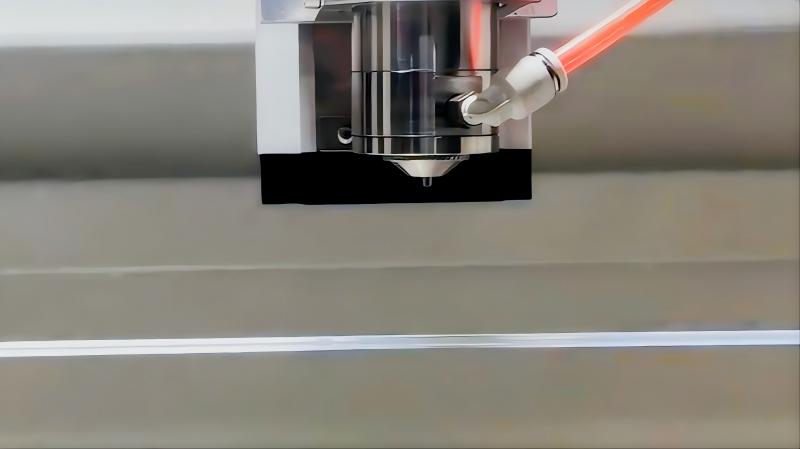
2. Hydrophobic Lubricating PTFE (Polytetrafluoroethylene) Coating
- Characteristics: Dry lubrication, not dependent on water activation; chemically and corrosively resistant to body fluids; commonly used as an inner coating for catheters, facilitating guidewire insertion and advancement.
- Thickness: Tens of nanometers to several micrometers. Applications: Guide catheter inner lumen, pusher outer layer; not suitable for direct contact with blood vessels as an outer hydrophilic layer.
3. Antithrombotic Coating
- Heparin coating: Inhibits coagulation, mostly used in central venous catheters (CVCs) to reduce catheter-related blood flow (CRT).
- Phospholipid PC, zwitterionic coating: Anti-protein and antiplatelet adsorption, reducing thrombotic factors.
4. Antibacterial Coating
- System: Heparin-antibacterial complex, quaternary ammonium salt, nano-silver, drug-loaded coating.
- Purpose: Inhibits bacterial adhesion and reduces catheter-related blood flow infection (CRBSI); essential for central venous and dialysis catheters.
5. Drug-Release Coating
- Drugs: Paclitaxel, rapamycin, etc.; used in balloon catheters to inhibit restenosis.
- Process: Co-coating of drugs with polymeric carriers to achieve controlled release; extremely high requirements for coating uniformity and drug loading consistency.
6. Parylene Coating
Ultra-thin insulating protection, moisture-proof and corrosion-resistant, mostly used in special active catheters, rarely used for lubrication.
Comparison of Mainstream Manufacturing Processes
1. Dip Coating (Traditional): Low equipment cost; Disadvantages: Uneven thickness, thicker at both ends and thinner in the middle, prone to sagging, high material loss, poor consistency for slender/irregularly shaped catheters.
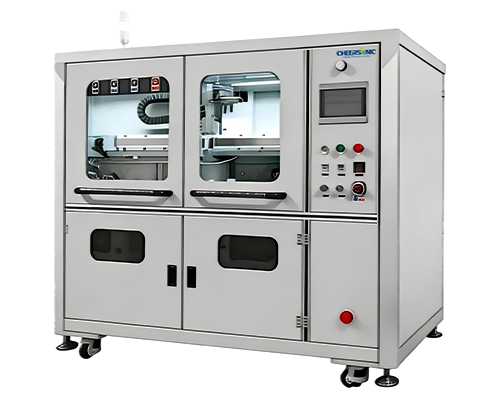
2. Ultrasonic Spraying (Mainstream for Mass Production of Interventional Catheters): Ultrasonic atomization, combined with catheter rotation + axial gun movement; controllable thickness ±1μm, uniform coating, high material utilization; can be used for hydrophilic, PTFE, and drug-eluting composite coatings; suitable for slender catheters, braided catheters, and complex workpieces with imaging rings; can seal cavities to meet medical clean production environments, accommodating both R&D prototyping and pilot-scale mass production.
3. Plasma Grafting: First, plasma activates the substrate, then in-situ grafts hydrophilic polymers; excellent adhesion, but expensive equipment and relatively low efficiency.
4. Magnetron Sputtering, DLC: Mostly used for metal catheter components; rarely used directly on polymer catheters.
Key pre-processing steps: Low surface energy substrates such as PEBAX and PP typically require plasma activation followed by a primer coating; otherwise, the coating will peel and flake off.
Typical Substrate Compatibility
- PEBAX: Mainstream of interventional catheters, low surface energy, requires primer treatment, compatible with hydrophilic and PTFE coatings.
- PU (Polyurethane): Intravenous catheters, hydrophilic and heparin antibacterial coatings.
- PEEK: Nerve/minimally invasive catheters, inert substrate, plasma pretreatment is essential.
- Silicone: Urinary catheters, hydrophilic and antibacterial coatings.
Key Technical Indicators & Registration Concerns
1. Coating Thickness Uniformity: Hydrophilic 0.5-5μm; PTFE 0.1-3μm; precise drug loading.
2. Coefficient of Friction: Dry state, after water immersion; durability degradation after repeated friction.
3. Coating Adhesion: No peeling or flaking after immersion and repeated friction.
4. Particulate Detection: Particulate matter detached from the coating is a key risk item for NMPA and FDA.
5. Biological Evaluation: Cytotoxicity, hemolysis, sensitization, irritation; anticoagulation/antibacterial requires corresponding functional verification.
6. Curing Window: UV curing/ Thermosetting requires strict temperature control to prevent deformation of the polymer catheter.
Clinical Pain Points and Technical Challenges
1. Uneven coating thickness at the edges of slender catheters, braided structures, and radiopaque rings;
2. Coating swelling and peeling under prolonged immersion in body fluids;
3. Consistency of drug loading across batches of the coating;
4. Control of coating particles; no globally unified threshold, requiring comparative risk assessment.
Key Points of Ultrasonic Spray Coating System for Catheters
– Configuration: Sealed cavity, workpiece rotation mechanism, multi-axis motion, ultrasonic nozzle, solvent recovery, hot air/UV curing module
– Capabilities: Single-layer hydrophilic coating, PTFE inner wall outer coating, alternating spraying of primer-functional layer-drug-loaded multilayer coatings
– Suitable for: Development and mass production of microcatheters, balloon catheters, central venous catheters, and neurointerventional catheters.
About Cheersonic
Cheersonic is the leading developer and manufacturer of ultrasonic coating systems for applying precise, thin film coatings to protect, strengthen or smooth surfaces on parts and components for the microelectronics/electronics, alternative energy, medical and industrial markets, including specialized glass applications in construction and automotive.
Our coating solutions are environmentally-friendly, efficient and highly reliable, and enable dramatic reductions in overspray, savings in raw material, water and energy usage and provide improved process repeatability, transfer efficiency, high uniformity and reduced emissions.
If you have any technical questions, customization demands, or procurement inquiries about ultrasonic atomization nozzles, feel free to contact our professional sales and technical team for detailed parameters, customized solutions, and industry application support.
Email: market2@cheersonic.com