
Preparation Process of Photoresist Resin
Preparation Process of Photoresist Resin – Chemisonic
In the field of microelectronics manufacturing, with the continuous advancement of semiconductor technology, photolithography process is one of the key links, and the preparation process and quality control of its core material – photoresist resin are particularly critical. The performance of photoresist resin is not only related to the precision and production efficiency of the pattern, but also influenced by the comprehensive factors of raw material ratio, reaction environment, process parameters, and subsequent physicochemical properties of the material.
Raw material selection and formula design
The synthesis of photoresist resin requires the use of various raw materials, mainly including resin body, solvents, photosensitive components, and crosslinking components. In terms of resin body selection, phenolic resins (such as Novolak type resins, chemical formula can be expressed as C ₆ H ₅ CH ₂ OH) and polyimide materials (such as PI resins, chemical structure is (C ₆ H ₄) ₂ C (O) N (CO) C ₆ H ₄) are more common. The former is widely adopted due to its excellent photoresponsiveness and chemical tolerance; The latter is commonly used in harsh lithography processes due to its excellent high temperature and corrosion resistance. The choice of solvent is related to the dissolution behavior and coating performance of the resin. Common solvents include ethanol (C ₂ H ₅ OH), acetone (CH ∝ COCH ∝), and dimethyl sulfoxide (DMSO, C ₂ H ₆ SO). Photosensitive components are used to enhance the sensitivity of resins to ultraviolet light, commonly including styrene based compounds (such as styrene, C ₈ H ₈) and some nitrogen-containing structures (such as diphenylphosphonic acid, (C ₆ H ₅) ₂ POOH). Cross linked components enhance the mechanical properties and thermal stability of materials by forming a cross-linked network structure. Typical representatives include diisocyanates (such as 1,6-hexanedioic acid, C ₈ H ₁ N ₂ O ₂) and epoxy resins (such as bisphenol A epoxy resin, C ₂ H ₂ O ₄).
By precisely adjusting the ratio of various raw materials, the performance of photoresist resin can be effectively regulated. Taking a typical formula as an example, the ratio of resin main body to photosensitive component is mostly between 5:1 and 10:1, the proportion of crosslinking component is generally 1% -5%, and the solvent usually accounts for 40% -60% of the overall formula.
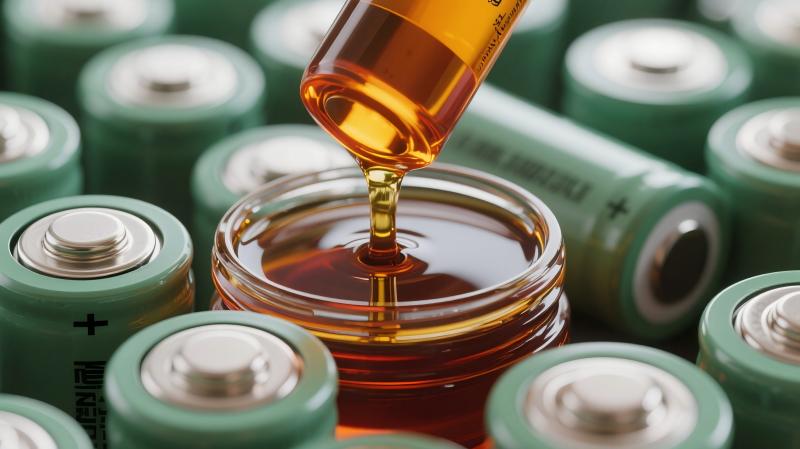
Preparation process flow
1. Types of polymerization reactions
Common polymerization methods include free radical polymerization and gel polymerization.
Free radical polymerization is widely used in the synthesis of photoresist resins due to its mild reaction conditions and wide range of monomer applications. This reaction is generally initiated at 50-80 ℃ under the action of initiators such as sodium persulfate, AIBN, etc., and promotes monomer polymerization through free radical mechanisms. Taking styrene (C ₈ H ₈) as an example, it can polymerize into polystyrene with higher molecular weight in the presence of an initiator system. The reaction time is generally controlled within 4-6 hours, and the resulting polymer molecular weight is often between 10000 and 100000, which is affected by temperature, monomer feeding, and initiator dosage.
Gel polymerization is mainly used to build three-dimensional network resin system. In this process, a crosslinking agent (such as diisocyanate, C ₈ H ₁ ₂ N ₂ O ₂) is introduced to react with active groups (such as hydroxyl groups) on the polymer chain under high temperature conditions, forming a stable spatial network. The reaction temperature is usually 80-120 ℃ and the duration is about 6-8 hours. By adjusting the ratio of crosslinking agent to monomer (usually 100:1 to 100:3), the hardness and strength of the resin can be effectively controlled, thereby improving its resistance to solvent corrosion and high temperature stability.
2. Dissolution and dilution process
After resin synthesis, it needs to be dissolved with appropriate solvents to obtain viscosity and flowability suitable for coating. Common solvents include ethanol, acetone, dimethyl sulfoxide, etc., which can effectively dissolve the resin matrix and impart good flow characteristics to the system. Taking acetone as an example, during the dissolution process, the mass ratio of solvent to resin is usually 1:1 to 2:1 to ensure that the solution is neither too thick to affect coating nor too thin to cause uneven film thickness. The dissolution temperature is generally controlled at 30-50 ℃ to balance dissolution efficiency and prevent thermal decomposition. In some processes, attention should also be paid to the solvent evaporation rate, as too fast evaporation can cause local concentration fluctuations. If the viscosity of the system is too high, it can be adjusted by adding diluents (such as n-butanol, dichloromethane, etc.), and the target viscosity is usually set at 200-500 cP.
3. Stability and particle control
To improve the storage and use stability of resins, it is often necessary to introduce stabilizing agents (such as antioxidants, UV stabilizers, etc.). For example, antioxidant BHT (C ₁₅ H ₂₂ O) can effectively inhibit degradation reactions caused by free radicals, thereby extending the lifespan of materials. In addition, particle size has a significant impact on lithography resolution, and it is usually necessary to control the particle size between 0.1-1 μ m. To achieve the desired particle size distribution, methods such as high shear stirring or ultrasonic dispersion can be used. By adjusting the stirring speed and time, particle agglomeration can be reduced; Ultrasonic treatment can further refine particles and improve system uniformity through high-frequency vibration.
Key process parameters
1. The influence of reaction temperature, time, and stirring conditions
The temperature, duration, and stirring intensity during the reaction process will significantly affect the degree of polymerization, molecular weight, and final performance of the resin.
2. The effect of different process conditions on resin properties
Process variables such as reaction temperature, time, stirring intensity, and solvent concentration have a significant impact on the molecular weight, viscosity, photosensitivity, mechanical strength, thermal stability, and graphic analysis ability of the resin.
Quality control of photoresist resin
Physical performance testing
1. Particle size distribution
The uniformity of particle size distribution in resin directly affects the quality of the coating film layer, thereby interfering with the light transmission and graphic accuracy during the exposure process. Laser particle size analyzer is usually used for testing, and the ideal photoresist resin particles should be concentrated between 0.1-0.5 μ m. Experiments have shown that when the particle size is between 0.15-0.4 μ m, the pattern refinement and process stability are optimal. If the particles are too large (>0.5 μ m), it can easily lead to uneven film layers; If it is too small (<0.1 μ m), it may increase the viscosity of the system and affect the coating effect.
2. Viscosity and fluidity
Appropriate viscosity is helpful for stable control of film thickness during the coating process. High viscosity (such as>1200 cP) can easily cause uneven coating, while low viscosity may lead to insufficient film thickness. In conventional processes, resin viscosity is generally controlled between 500-1000 cP, with around 900 cP being optimal. Viscosity measurement often uses a rotational viscometer to evaluate its coating adaptability through rheological curves at different shear rates. At the same time, good fluidity helps to achieve uniform film formation and requires comprehensive control during the process.
3. Solubility and dry film thickness
The complete dissolution time of resin at room temperature generally does not exceed 30 minutes. If the dissolution time is too long, it may indicate abnormalities in the formula or raw materials. The dry film thickness is another key factor affecting the accuracy of graphic analysis, generally controlled at 0.5-2 μ m, and commonly set at around 1 μ m in common processes. The film thickness can be accurately measured using devices such as profilometers. The coating amount and curing time are the main means of adjusting the dry film thickness. A thin film layer may cause blurry graphics, while a thick film layer can affect the quality of exposure imaging.
Chemical performance testing
1. UV absorption performance
Resin should have good absorption ability in the ultraviolet region (especially around 365 nm) to meet the requirements of conventional exposure light sources. The absorbance in the 200-400 nm wavelength range can be measured using a UV visible spectrometer, typically requiring A ≥ 1.5 to ensure sufficient photochemical reactions during the exposure process. Research has shown that when the absorbance of the resin reaches around 2.0 at 365 nm, its photosensitivity and graphic resolution are superior.
2. Performance changes after exposure
During the exposure process, the photosensitive components in the resin undergo cross-linking or degradation reactions, thereby changing their solubility and mechanical properties. Experimental data shows that the crosslinking degree of the resin usually increases by 20% -40% after exposure, which helps the pattern to remain stable during the development process. The degree of crosslinking can be characterized by infrared spectroscopy. Attention should be paid to controlling the exposure dose within a reasonable range. Excessive exposure may lead to excessive cross-linking, causing the film layer to become brittle and reducing graphic accuracy.
Summary
The preparation process and quality control of photoresist resin are the core to ensure the yield of semiconductor manufacturing. From raw material screening, formula design to polymerization reaction, dissolution and dilution, and particle control, every step needs to be strictly optimized. By precise control of key parameters such as temperature, time, and stirring intensity, the uniformity and overall performance of the resin can be significantly improved. The physical properties (such as particle size, viscosity, and film thickness) and chemical properties (such as UV absorption and post exposure behavior) jointly determine the quality of photolithography patterns. With the continuous development of semiconductor technology towards higher integration, higher requirements have been put forward for the performance of photoresist resins. In the future, research and development will focus on developing new resin systems with higher resolution and stronger environmental adaptability to cope with increasingly complex process challenges.
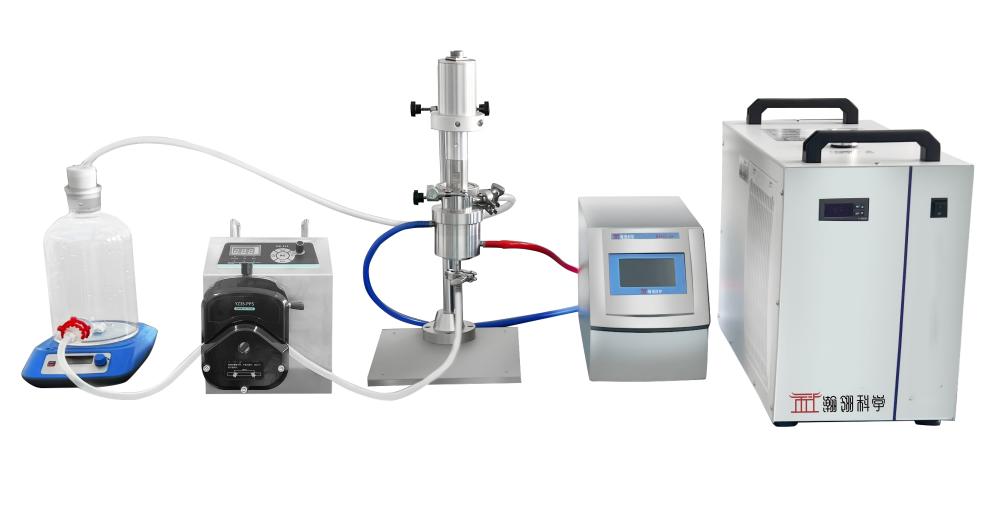
Ultrasonic dispersion is a feasible and commonly used auxiliary method in the preparation process of photoresist resin, mainly used to improve the uniformity of material mixing and dispersion effect.
1. Core advantages of ultrasound dispersion
Ultrasonic dispersion plays a role in the cavitation effect generated by high-frequency sound wave vibration, and its core value is reflected in the following three points:
- Efficient elimination of agglomeration: It can effectively disperse small particle aggregates that may occur during resin synthesis, avoiding defects in subsequent photoresist.
- Improving mixing uniformity: Compared to traditional mechanical stirring, it can achieve molecular level uniform mixing of components such as resin, monomers, and initiators in a shorter time.
- Reduce system viscosity: In some high viscosity resin systems, ultrasonic vibration can temporarily reduce material viscosity and assist in the uniform dispersion of other additives.
2. Application scenarios and precautions
Ultrasonic dispersion is not necessary throughout the entire process and should be used in conjunction with specific process stages and resin types, while also paying attention to the following points:
- Applicable scenarios: Mainly used in the mixing stage of resin prepolymers and functional additives (such as photosensitizers and crosslinking agents), or in the addition and dispersion process of nano fillers (such as silica).
- Key parameter control: It is necessary to strictly control the ultrasonic power and time. Excessive power or time may cause the resin molecular chain to break, affecting the final performance of the photoresist.
- Suitable resin types: More suitable for common photoresist resins such as acrylic and epoxy resins. For some thermosensitive resins, it is necessary to reduce the ultrasonic temperature and shorten the time.
Chemisonic specializes in ultrasonic liquid processing technology. For decades, we have dedicated to designing, developing, and manufacturing ultrasonic liquid processors independently, from laboratory application to industrial level. Cutting-edge ultrasonic technology, high quality device and easy-to-use operating system are the fundamentals for our company to achieve continued business growth.