Lithium Battery and Sodium Battery Eectrolyte Formulations
Analysis of differences in electrolyte formulations between lithium-ion and sodium-ion batteries
Although lithium batteries and sodium batteries belong to the same ion battery system, relying on the migration of ions between the positive and negative electrodes to store and release energy, they exhibit significant differences in electrolyte formulations. Due to the distinct ionic characteristics of lithium and sodium, they manifest unique features in solute selection, solvent composition, and additive application. Although both electrolytes appear as liquid media, their underlying design philosophies and material systems differ fundamentally.
1. Selection of solute
Lithium battery electrolytes typically use lithium salts as solutes, with lithium hexafluorophosphate (LiPF₆) being the mainstream. This type of lithium salt has strong dissociation ability, capable of efficiently releasing lithium ions in carbonate solvents and assisting in the formation of a stable solid electrolyte interface (SEI) film on the anode.
Sodium batteries commonly use sodium hexafluorophosphate (NaPF₆) as the basic solute. However, due to the larger radius of sodium ions compared to lithium ions, their dissociation ability is relatively weaker, resulting in a generally lower conductivity of the electrolyte at the same concentration. For a comprehensive consideration of cost control and performance optimization, sodium batteries also often use sodium salts such as sodium tetrafluoroborate (NaBF₄) or sodium perchlorate (NaClO₄).
The fundamental difference stems from the size of ions: lithium ions are capable of forming a stable and tightly packed solvation structure with carbonate solvents, whereas the solvation layer of sodium ions is relatively loose. Therefore, higher requirements are placed on the compatibility between the solute and the solvent.
Design of solvent composition
Lithium battery electrolytes predominantly utilize mature carbonate solvent systems, typically composed of a blend of cyclic carbonates (such as EC and PC) and chain carbonates (such as DMC and EMC), to strike a balance between high dielectric constant and low viscosity, ensuring efficient ion migration.
Sodium batteries have more stringent requirements for solvent compatibility: cyclic carbonate PC tends to co-intercalate with hard carbon anodes, causing structural damage. Therefore, combinations of EC and chain carbonates (such as DMC, DEC) are more commonly used. In addition, sodium ions have a high solvation energy, requiring the use of more low-viscosity solvents (such as chain carbonates accounting for more than 60%) to facilitate the desolvation process. Sometimes ether solvents are also introduced to enhance low-temperature performance, which is less common in high-voltage lithium batteries due to their poor oxidation resistance.
Mechanism of action of additives
Although the proportion of additives in the electrolyte is small, they have a crucial impact on battery cycling and safety performance.
Common additives in lithium batteries include vinylene carbonate (VC) and fluoroethylene carbonate (FEC), which are used to optimize the solid electrolyte interface (SEI) film and form a stable interfacial layer rich in LiF. Vinyl sulfate (PS) is used to inhibit the leaching of positive electrode metals. Their core objective is to adapt to the intercalation behavior of lithium ions and maintain interfacial stability.
Due to the larger ionic radius of sodium batteries, their SEI (solid-electrolyte interphase) films are typically thicker and rich in inorganic components (such as Na₂CO₃ and NaF). Therefore, targeted measures such as the use of fluorinated propylene carbonate (FPC) are necessary to enhance the mechanical strength of the SEI and mitigate negative electrode volume changes. Propylene sulfite (PS) additives help prevent the formation of sodium dendrites.
In summary, lithium battery electrolytes pursue a fine formulation under high performance requirements, emphasizing material purity and functional synergy; whereas sodium batteries focus more on cost controllability and resource sustainability. Their electrolyte design reflects a stronger balance between practicality and adaptability, indicating the positioning differences between the two types of batteries in different application scenarios.
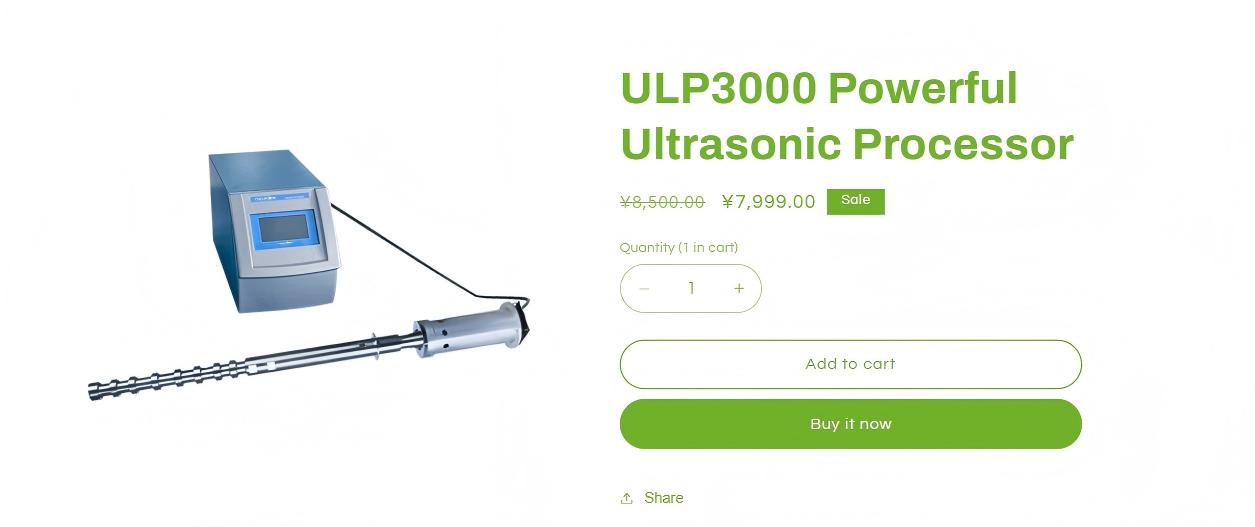
Ultrasonic dispersion of lithium battery slurry
The dispersion quality of lithium battery slurry directly determines the electrode performance and battery capacity. Ultrasonic dispersion equipment, with its unique advantages, has become a core process equipment in this field. It generates a “cavitation effect” in the slurry through high-frequency mechanical vibration (typically 20-40kHz), forming a large number of tiny bubbles that instantly collapse, releasing energy that can efficiently break up the agglomerated particles of active materials, conductive agents, and binders, achieving nanoscale uniform dispersion.
Compared to traditional mechanical stirring, this equipment eliminates the need for high-speed shearing, reducing the breakage of active material particles and minimizing viscosity fluctuations in the slurry. This significantly enhances the stability of the slurry, extending the settling and stratification time by over 30%. In process applications, it can accommodate slurries with different solid contents (30%-70%), precisely controlling the dispersion effect by adjusting the amplitude and processing time. This ensures that the uniformity error of the electrode coating is kept within 5%, thereby improving the battery’s cycle life and capacity retention rate. Currently, this equipment has been widely used in the large-scale production of power batteries, providing reliable technical support for enhancing battery energy density and production efficiency.