
Laboratory Ultrasonic Coating Systems for Solar Cells
Laboratory Ultrasonic Coating Systems for Solar Cells. It delivers uniform low‑defect thin‑films for perovskite and solar cell R&D.
In the development of next-generation photovoltaic devices, the uniformity and controllability of thin-film deposition are critical factors determining cell conversion efficiency. In recent years, ultrasonic spray technology has rapidly emerged as an ideal choice for laboratory-scale solar cell fabrication due to its unique atomization mechanism. It enables highly efficient and uniform thin-film deposition, offering unprecedented processing windows for emerging systems such as perovskites, organic photovoltaics (OPVs), and copper indium gallium selenide (CIGS).
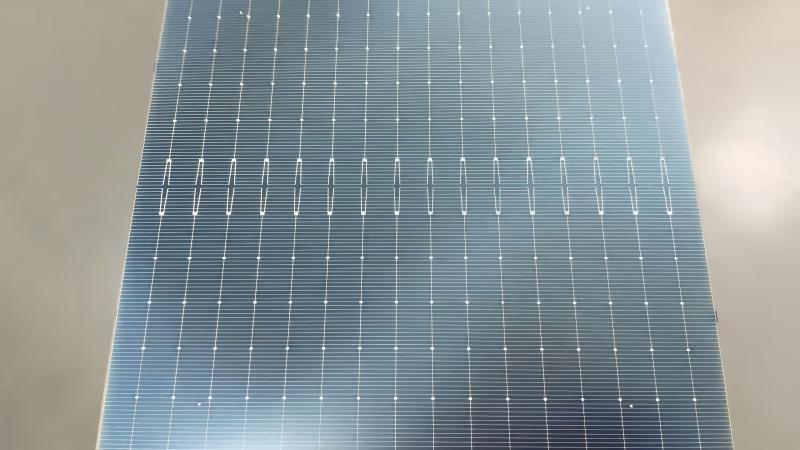
Unlike traditional pneumatic or high-pressure spray methods, laboratory ultrasonic coating systems utilize piezoelectric transducers to generate high-frequency vibrations (in the megahertz range), breaking down precursor solutions into micron- or even sub-micron-scale aerosol droplets. This atomization process relies minimally on high-speed airflow; consequently, the droplets exhibit a narrow particle size distribution and low kinetic energy. This prevents splashing and rebound while eliminating random accumulation caused by turbulent eddies. When these fine droplets are guided by a carrier gas onto a heated substrate, the solvent evaporates rapidly and the solute self-assembles into dense crystal nuclei, ultimately forming a continuous film with a surface roughness of less than 5 nm. For thickness-sensitive devices—such as perovskite light-absorbing layers, where the optimal thickness typically ranges from 400 to 600 nm—this technology limits intra-wafer non-uniformity to within ±3%. This performance far surpasses that of spin-coating, which suffers from edge-bead effects, and slot-die coating, which carries a risk of large-area streaking.
In a laboratory setting, the core advantages of ultrasonic coating systems can be summarized by four key attributes: scalability, reproducibility, material utilization efficiency, and process tolerance. First, the deposition area is determined solely by the spray head’s scanning trajectory; this allows for seamless switching between substrate sizes ranging from 2 to 12 inches without the need to change spin-coater chucks or masks, perfectly accommodating needs that span from single-point experiments to parameter-optimization arrays. Secondly, the closed-loop fluid supply system and constant-temperature atomizing head ensure a flow rate drift of less than ±0.5% during prolonged spraying, limiting the standard deviation of efficiency across substrates in the same batch to within 0.2%—a critical factor for identifying optimal doping concentrations or interface modification layers. Furthermore, ultrasonic atomization generates no high-speed shear stress, making it compatible with diverse ink systems (viscosity range: 0.5–50 cP); with a dead volume of only 0.1–0.3 mL, it significantly conserves expensive precursor materials, such as solutions containing rare/precious metals or complex organic ligands. Most importantly, the equipment can operate in an ambient air environment while utilizing an inert gas shroud, enabling researchers to adjust deposition rates, substrate temperatures, and annealing sequences *in situ* to rapidly identify the optimal crystallization kinetics window.
As thin-film solar cell technology transitions from small-scale laboratory prototypes to commercial modules, manufacturers urgently require a coating solution that offers scalability, reproducibility, and cost-effectiveness. Ultrasonic coating systems bridge this gap: key parameters—such as nozzle frequency, carrier gas flow rate, substrate temperature, and scanning speed—can be digitally mapped to roll-to-roll production lines. Consequently, process recipes developed in the lab can be directly transferred to pilot lines without the need to re-optimize atomization mechanisms. Additionally, the system boasts low maintenance costs; nozzle clogging rates are 80% lower than those of traditional nozzles, and cleaning requires only a brief solvent back-flush, ensuring exceptional stability for long-term, repetitive experiments. Research teams have already utilized this technology to achieve efficiencies exceeding 24% on large-area (10 cm × 10 cm) perovskite modules, demonstrating excellent batch-to-batch consistency.
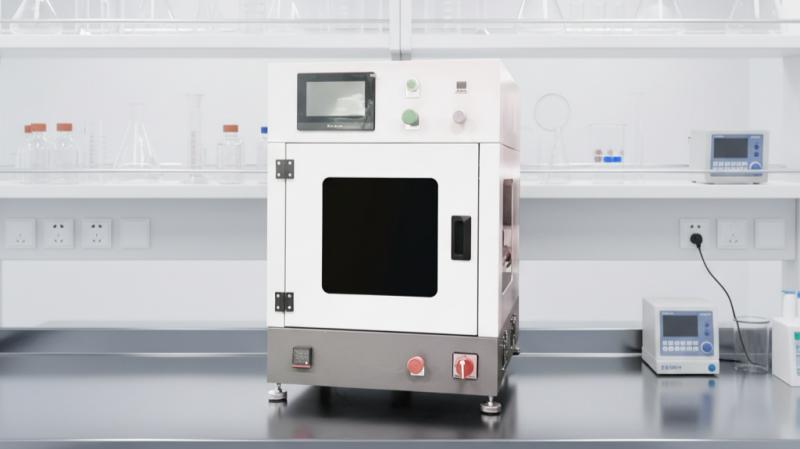
Looking ahead, the integration of AI-assisted process optimization systems will enable laboratory ultrasonic coating machines to “deposit” not only materials but also data. By monitoring film thickness, temperature, and atomization status in real-time and dynamically adjusting local flow rates for each scan segment, the system will ultimately achieve adaptive, intelligent coating capabilities. This may well be the pivotal step in the evolution of photovoltaic technology from an “art of trial and error” to “precision engineering,” with ultrasonic atomization serving as the most solid launching point for this transition.
About Cheersonic
Cheersonic is the leading developer and manufacturer of ultrasonic coating systems for applying precise, thin film coatings to protect, strengthen or smooth surfaces on parts and components for the microelectronics/electronics, alternative energy, medical and industrial markets, including specialized glass applications in construction and automotive.
Our coating solutions are environmentally-friendly, efficient and highly reliable, and enable dramatic reductions in overspray, savings in raw material, water and energy usage and provide improved process repeatability, transfer efficiency, high uniformity and reduced emissions.
If you have any technical questions, customization demands, or procurement inquiries about ultrasonic atomization nozzles, feel free to contact our professional sales and technical team for detailed parameters, customized solutions, and industry application support.
Email: market2@cheersonic.com