
Hydrogen Fuel Cell Engine Stack MEA Catalyst Layer
We will delve into the catalyst layer (CL) of the membrane electrode assembly (MEA), which is the most critical and technically challenging component in hydrogen fuel cell engine stacks.
The catalyst layer is the “site” where electrochemical reactions occur, directly determining the power generation performance, start-up speed, durability, and most of the costs of fuel cells.
The role and importance of catalyst layer
The catalyst layer is attached to both sides of the proton exchange membrane, namely:
- Anode catalyst layer (Anode CL): responsible for hydrogen oxidation reaction (HOR): 2H ₂ → 4H ⁺+4e ⁻
- Cathode CL: Responsible for Oxygen Reduction Reaction (ORR): O ₂+4H ⁺+4e ⁻ → 2H ₂ O

Core role:
- Catalytic reaction: Provides efficient and stable reaction sites for HOR and ORR, significantly reducing the activation energy required for the reaction.
- Conducting electrons: The catalyst itself is conductive, ensuring that the electrons generated by the reaction can be smoothly exported to the gas diffusion layer and bipolar plate.
- Conducting protons: relying on mixed ionomers (Nafion ionogels) to form proton transport channels, ensuring that H ⁺ can smoothly reach or leave the reaction site.
- Transport material: Its porous structure must allow for efficient diffusion of reaction gases (H ₂, O ₂) to the reaction site and allow for the smooth discharge of generated water.
- The interface of “three-phase mass transfer”: An ideal catalyst layer must perfectly balance the transport of gas phase (reaction gas), liquid phase (water/proton), and solid phase (electron/catalyst), and any deficiency in any aspect will lead to a decrease in performance.
Composition of catalyst layer
The catalyst layer is a precision thin layer composed of various nanomaterials (usually with a thickness of 5-20 microns), and its main components include:
1. Electrocatalyst
- Material: Currently, platinum (Pt) based catalysts are the only materials that can simultaneously meet high activity and high stability under harsh conditions in automotive fuel cells.
- Form:
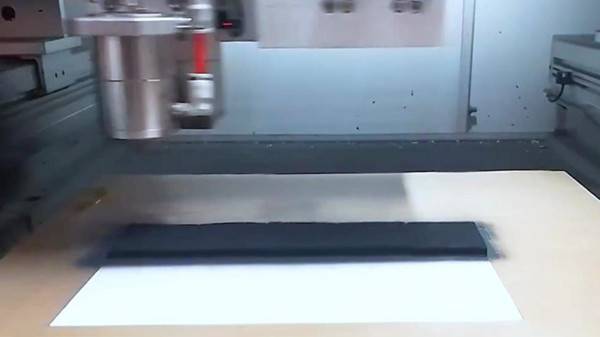
– Platinum carbon catalyst (Pt/C): The most common form is to disperse 2-5 nanometer platinum nanoparticles onto a high specific surface area carbon support (such as Vulcan XC-72 carbon black). This greatly improves the utilization rate of platinum and reduces its usage.
– Alloy catalyst: By using alloy nanoparticles of platinum with transition metals such as cobalt (Pt Co) and nickel (Pt Ni), the electronic structure of platinum can be altered, significantly improving the inherent activity and stability of ORR. - Challenge: Platinum is a precious metal, expensive, and sensitive to impurities such as carbon monoxide (CO), making it prone to poisoning. Reducing platinum usage and developing non precious metal (PGM free) catalysts are the core research directions.
2. Ionomer
- Material: Typically a dispersion of perfluorosulfonic acid (PFSA) resin (such as Nafion), similar to proton exchange membrane material.
- Function:
– Form a proton conduction network around the catalyst particles to transport H ⁺ to each reaction site.
– As a binder, the catalyst particles are bonded together and attached to the substrate. - Key parameter: Polymer/Carbon (I/C) ratio. The proportion is too low, resulting in high proton transport resistance; If the proportion is too high, it will cover the active sites and block the pores, hindering gas transmission. Finding the optimal I/C ratio is the core of formula optimization.
3. Carrier (Support)
- Material: Usually carbon materials such as acetylene black, Ketjenblack, etc.
- Function:
– Provide high specific surface area for anchoring and dispersing platinum nanoparticles to prevent their aggregation.
– The skeleton network that constitutes electronic conduction. - Challenge: Carbon carriers will corrode at high potentials in fuel cells, leading to the detachment and deactivation of platinum nanoparticles. The development of more stable new carriers, such as graphene, carbon nanotubes, doped carbon, metal oxides, etc., is the key to improving durability.
4. Pores
- Function: Pores are not a material, but a microstructure formed by the stacking of the aforementioned materials. They form channels for the transport of reactive gases and liquid water.
- Requirement: It is necessary to have a suitable multi-level pore structure, with both micropores providing a large specific surface area and large pores facilitating the rapid discharge of water.
Preparation process of catalyst layer
Preparing a uniform, ultra-thin, and structurally optimized catalyst layer is a huge challenge in the manufacturing process. The mainstream processes are as follows:
1. Slurry preparation
Mix accurately weighed platinum carbon catalyst, ionomer solution, and solvent (such as water/alcohol mixture), and prepare a uniform, stable, and specific rheological catalyst slurry through ball milling, ultrasonic dispersion, high-speed stirring, and other methods.
2. Deposition
Deposit the slurry onto the substrate. The substrate can be a proton exchange membrane (direct coating method, CCM) or a gas diffusion layer (GDL) (indirect coating method, GDE)。 CCM method is currently the mainstream.
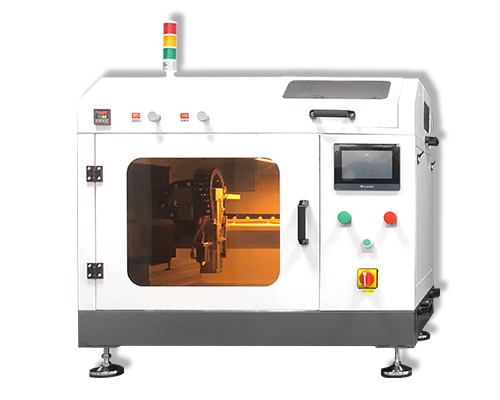
- Ultrasonic Spraying:
– Principle: Use ultrasonic energy to atomize the slurry into extremely fine and uniform droplets, and then spray them onto the substrate with a carrier gas.
– Advantages: Excellent coating uniformity, high slurry utilization rate (>95%), precise load control, suitable for preparing ultra-thin layers.
– Application: It is the most suitable method for laboratory research and small-scale production, and is the mainstream method for studying high-performance catalyst layers. - Slot Die Coating:
Principle: The slurry is pumped into a precision slit die, and a uniform liquid film is formed at the lip of the die by pressure, which is then coated onto a continuously moving substrate.
Advantages: Fast coating speed, uniform thickness, no splashing of fog droplets (high material utilization rate).
Application: It is the most suitable technology for large-scale continuous production and the preferred technology for industrialization. - Other technologies such as screen printing and doctor blade coating have also been applied, but their uniformity and efficiency are not as good as the previous two.
3. Drying and Hot Pressing
- Drying: After coating, a precise temperature controlled drying process is required to remove solvents and form a stable proton conduction network for the ionomer.
- Hot pressing (for CCM method): A proton exchange membrane coated with a catalyst layer is pressed together with gas diffusion layers (GDL) on both sides at a certain temperature and pressure to form a membrane electrode (MEA). This step is crucial as it can reduce the contact resistance between layers and ensure a good “three-phase mass transfer” interface.
Technical Challenges and Development Trends
Reduce platinum loading: from 0.4 mgPt/cm ² to 0.1 mgPt/cm ² or even lower, achieved by designing efficient catalysts such as core-shell structures and nanoframe structures.
Improve durability: solve problems such as platinum dissolution/aggregation and carbon carrier corrosion, and develop highly stable catalysts and carriers.
Optimize the three-phase interface: Through advanced preparation processes (such as ultrasonic spraying) and material design, construct a more reasonable pore structure and ionomer distribution to alleviate water flooding and mass transfer polarization.
Non precious metal (PGM free) catalysts: Exploring new catalysts represented by iron, cobalt, and nitrogen doped carbon (M-N-C), aiming to completely eliminate dependence on platinum, which is the ultimate goal but still faces significant challenges in activity and stability.
Summary: The catalyst layer is the “heart” of fuel cells, and its technical core is the deep integration of materials (catalysts, ionomers) and processes (coating technology). Every breakthrough in material systems and innovation in preparation processes directly drives the hydrogen fuel cell industry towards high performance, low cost, and long lifespan.
About Cheersonic
Cheersonic is the leading developer and manufacturer of ultrasonic coating systems for applying precise, thin film coatings to protect, strengthen or smooth surfaces on parts and components for the microelectronics/electronics, alternative energy, medical and industrial markets, including specialized glass applications in construction and automotive.
Our coating solutions are environmentally-friendly, efficient and highly reliable, and enable dramatic reductions in overspray, savings in raw material, water and energy usage and provide improved process repeatability, transfer efficiency, high uniformity and reduced emissions.
Chinese Website: Cheersonic Provides Professional Coating Solutions