
Electrolysis of Water and Membrane Electrode of Fuel Cell Coating
Application of Ultrasonic Spraying in Water Electrolysis and Fuel Cell Membrane Electrode Coating – Cheersonic
Ultrasonic spraying technology, with its advantages of precision atomization and precise deposition, has become the core process for water electrolysis hydrogen production and fuel cell membrane electrode (MEA) coating preparation. It atomizes the catalyst slurry into uniform droplets of 0.5-40 microns through high-frequency vibration of 20-100kHz, relying on cavitation effect to break particle agglomeration and achieve dense and uniform deposition of the coating, effectively solving the pain points of uneven coating and material waste in traditional spray coating.
In the field of water electrolysis, this technology can be used for the preparation of catalytic layers in PEM and AEM electrolysis cells, accurately loading platinum, iridium or non precious metal catalysts, reducing hydrogen and oxygen evolution overpotentials, improving electrolysis efficiency by 15% -20%, material utilization rate of over 95%, and significantly reducing precious metal losses. In the field of fuel cells, proton exchange membrane catalytic layers and bipolar plate coatings can be prepared, with a coating thickness error of less than 5%, to construct a stable three-phase reaction interface and improve battery power density and durability.
This technology combines non-contact processing, controllable parameters, environmental friendliness, and high efficiency, and is suitable for laboratory research and industrial production. It not only promotes the upgrading of membrane electrode performance, but also helps the water electrolysis and fuel cell industries reduce costs and increase efficiency, providing support for the large-scale application of clean energy technology.
Water electrolysis and fuel cell membrane electrode coating are key technologies involving multiple aspects of hydrogen production through water electrolysis and fuel cells. The following is a detailed analysis of this technology:
Membrane Electrode Coating in Water Electrolysis for Hydrogen Production
In the process of hydrogen production through water electrolysis, the membrane electrode is the core component of the electrolyzer, and its performance directly determines the efficiency and lifespan of the electrolyzer. The membrane electrode mainly consists of a proton exchange membrane, an anode catalyst layer, a cathode catalyst layer, and diffusion layers on both sides. These components work together to complete the electrochemical decomposition reaction of water, producing hydrogen and oxygen.
The application of coating technology in this process mainly involves uniformly coating catalysts (such as platinum-carbon catalysts) on both sides of the proton exchange membrane to form the anode and cathode catalyst layers. These catalyst layers play a crucial role in the water electrolysis process, promoting the electrochemical decomposition reaction of water.
Fuel Cell Membrane Electrode Coating
The fuel cell membrane electrode is the core component of the fuel cell, mainly composed of a catalyst, a proton exchange membrane, and a gas diffusion layer. An ideal MEA needs to possess good gas diffusion capabilities, liquid water management capabilities, and proton conduction capabilities. Platinum-carbon materials play a crucial role in the fabrication of membrane electrode assemblies for fuel cells due to their excellent catalytic performance.
Spraying Methods:
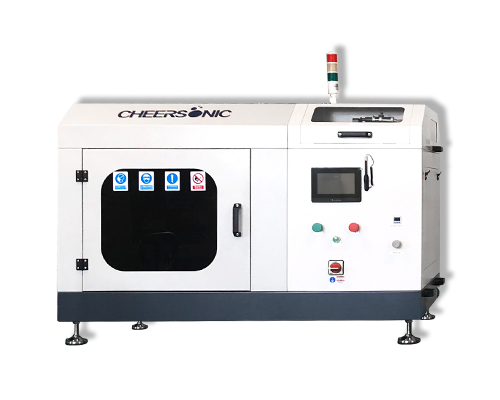
Ultrasonic Spraying:Ultrasonic spraying technology can produce a highly durable and uniform platinum-carbon catalyst ink coating on the MEA of fuel cells while avoiding membrane deformation. This technology is suitable for various types of fuel cells, including PEM fuel cells and solid oxide fuel cells. The advantage of ultrasonic spraying is that it can precisely control the distribution and size of catalyst particles, achieving uniform coating of the catalyst on the electrode surface, thereby improving the catalytic activity and stability of the electrode.
Blade Coating:Another commonly used coating method is blade coating. A prepared platinum-carbon catalyst slurry is uniformly coated onto the proton exchange membrane using a blade, and then dried to form a catalyst layer. This method is simple to operate, but careful control of the coating thickness and uniformity is required to avoid problems such as swelling and deformation.
Optimization of the Spraying Process:
Pre-treatment of the binder in the catalyst slurry, such as controlling the Nafion conformation by adjusting the solubility and polarity of specific solvents, can expand the three-phase interface between the catalyst and Nafion.
Improvements can be made to the spraying process and equipment, such as using multi-nozzle spraying equipment to separately disperse different component slurries and spray them simultaneously after ultrasonic atomization.
Post-spraying treatments can be improved, such as treating the slurry in a high-voltage electric field to remove solvents after spraying, or using laser irradiation of the catalyst layer to improve membrane electrode performance.
Economic and Environmental Benefits of Spraying Technology
Economic Benefits: Efficient utilization of platinum-carbon catalysts can reduce the production cost of fuel cells and improve economic efficiency. At the same time, the recycling and reuse of waste platinum-carbon can also bring additional revenue to enterprises.
Environmental Value: Platinum is a rare metal with excellent catalytic and corrosion-resistant properties. Recycling waste platinum-carbon materials can not only achieve resource recycling but also reduce environmental pollution and ecological damage.
In conclusion, electrolysis of water and fuel cell membrane electrode spraying technology are of great significance for improving the performance and stability of fuel cells. Optimizing the spraying process and recycling waste platinum-carbon materials can further promote the development and application of fuel cell technology.
About Cheersonic
Cheersonic is the leading developer and manufacturer of ultrasonic coating systems for applying precise, thin film coatings to protect, strengthen or smooth surfaces on parts and components for the microelectronics/electronics, alternative energy, medical and industrial markets, including specialized glass applications in construction and automotive.
Our coating solutions are environmentally-friendly, efficient and highly reliable, and enable dramatic reductions in overspray, savings in raw material, water and energy usage and provide improved process repeatability, transfer efficiency, high uniformity and reduced emissions.
Chinese Website: Cheersonic Provides Professional Coating Solutions