
Dispersion of Carbon Black in Electricity Deduction
The Influence of Uneven Dispersion of Carbon Black in Power Supply
The dispersion uniformity of carbon black (commonly used conductive agent) in the slurry during the preparation of button type lithium battery electrodes has a critical impact on the electrochemical performance of the battery. If the carbon black is unevenly dispersed, it will cause various problems, mainly including:
1. Increased internal resistance and incomplete conductive network
Although the carbon black agglomeration area has high local conductivity, it is difficult to form an effective conductive path for the electrode as a whole; In the area of carbon black deficiency, the active substance forms “islands” due to the lack of electronic transmission pathways, which cannot fully participate in the reaction and result in local high impedance regions. The overall performance is a decrease in electrode electronic conductivity, with a significant increase in charge transfer impedance and Ohmic impedance.
2. Low utilization rate of active substances and decreased capacity
In areas where the conductive network is incomplete, active substances such as NCM, LFP, graphite, etc. cannot effectively carry out lithium ion insertion and extraction, resulting in some materials becoming ‘inactive’. Meanwhile, due to the failure of carbon black to uniformly coat the surface of the active material, the effective electrochemical reaction area is reduced, resulting in a significant decrease in the actual capacity of the battery, especially under high rate conditions.

3. Uneven current distribution and severe local polarization
Current is more likely to concentrate in areas with good conductivity, resulting in high local current density and exacerbating the non-uniformity of electrochemical reactions. These areas may experience structural damage to the active material or electrolyte decomposition during charging, and may cause lithium metal deposition during discharge, thereby accelerating battery aging, reducing cycle life, and posing safety hazards.
4. Deterioration of magnification performance
The demand for electron and ion transport increases sharply under high rate conditions, and the uneven conductive network significantly increases the polarization voltage. The charging and discharging platform degrades, and the reversible capacity of the battery decreases significantly at high currents, resulting in a weakened power output capability.
5. Decreased cycle stability
Uneven current distribution causes local overcharging/overdischarging, inconsistent SEI film growth, and stress concentration of active materials, which collectively accelerate electrode structure degradation and interface side reactions, leading to rapid capacity retention degradation and shortened cycle life.
6. Coulomb efficiency decreases
The increase of local side reactions, such as the continuous decomposition of electrolyte and the formation and destruction of unstable interface facial mask, results in the increase of irreversible capacity loss and the decrease of coulomb efficiency.
7. Poor repeatability of experimental data
For button batteries mainly used for scientific research, uneven slurry can lead to:
– Significant differences in battery performance within the same batch;
– Large fluctuations in capacity and other parameters during a single test;
The reliability of electrochemical data has decreased, affecting the accuracy of evaluating key factors such as materials and electrolytes.
In summary, the core effects of uneven dispersion of carbon black on the performance of button type batteries include: increased internal resistance, decreased capacity and utilization of active materials, deterioration of rate performance and cycle life, decreased Coulombic efficiency, and poor experimental reproducibility. Therefore, uniform dispersion of the slurry must be taken as a key control point in electrode preparation, usually combined with optimized dispersion processes (such as dispersant selection, solid content control, stirring and ultrasonic processes, etc.) and systematic slurry characterization methods to achieve stable and efficient electrochemical testing.

Method for detecting the uniformity of carbon black dispersion
Accurately evaluating the dispersion state of the slurry (especially the conductive agent carbon black) is crucial for ensuring electrode performance. The following are various methods ranging from simple observation to precise testing, and it is recommended to use them in combination to make a comprehensive judgment:
Easy and fast method (online/offline)
1. Assessment of apparent state
Visual inspection: The color of the slurry should be uniform without dark or deep stripes, spots, or obvious particles.
Wall hanging behavior: After stopping mixing, the slurry should adhere evenly to the container wall without particle agglomeration or uneven flow.
Consistency of viscosity: The flowability of the slurry should be stable, and the deviation of viscosity measurement values should be small (such as<5%), but it should be noted that uniform viscosity is not completely equivalent to uniform dispersion of conductive agents.
2. Scraper fineness meter test
By scraping the slurry onto a standard groove plate, observe the corresponding depth of particle stripes to determine the maximum aggregate size. Usually, it is required that the particle size of carbon black after dispersion should be ≤ 25-45 μ m. This method is fast, low-cost, and suitable for on-site process control, but it only reflects the maximum particle size and has limited impact on the overall distribution.
Microstructure analysis method (offline, high-precision)
3. Optical microscope
After smearing the slurry, observe that there should be no visible black agglomeration when well dispersed, and the surface of the active substance should be uniformly covered with carbon black. This method is intuitive and convenient, but its resolution is limited, and sample preparation may affect the observation results.
4. Scanning Electron Microscope (SEM)
It can clearly display the distribution status, agglomeration, and continuity of the conductive network of carbon black on the surface or cross-section of the electrode, with a resolution of nanometer level. It is a powerful tool for judging the dispersion uniformity, but the equipment cost is high and the sampling volume is small, requiring multiple observations to represent the whole.
5. Energy dispersive X-ray spectroscopy (EDS)
Through element surface distribution analysis (such as C element), the uniformity of conductive agent distribution can be visually displayed, which is suitable for material systems with characteristic elements.
Functional performance testing method (indirect characterization)
6. Coating conductivity test
Apply the slurry onto the insulating substrate and dry it to form a film, then measure the surface resistance using the four probe method. The lower the resistance and the more uniform the distribution, the more complete the conductive network is usually represented. This method is directly related to electrical performance, but it needs to be combined with other methods to confirm the dispersion state.
7. Mechanical performance testing of polarizer
Poor dispersion may lead to increased brittleness or decreased adhesion of the polarizer, which can be assisted by bending or tape peeling tests. However, the results are subject to various factors and are for reference only.
Final performance verification
8. Electrochemical testing of button type batteries
Although it is not a direct method for detecting the slurry, the performance of the battery is the ultimate reflection of the dispersion quality. Batteries made from the same batch of slurry should have high consistency, low internal resistance, high capacity, and good cycling stability. This method has a long cycle and high cost, but it is irreplaceable.
By comprehensively applying the above methods, the dispersion quality of carbon black can be systematically evaluated, providing reliable basis for optimizing dispersion processes (such as introducing laboratory ultrasonic treatment), and ultimately ensuring the reliability of electrode performance and experimental data.
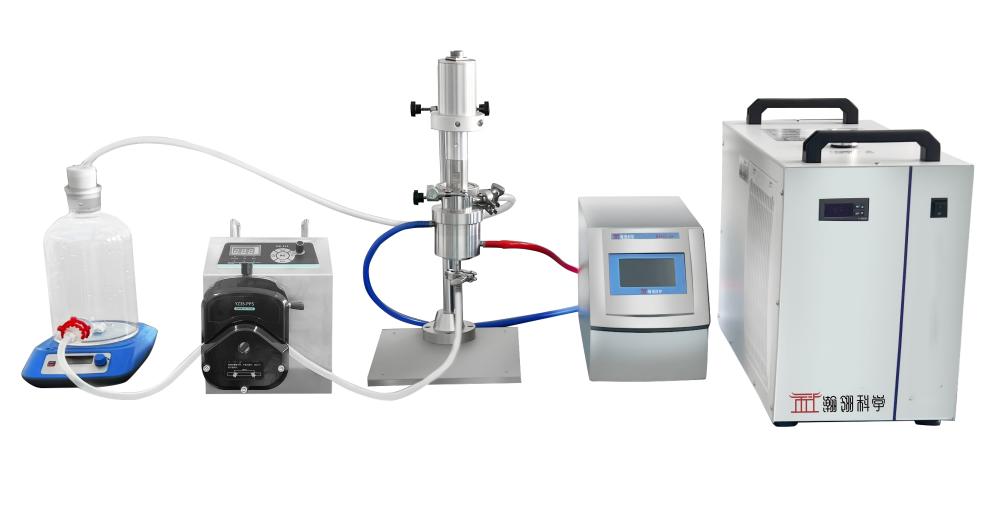
The solution to the problem of carbon black dispersion in the positive electrode slurry of laboratory lithium batteries requires “fine control+technical collaboration” as the core: laying the dispersion foundation through carbon black pretreatment, solvent dehydration, and binder optimization, constructing a basic dispersion system through “three-step feeding method+mechanical shearing”, and introducing laboratory ultrasonic lithium battery positive electrode slurry carbon black dispersion technology to break the bottleneck of hard agglomeration. At the same time, with equipment selection and environmental control, a full process solution is formed. In laboratory settings, ultrasonic dispersion technology, with its efficient crushing ability for nanoscale agglomerates, can compensate for the insufficient shear force of small equipment without the need for additional dispersants, avoiding the introduction of impurities. Through the above measures, the problem of poor dispersion of carbon black in laboratory positive electrode slurry can be effectively solved, providing uniform and stable electrode materials for button type battery performance testing, and accelerating the research and development process of new materials for lithium-ion batteries.