
Core Technology Analysis of Green Hydrogen Production
Hydrogen, an energy carrier possessing both significant industrial value and clean energy attributes, continues to rise in strategic importance in the global low-carbon energy transition due to its outstanding advantages such as storability, renewability, zero-carbon production, and high energy density. Currently, industrial hydrogen production still heavily relies on fossil fuels, generating substantial carbon emissions during the production process, which contradicts the industry’s goals of carbon neutrality and green, low-carbon development. Against this backdrop, zero-carbon green hydrogen production technology has become a key breakthrough direction in the new energy field and a crucial factor in promoting energy structure reform.
Electrolysis of Water for Hydrogen Production: The Mainstream Core Pathway for Large-Scale Green Hydrogen Production
Electrolysis of water for hydrogen production uses electricity to drive the decomposition of water molecules, producing high-purity hydrogen and oxygen. It is currently the only hydrogen production technology that can achieve near-zero carbon emissions throughout the entire process and is a core support for the industrialization of green hydrogen. Currently, the mainstream electrolytic hydrogen production technologies in the industry are mainly divided into four categories. Each type of technology exhibits differences in principle, performance, application scenarios, and development bottlenecks, as detailed below:
Alkaline Electrolysis of Water for Hydrogen Production
Technical Principle: Using a high-concentration alkaline solution as the electrolyte, after applying direct current, water molecules undergo oxidation-reduction reactions at the electrodes on both sides, generating hydrogen and oxygen respectively. A diaphragm effectively isolates the two gases, preventing gas mixing and ensuring the purity of the output.
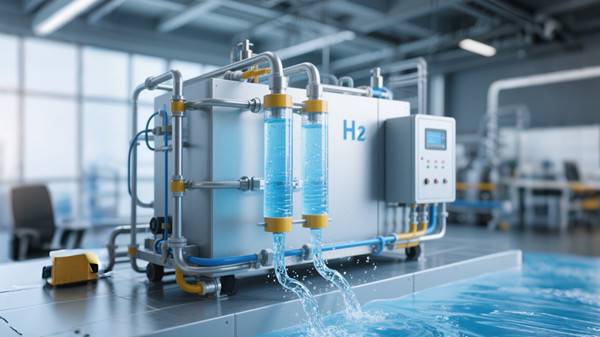
Current Development Status: This technology has a deep industrial foundation, high process maturity, and significant advantages in overall construction and operation costs, making it the most widely used hydrogen production technology. Currently, the industry has achieved large-scale breakthroughs in single-tank hydrogen production capacity, with unit hydrogen power consumption remaining stable within the industry’s conventional range. The core of technological iteration focuses on three main directions: energy consumption optimization, single-tank capacity expansion, and improved electrolysis conversion efficiency. The core diaphragm material has undergone iterative upgrades, gradually replacing traditional asbestos and polyphenylene sulfide materials with composite diaphragms that offer superior overall performance, effectively improving equipment operational stability.
Existing technical challenges: Overall electrolysis energy consumption is relatively high, and energy conversion efficiency needs further improvement; electrodes are prone to corrosion and wear during long-term operation, affecting equipment stability; the membrane has stringent requirements for long-term service tolerance and stability; the initial hydrogen production purity is limited, requiring subsequent purification processes to meet the needs of high-end applications.
High-Temperature Electrolysis of Water with Solid Oxides for Hydrogen Production
Technical Principle: Unlike room-temperature electrolysis processes, this technology utilizes a high-temperature environment of 700-1000℃ to directly electrolyze water vapor to produce hydrogen. The high-temperature environment significantly reduces the activation energy required for the electrolysis reaction, improving energy utilization efficiency. The core of the equipment is a multi-layered ceramic structure component, which undertakes the core functions of hydrogen conduction, electrical conduction, and oxygen evolution.
Technical Advantages and Application Characteristics: The core advantage is extremely low electrolysis energy consumption, which can be fully matched with industrial high-temperature waste heat, solar thermal power generation, and other waste heat resources to achieve cascaded energy utilization and adapt to various high-temperature energy system coupling scenarios. Besides efficient hydrogen production, this technology can also support diverse scenarios such as synthetic fuel preparation and fuel cell power supply. The equipment exhibits excellent operational stability, produces high-purity hydrogen, and demonstrates significant potential for comprehensive applications.
Current technological challenges: The long-term high-temperature and high-humidity operating environment places extremely high demands on the durability and anti-aging performance of core ceramic and electrode materials; thermal stress generated during equipment start-up and shutdown can accelerate the wear and tear of core components, shortening the equipment’s service life; the overall system structure is complex and integration is difficult, and it is currently still in the early stages of industrialization. Large-scale commercial deployment still requires technological breakthroughs.
Anion Exchange Membrane Electrolysis for Hydrogen Production
Technical Principle: Using anion exchange membranes as the core ion-conducting medium, the membrane conducts hydroxide ions, enabling water electrolysis under alkaline or weakly alkaline mild conditions, avoiding the drawbacks of traditional strong-alkaline electrolysis processes.
Technical Advantages and Application Characteristics: It integrates the advantages of traditional alkaline electrolysis and membrane electrolysis technologies. It allows for the use of low-cost non-precious metal catalysts to control production costs, while also possessing the compact structure and small size of membrane electrolysis equipment. The process is highly adaptable, allowing the use of pure water or low-concentration alkaline solutions as electrolytes, completely solving the problems of strong alkali corrosion and complex maintenance, while avoiding the high cost of high-end perfluorinated membrane materials.
Current technical challenges and R&D directions: The core bottleneck lies in anion exchange membrane materials. Their long-term chemical stability, ion conduction efficiency, and anti-attenuation capabilities still need optimization. Furthermore, large-scale mass production processes are immature, and cost control is challenging. Optimizing the catalyst layer preparation process is a core R&D direction. Through refined coating processes, thin-layer, uniform catalyst deposition can be achieved, improving catalytic activity while reducing material consumption, which is key to overcoming technical performance bottlenecks. Currently, this technology has achieved small-scale commercialization and is gradually iterating towards large-scale, integrated applications.
Proton Exchange Membrane Electrolysis for Hydrogen Production
Technical Principle: Using a proton exchange membrane as the core conductive medium, electrolysis is completed under acidic pure water conditions. Water molecules decompose at the anode to generate oxygen, protons, and electrons. Protons migrate directionally through the membrane to the cathode, combining with electrons to generate high-purity hydrogen. The entire reaction is controllable, and the product purity is high.
Technical Advantages and Application Characteristics: Possessing core advantages such as high current density, high energy conversion efficiency, and fast dynamic response, the equipment boasts a compact structure, high integration, and small footprint. It produces hydrogen with ultra-high purity, making it suitable for high-end hydrogen energy applications and widely recognized as a hydrogen production technology with significant long-term development potential.
Current Technical Challenges and R&D Directions: High cost is the core factor restricting large-scale deployment. The cost primarily stems from the core precious metal catalyst and proton exchange membrane materials. As a core component, the membrane electrode assembly (MEA) directly determines system performance and cost through its fabrication process. A refined coating process can precisely control the catalyst slurry deposition state, forming a uniform and dense thin-layer catalyst. This reduces precious metal waste and lowers production costs while optimizing electrode reactivity and improving equipment performance, representing a key breakthrough in current technological iteration. Currently, this technology is in the early stages of commercialization with a vast market potential. Future cost reductions will primarily rely on core process innovation and large-scale mass production.
The Core Value of Refined Coating Technology in Catalytic Electrode Preparation
In various novel water electrolysis hydrogen production technologies, high-quality catalytic electrodes are the core components determining electrolysis efficiency, equipment stability, and production costs. Refined coating technology has become a key supporting technology for high-end electrode preparation, particularly suited to the industrial iteration needs of two types of membrane electrolysis technologies. Its core application advantages are as follows:
– Excellent Coating Uniformity: It enables uniform distribution of nanoscale catalytic particles across the entire substrate surface, forming a catalytic thin layer with uniform thickness and reasonable porosity, maximizing the exposure of reactive sites and effectively improving water electrolysis reaction efficiency and overall equipment performance.
– Strong Process Controllability: It allows for precise control of catalyst coating thickness and loading, matching the performance requirements of different operating conditions and equipment as needed. While ensuring catalytic efficiency, it precisely controls the amount of precious metal consumables used, achieving cost reduction and efficiency improvement.
– Wide Scenarios Adaptability: It is adaptable to various membrane materials, gas diffusion layers, and other substrate materials, compatible with catalyst slurries of different compositions and viscosities, and suitable for various electrolysis equipment electrode preparation scenarios, exhibiting extremely high versatility and scalability.
– High raw material utilization: Effectively reduces catalyst slurry spraying loss and excessive deposition, significantly improves the utilization rate of core consumables, lowers production costs at the electrode preparation stage, and contributes to the overall economic improvement of the equipment.
The widespread application of this refined preparation process can simultaneously promote the upgrading of electrolyzer efficiency, energy consumption reduction, and cost optimization, serving as a crucial supporting factor for overcoming the economic bottleneck of green hydrogen industrialization and accelerating technology implementation.
Industry Development Outlook
Water electrolysis for hydrogen production is the core path to green hydrogen industrialization and a key lever for supporting the clean energy transition and achieving the strategic goal of carbon neutrality. With the continuous decline in renewable energy power generation costs, coupled with the continuous iteration and optimization of various electrolysis hydrogen production technologies, the energy consumption of traditional processes continues to decrease, the performance of new membrane electrolysis technologies steadily improves, and industrialization costs are gradually being released. Simultaneously, technological innovations in key areas such as core membrane materials, catalyst systems, and electrode preparation processes continue to address the performance and cost pain points of green hydrogen production. In the future, the economic competitiveness of green hydrogen will continue to strengthen, and the process of large-scale market application will further accelerate, potentially becoming an important component of the new power system and green industrial system, providing core support for building a zero-carbon sustainable energy system.
Advantages of Ultrasonic Precision Coating Technology in the Renewable Energy Sector
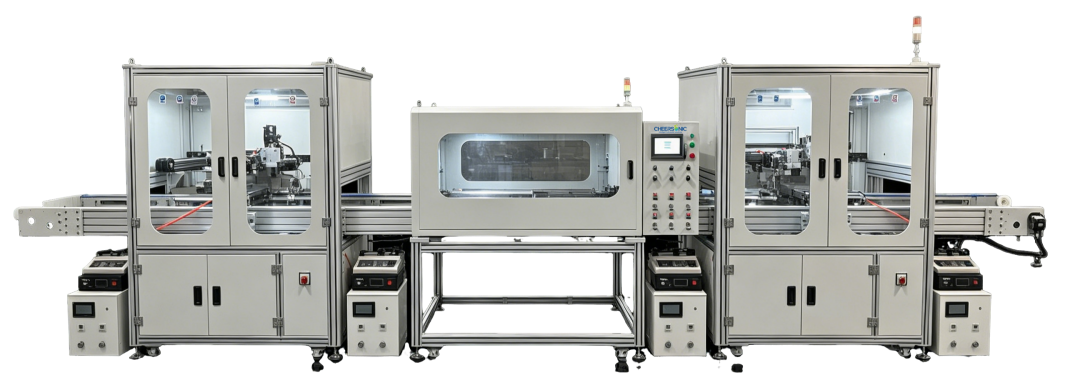
Precision ultrasonic coating technology has become a core enabling process in the renewable energy sector, effectively improving the efficiency, service life, and overall economic viability of clean energy devices. Unlike traditional high-temperature thermal spraying processes, which can only produce thick metal or ceramic coatings, ultrasonic coating technology, based on the principle of low-energy precision deposition, can construct uniform, ultra-thin functional films on substrate surfaces. It is widely applicable to various new energy application scenarios, including electrolytic hydrogen production equipment, fuel cells, photovoltaic modules, new energy storage batteries, and transparent conductive films.
Leveraging long-term technological accumulation in thin-film deposition processes, large-scale ultrasonic coating equipment, combined with dedicated ultrasonic spraying core components, can achieve high-performance preparation of green hydrogen production catalysts, photovoltaic functional films, and coatings for next-generation proton exchange membranes and solid oxide fuel cells, significantly improving the durability of functional coatings and breakthroughs in product processes. This coating preparation solution provides stable and replicable spraying effects for scientific research and industrial production, continuously contributing to the technological iteration and upgrading of the global renewable energy industry.
About Cheersonic
Cheersonic is the leading developer and manufacturer of ultrasonic coating systems for applying precise, thin film coatings to protect, strengthen or smooth surfaces on parts and components for the microelectronics/electronics, alternative energy, medical and industrial markets, including specialized glass applications in construction and automotive.
Our coating solutions are environmentally-friendly, efficient and highly reliable, and enable dramatic reductions in overspray, savings in raw material, water and energy usage and provide improved process repeatability, transfer efficiency, high uniformity and reduced emissions.
Chinese Website: Cheersonic Provides Professional Coating Solutions