
Coating of Surgical Instrument Springs
Coating of Surgical Instrument Springs – Ultrasonic Coating – Cheersonic
In the field of medical surgical instruments, medical springs, as key core components, are widely used in products such as hemostatic forceps, needle holders, and minimally invasive surgical instruments. Their performance directly affects the precision of surgical procedures and patient safety. These springs not only need to possess excellent elastic fatigue strength but also meet stringent requirements such as biocompatibility, corrosion resistance, and low friction. Coating technology is the core means to achieve these properties, and ultrasonic spray coating technology, with its unique advantages, has become an ideal choice for the preparation of coatings for medical springs.
Traditional spray coating technology often faces problems such as uneven coating thickness, significant material waste, and poor coating adhesion in the processing of medical spring coatings. Medical springs are mostly slender helical structures. Traditional spray coating produces relatively large atomized particles, making it difficult to evenly cover the helical gaps and surface of the spring, easily resulting in localized excessive coating thickness or missed coating, affecting the elastic deformation performance of the spring. At the same time, the material utilization rate of traditional spray coating is usually less than 50%, which not only increases production costs but may also pollute the environment due to excess coating. Ultrasonic spray coating technology, on the other hand, achieves precise atomization of the coating through high-frequency vibration, fundamentally solving the pain points of traditional technology. Its working principle involves using an ultrasonic transducer to convert high-frequency electrical energy into mechanical vibration, causing the coating to form uniform droplets with a diameter of only a few micrometers at the nozzle. These tiny droplets can precisely adhere to the complex surface of medical springs, including hard-to-cover areas such as spiral crevices, achieving high-precision spraying with coating thickness deviation controlled within ±5%. Furthermore, ultrasonic spraying achieves a material utilization rate of over 85%, significantly reducing the loss of biocompatible coatings and meeting the green production requirements of the medical industry.
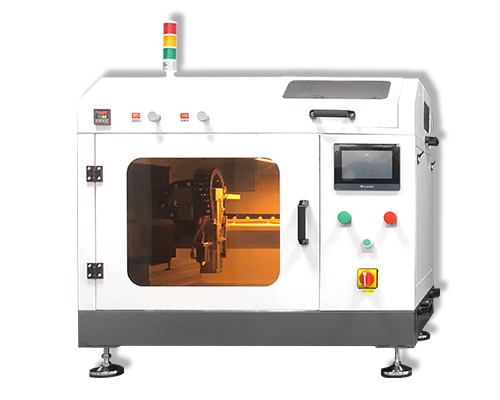
In terms of coating performance improvement, ultrasonic spraying technology demonstrates significant advantages. For commonly used PTFE low-friction coatings, titanium nitride wear-resistant coatings, and hydroxyapatite bioactive coatings in medical springs, this technology can ensure a tight bond between the coating and the spring substrate by precisely controlling atomization parameters, effectively avoiding medical risks caused by coating detachment during surgery. Simultaneously, the uniform coating structure also improves the corrosion resistance of the spring. Salt spray tests show that medical springs coated with ultrasonic spraying have a corrosion resistance life more than three times longer than traditionally sprayed products.
With the rapid development of minimally invasive surgery, the requirements for the precision and performance of medical springs are constantly increasing. Ultrasonic spraying technology, with its precision, efficiency, and environmental friendliness, is becoming the mainstream technology for medical spring coating preparation. In the future, through deep integration with materials science, ultrasonic spraying technology will further improve the biocompatibility and lifespan of medical springs, providing strong support for the innovative development of surgical instruments and helping the medical industry achieve higher levels of safe and precise medicine.

Ultrasonic Spraying Surgical Instrument Springs Coating
Surgical instrument springs are core components in hemostatic forceps, needle holders and minimally invasive surgical tools, whose performance directly affects surgical precision and patient safety. They require excellent elastic fatigue strength, biocompatibility, corrosion resistance and low friction, and ultrasonic spraying technology has become the ideal solution for their coating preparation due to its unique advantages.
Different from traditional spray coating, ultrasonic spraying uses high-frequency vibration to atomize coating materials into uniform micrometer-scale droplets without relying on high-pressure air, fundamentally solving the problems of uneven coating, serious material waste and poor adhesion in traditional processes. Its piezoelectric transducer converts electrical energy into mechanical vibration, enabling droplets to precisely cover the helical gaps and complex surfaces of springs, with coating thickness deviation controlled within ±5%.
This technology is compatible with PTFE, titanium nitride and hydroxyapatite coatings, ensuring tight bonding between the coating and the spring substrate to avoid coating detachment during surgery. It also achieves over 85% material utilization, reducing waste of expensive biocompatible materials and meeting green production requirements of the medical industry. Additionally, its self-cleaning nozzles reduce downtime, and the low-temperature process avoids damaging sensitive coating materials.
Ultrasonic spraying significantly enhances the service life and safety of surgical instrument springs, ensuring stable performance during repeated sterilization and surgical operations, and has become an indispensable technology in the precision manufacturing of medical instruments.
About Cheersonic
Cheersonic is the leading developer and manufacturer of ultrasonic coating systems for applying precise, thin film coatings to protect, strengthen or smooth surfaces on parts and components for the microelectronics/electronics, alternative energy, medical and industrial markets, including specialized glass applications in construction and automotive.
Our coating solutions are environmentally-friendly, efficient and highly reliable, and enable dramatic reductions in overspray, savings in raw material, water and energy usage and provide improved process repeatability, transfer efficiency, high uniformity and reduced emissions.
Chinese Website: Cheersonic Provides Professional Coating Solutions
