
Boehmite & Al₂O₃ Ceramic Slurry Ultrasonic Spraying System
Ultrasonic spraying machines are perfectly suited for preparing this ceramic layer, offering significant advantages in process adaptability and performance assurance. The specific analysis is as follows:
Matching of the Technical Characteristics of Ultrasonic Spraying Machines with the Requirements of Ceramic Layer Preparation
Micron-level thickness with precise control, meeting the mainstream 1-6μm specification
Ultrasonic spraying machines atomize ceramic slurry into fine particles (droplet size controllable between 5-50μm) through ultrasonic vibration (frequency typically 20-180kHz). By adjusting parameters such as nozzle movement speed, slurry flow rate, and ultrasonic power, precise control of the coating thickness can be achieved. For the aforementioned 1-6μm ceramic layer, the thickness uniformity error can be controlled within ±5%, avoiding the problems of “localized excessive thickness leading to increased ion transport resistance” or “localized excessive thinness causing thermal shrinkage risk,” thus meeting the core requirement of “directional control of multiple physicochemical processes in the battery.”
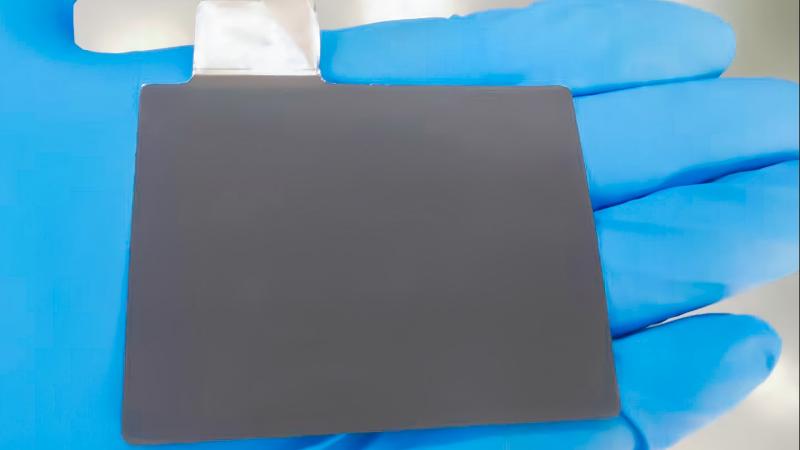
The atomization process avoids high-pressure impact, protecting the integrity of the base film.
As mentioned earlier, the ceramic diaphragm base film is made of polymer materials such as PE/PP (melting point 135-160℃, relatively low mechanical strength). Traditional high-pressure spraying easily causes wrinkles and damage to the base film due to airflow impact. Ultrasonic spraying, however, relies on ultrasonic vibration atomization, eliminating the need for high-pressure airflow and minimizing mechanical damage to the base film. Simultaneously, the atomized ceramic slurry deposits at a low speed on the base film surface, reducing particle agglomeration and forming a uniformly covered coating. This avoids “shrinkage in uncoated areas,” laying the foundation for the subsequent construction of a “thermal barrier” and a “multi-layer particle protection barrier.”
Excellent dispersibility of inorganic particles ensures a dense coating structure. The thermal stability of the ceramic layer (dependent on the high melting point of Al₂O₃) and its puncture resistance (dependent on the rigid network of particle packing) both require uniform dispersion of inorganic particles within the coating. The atomization process of ultrasonic spraying generates high-frequency vibrations, which further disperses slightly agglomerated Al₂O₃/boehmite particles in the slurry. The droplet uniformity is high, resulting in a densely packed coating with uniform pore distribution. This structure meets the characteristics of “strong support in thick coatings” (multiple particle layers, dense rigid network) and balances the relationship between “ion migration paths” and “electrolyte wetting” by controlling porosity (avoiding excessively large pores leading to a sharp increase in ion resistance, or too small pores affecting wetting speed).
Process Adaptability and Practical Application Advantages
Compatible with multiple types of ceramic slurries and adaptable to different particle systems. Ultrasonic spraying has broad compatibility with ceramic slurries. Whether it’s a single Al₂O₃/boehmite system or a mixed inorganic particle system, as long as the slurry viscosity (usually controlled within 200-1000 cP) and solid content (20%-60%) are adjusted to the appropriate range, stable preparation is possible. This meets the material requirement mentioned earlier that “ceramic coatings are mostly composed of inorganic particles such as Al₂O₃ and boehmite,” and the hydrophilicity of the coating can be further optimized by adjusting the slurry formula (e.g., increasing the Al₂O₃ hydroxyl content), thus improving the electrolyte wetting effect.
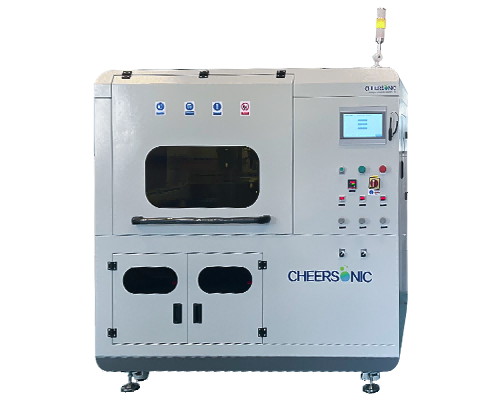
Continuous production offers high efficiency and is suitable for industrial applications. Currently, the industry’s demand for ceramic diaphragms is growing on a large scale. Ultrasonic spraying machines can achieve roll-to-roll (R2R) continuous production, seamlessly integrating with the continuous unwinding and drying processes of the base membrane. Coating preparation speeds can reach 1-5 m/min, meeting the needs of industrial mass production. Simultaneously, process parameters (such as thickness and uniformity) can be precisely controlled through an automated system, reducing human error and ensuring the consistency of ceramic layer performance between batches. This avoids the impact of thickness fluctuations on the comprehensive control effect of “thermal stability, mechanical strength, and ion transport.”
Process Optimization Directions
* Matching Slurry Viscosity and Ultrasonic Parameters: Excessive slurry viscosity can lead to incomplete atomization and coating particle agglomeration; insufficient viscosity may cause coating sagging, affecting thickness uniformity. The slurry solids content and dispersant dosage should be adjusted according to particle size (e.g., Al₂O₃ commonly 100-500nm), while simultaneously matching the corresponding ultrasonic frequency (high frequency for fine particles, low frequency for coarse particles) to ensure effective atomization.
* Synergy Between Drying Process and Coating Adhesion: The previous section emphasized the interfacial adhesion between the ceramic layer and the base film/electrode (e.g., the “physical interlocking” effect). After ultrasonic spraying, low-temperature drying (below the base film’s melting point, typically 80-120℃) is necessary to remove the slurry solvent and prevent high-temperature deformation of the base film. Simultaneously, adjusting the drying rate (slow heating) can reduce internal coating stress, improve the adhesion between the ceramic layer and the base film, and prevent coating detachment during cycling, thus maintaining interfacial stability.
About Cheersonic
Cheersonic is the leading developer and manufacturer of ultrasonic coating systems for applying precise, thin film coatings to protect, strengthen or smooth surfaces on parts and components for the microelectronics/electronics, alternative energy, medical and industrial markets, including specialized glass applications in construction and automotive.
Our coating solutions are environmentally-friendly, efficient and highly reliable, and enable dramatic reductions in overspray, savings in raw material, water and energy usage and provide improved process repeatability, transfer efficiency, high uniformity and reduced emissions.
Chinese Website: Cheersonic Provides Professional Coating Solutions
