
Advantages of SU-8 for Complex Microstructures
Advantages of SU-8 for Complex Microstructures | Ultrasonic spraying of irregularly shaped trenches and micropores
In the field of micro/nano fabrication, SU-8 photoresist is a true all-rounder. Its widespread use stems from its unparalleled superiority in fabricating complex geometries such as irregular shapes, grooves, micropores, and trenches. Here are its core advantages:
High Aspect Ratio and Near-Perfect Vertical Sidewalls – A Natural Ally for Grooves and Micropores
SU-8 is a negative photoresist; the exposed areas undergo cross-linking polymerization, while the unexposed areas are removed by the developer. This characteristic makes it naturally suitable for fabricating grooves, trenches, and micropores – because the cured exposed areas form the “skeleton” of the structure, and the washed-away unexposed areas create cavities.
– Ultra-High Aspect Ratio: SU-8 can easily achieve aspect ratios exceeding 10:1 for trench and micropore arrays, and even over 19:1 under laboratory conditions. This means you can etch vertical channels as narrow as a few micrometers within a few hundred micrometers of photoresist layer, which is crucial for applications such as fluid guidance and cell screening in microfluidic chips.
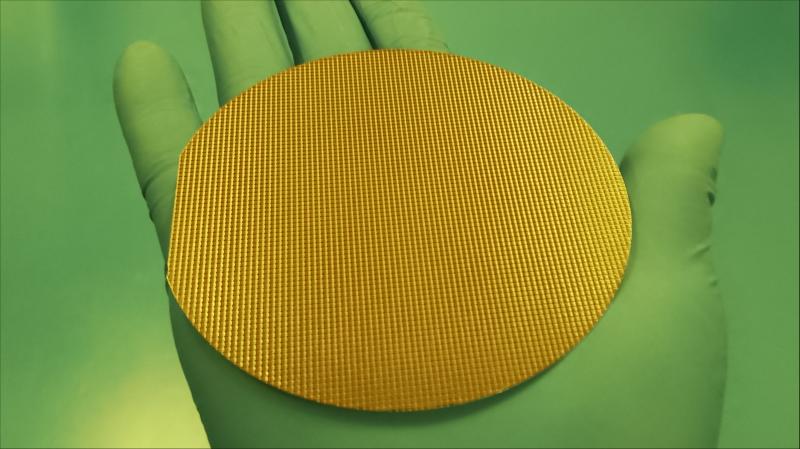
– Nearly vertical (90°) sidewalls: Due to SU-8’s moderate absorption of near-ultraviolet light (365nm) and uniform cross-linking density during exposure, the sidewalls exhibit excellent steepness after development. Unlike the common “bevel” or “undercut” of positive photoresists, SU-8’s trench and micro-hole sidewalls are smooth and vertical, directly ensuring predictable fluid resistance and accurate optical detection.
Large-thickness single-coat application – a “free adjuster” for groove depth
When processing grooves and deep holes, the thickness of the resist layer directly determines the depth of the structure. SU-8 has extremely high viscosity and solids content, allowing for the acquisition of uniformly thick resist layers ranging from a few micrometers to hundreds of micrometers (even exceeding 1 millimeter) in a single application by adjusting the spin coating speed.
– Compared to other photoresists requiring multiple coatings and baking cycles, SU-8’s single-coat thick-film process significantly simplifies the process and reduces cumulative errors.
– This controllable thickness makes fabricating grooves of varying depths extremely simple—simply by reserving different exposure doses during mask design or using grayscale masks, a network of grooves of varying depths can be formed on the same substrate, meeting the needs of complex fluid logic.
Excellent Mechanical and Chemical Stability—A “Rugged Skeleton” for Irregular Structures
Irregular structures (such as curved surfaces, cantilevered structures, bridges, pyramids, etc.) often require materials to possess both high mechanical strength and resistance to chemical corrosion. SU-8, after cross-linking, forms a three-dimensional network of epoxy resin, exhibiting the following outstanding characteristics:
– High hardness and resistance to deformation: The cured SU-8 has a Young’s modulus of approximately 4-5 GPa and a tensile strength of 60-80 MPa, making irregular structures less prone to collapse or breakage during subsequent processes (such as wet etching and electroplating). Even suspended or large-span irregular components maintain dimensional stability.
– Excellent chemical inertness: SU-8 is resistant to most acid and alkali solutions (except strong oxidizing acids) and common organic solvents. Therefore, when used as a mold, it can be repeatedly used in processes such as PDMS casting and metal electroforming without swelling or dissolution—a fatal weakness of many other photoresists (such as PMMA).
Optical transparency and biocompatibility—“visualization windows” in micropores and trenches
SU-8 exhibits excellent transmittance in the visible light band for microplates, cell culture dishes, or microfluidic observation windows, which is highly advantageous for real-time microscopy monitoring. Simultaneously, SU-8 has proven to have good biocompatibility; after surface modification, it can support cell adhesion and growth, thus being widely used in the fabrication of cell-capturing micropores, drug screening trenches, and other biomedical devices.
– The pore size and spacing of the micropores can be precisely controlled to the submicron level, and due to SU-8’s low diffraction effect on ultraviolet light (which can be further reduced through contact exposure), pore size consistency can be ensured even in densely fabricated micropore arrays.
– The smooth surface of the trenches reduces fluid turbulence and cell damage, improving the reliability of biological experiments.
Wide Process Tolerance – Easily Achieve Multi-Layer Irregular Composite Structures
SU-8 allows for multi-layer stacking lithography, meaning that through multiple spin coatings, alignments, and exposures, irregular structures with complex three-dimensional topologies can be constructed, such as:
– A bottom layer of wide trenches and an upper layer of narrow micropores, forming vertically interconnected “stepped” cavities;
– By adjusting the exposure focus depth, irregular grooves with inclined sidewalls or curved contours can be created to meet specific hydrodynamic requirements.
This process flexibility makes SU-8 an ideal material for rapid prototyping – most complex designs can be achieved without expensive equipment; ordinary UV lithography machines can fulfill this need.
Dual Use as a Sacrificial Layer or Permanent Structure
Although removal difficulties were mentioned earlier, from a benefit perspective, this precisely means that SU-8 is extremely durable when used as a permanent structure (such as microfluidic chip bodies and sensor supports). If temporary molds are needed, specialized photoresist removers (such as NMP heating) or oxygen plasma ashing can be used for removal, making it not entirely impossible.
Conclusion
SU-8’s enduring popularity in the microfabrication field stems from its perfect solution to the three core pain points in complex microstructure fabrication: insufficient thickness, non-straight sidewalls, and insufficient strength. Whether it’s deep and narrow trenches, high-density micropores, or arbitrarily curved irregular surfaces, SU-8 provides solutions with high precision, high repeatability, and high reliability. While it’s not without its shortcomings, in these specific applications, its advantages far outweigh its limitations—this is the real reason it has become a “star material.”
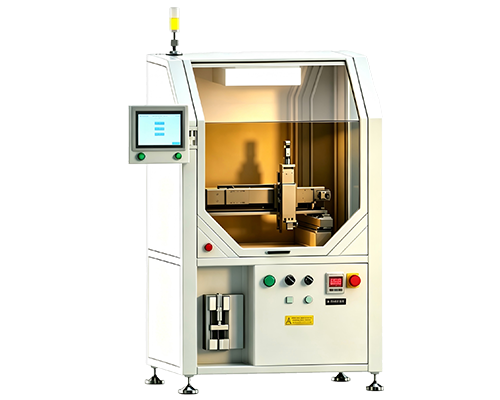
It’s worth mentioning that as the demands for complex structures in micro-nano fabrication continue to increase, an innovative coating technology called ultrasonic spraying is combining strongly with SU-8, providing a new approach to solving the pain points of traditional processes.
Traditional SU-8 coating mainly relies on spin coating, which involves uniformly spreading the photoresist through high-speed rotation. However, spin coating’s limitations become apparent when processing 3D microstructures such as irregular shapes, deep trenches, or high-density micropores: at high speeds, photoresist tends to form an excessively thin coating on the sidewalls of deep trenches, and may even create voids at the bottom; simultaneously, annoying “edge adhesive” often forms at the substrate edges due to surface tension.
Ultrasonic spraying technology cleverly solves these problems. Its working principle utilizes high-frequency vibration to atomize SU-8 photoresist into extremely fine and uniform droplets. These micron-sized droplets, like a “precise mist,” can gently and seamlessly cover any complex 3D surface.
This technology offers revolutionary advantages for processing complex microstructures with SU-8:
Perfect coverage of irregular shapes and deep trenches: The tiny atomized droplets easily penetrate and fill various complex areas such as deep trenches and micropores, effectively avoiding the voids and uneven thickness problems common in traditional spin coating. Its coverage and uniformity on high aspect ratio structures are significantly superior to traditional spin coating processes.
Achieving Extremely Uniform Thin Films: Ultrasonic spraying allows for precise control of coating thickness, density, and uniformity. Whether preparing ultra-thin or tens of micrometers thick coatings, it ensures high consistency.
Reliable Equipment and Controllable Costs: Ultrasonic nozzles are less prone to clogging, significantly reducing maintenance costs. Furthermore, as a simple, efficient, and repeatable process operating in atmospheric conditions, it provides an economical and reliable solution for producing high-quality SU-8 thin films.
Therefore, ultrasonic spraying technology is not intended to completely replace spin coating, but rather to expand the processing capabilities of SU-8 to new heights. When faced with irregular shapes, grooves, micropores, and trenches that are difficult to handle with spin coating, ultrasonic spraying offers an ideal coating solution with high precision and high uniformity, allowing SU-8, this “star material,” to unleash its greater potential on the stage of complex micro- and nanostructures.
About Cheersonic
Cheersonic is the leading developer and manufacturer of ultrasonic coating systems for applying precise, thin film coatings to protect, strengthen or smooth surfaces on parts and components for the microelectronics/electronics, alternative energy, medical and industrial markets, including specialized glass applications in construction and automotive.
Our coating solutions are environmentally-friendly, efficient and highly reliable, and enable dramatic reductions in overspray, savings in raw material, water and energy usage and provide improved process repeatability, transfer efficiency, high uniformity and reduced emissions.
Chinese Website: Cheersonic Provides Professional Coating Solutions
