
Medical Guidewire Surface Functional Coating
Medical Guidewire Surface Functional Coating | Ultrasonic Spray Coating Solution
Medical guidewire coatings are functional thin films prepared on the surface of stainless steel or nickel-titanium alloy guidewire cores for interventional procedures (cardiovascular, neurointerventional, urological, peripheral). Their core functions include reducing friction, protecting blood vessels, preventing thrombosis, and improving delivery/torque performance. They must meet medical device compliance requirements such as biocompatibility, adhesion, abrasion resistance, and no particle shedding. The dry film thickness of the coating is generally 0.1-10 μm, with 0.5-5 μm being the mainstream. Too thick a coating will change the guidewire stiffness, while too thin a coating may cause localized exposure of the substrate.
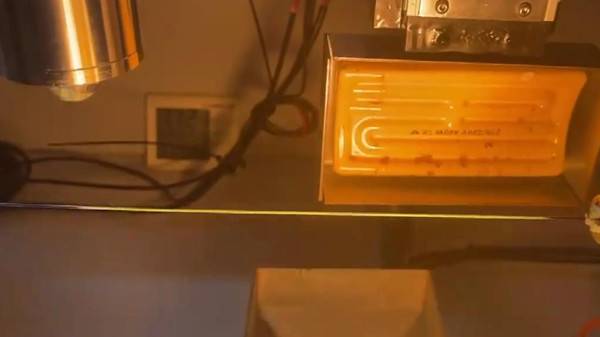
Two Mainstream Lubricating Coatings
Hydrophilic Super-Likely Lubricating Coating (Most Commonly Used Clinically)
Materials: PVP (polyvinylpyrrolidone), PEG, PAA (polyacrylic acid), hyaluronic acid, zwitterionic polymers; generally requires a primer and cross-linking to achieve chemical bonding and prevent physical detachment.
Principle: Upon contact with physiological saline/blood, it rapidly absorbs water, forming a hydrogel lubricating layer on the surface. Fluid lubrication can achieve a friction coefficient as low as 0.01-0.05.
Advantages: Extremely slippery when wet, suitable for tortuous and small blood vessels (nerves, coronary microguidewires), reducing the risk of vascular dissection and spasm; facilitates the exchange of microcatheters.
Disadvantages: Requires hydration activation; high friction when dry; repeated friction poses a risk of coating wear and particle detachment; weaker tactile feedback.
Typical Structure: Hydrophilic coating at the distal tip, wear-resistant hydrophobic coating at the proximal end, segmented composite guidewire, balancing smoothness and maneuverability.
Hydrophobic PTFE (Polytetrafluoroethylene) Coating
Principle: Low surface energy fluoropolymer, lubricating in both dry and wet environments, does not require water activation, and has a higher coefficient of friction than hydrophilic coatings.
Advantages: Wear-resistant, chemically stable, good tactile feedback, strong control during instrument exchange; commonly used in urology, peripheral guidewires, and proximal guidewire segments.
Disadvantages: Lubrication limit is lower than hydrophilic coatings; the manufacturing challenge lies in the adhesion of PTFE to the metal substrate, which is prone to peeling.
Common Clinical Combination: Proximal PTFE hydrophobic coating + distal hydrophilic coating, balancing proximal maneuverability and wear resistance with distal ultra-smooth bending.
Other Functional Coatings:
1. Heparin Antithrombotic Coating: Covalently bonded heparin inhibits surface coagulation, reducing the risk of intravascular thrombosis; commonly used in cardiovascular interventional guidewires.
2. Drug-Loaded Coating: Paclitaxel, rapamycin, etc., combined with biodegradable polymers for local sustained release, inhibiting restenosis; used in therapeutic guidewires.
3. Radiopaque Coating: Incorporating platinum, iridium, and bismuth oxide nanoparticles to improve X-ray visibility.
4. Antibacterial Coating: Used in urinary guidewires to reduce the risk of urinary tract infections.
Complete Guidewire Coating Process:
1. Substrate Pretreatment: Polishing, cleaning, and degreasing; plasma activation/silane coupling agent to introduce active groups and improve coating adhesion (a crucial step that directly determines whether the coating will peel off).
2. Primer (Anchoring Layer): Improves the adhesion between the coating and the metal.
3. Coating and Film Formation:
- Dip-coating/lift-coating: Suitable for whole-wire coating; Disadvantages: Difficult to precisely segment, prone to sagging, poor thickness consistency.
- Ultrasonic spraying: High-frequency vibration atomization, no high-pressure gas; allows for segmented selective spraying (only spraying the distal end/head hydrophilic layer); uniform and controllable film thickness, high material utilization, suitable for thin guidewires; can be used for multi-layer composite coatings (primer – functional layer – wear-resistant layer), currently the mainstream process for medical coatings.
- High-pressure air spraying: Prone to generating large droplets and bubbles, with more defects; high-end medical guidewires are gradually being replaced by ultrasonic spraying.
4. Curing: Thermal curing/UV crosslinking; Crosslinking is the core of hydrophilic coating adhesion; coatings with only physical adsorption are easily rubbed off.
5. Post-treatment, cleaning, testing, sterilization.
Key Performance and Testing (Key Points for Medical Device Review)
1. Lubricity: Coefficient of friction, pushing force; hydration activation time of hydrophilic coating ≤5s.
2. Coating Adhesion: Reciprocating friction test, particle detection (shed particles pose a significant risk), staining method for defect assessment.
3. Biosafety: Complete ISO 10993 standards (cytotoxicity, sensitization, hemolysis, blood compatibility); chemical characterization, precipitate detection.
4. Uniformity: Large areas of uncoated areas are not permitted; control the number and size of point defects.
5. Durability: Simulate performance degradation after repeated pushing, torsion, and bending.
> Risk Points: Coating detachment generates particles that can enter the bloodstream and cause embolism, a key concern for NMPA review. The coating must be chemically grafted, not simply physically adsorbed.
Process Comparison
1. Dip-Coating Pull-Up Process: Its core advantages are simple equipment structure, convenient operation, and adaptability to large-volume guidewire overall coating production, resulting in a low production threshold. However, this process has significant drawbacks: it cannot achieve precise segmented coating operations, the coating thickness at both ends of the guidewire is prone to unevenness, and sagging is common during production, leading to poor overall coating thickness consistency. This method is only suitable for the large-scale production of conventional, single-piece coated guidewires.
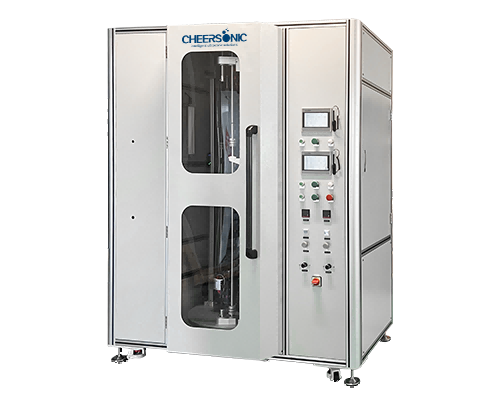
2. Ultrasonic Spraying Process Its core advantages are significant: it supports segmented selective spraying of guidewires, precisely fulfilling the differentiated coating requirements of hydrophilic distal tips and hydrophobic proximal tips; the prepared coating film thickness is uniform and controllable, with high material utilization, suitable for processing slender medical guidewires, and can simultaneously achieve the preparation of multi-layer composite coatings such as primers, functional layers, and wear-resistant layers, resulting in fewer defects in the finished product. The only drawback is the relatively higher equipment investment cost. This process is mainly used in the production of high-end microguidewires, suitable for processing scenarios involving high-precision coatings such as composite structure coatings and drug-loaded coatings.
Industry Development Trends
1. Covalently bonded hydrophilic coatings replace simple physically adsorbed coatings, reducing the risk of particle shedding.
2. Segmented composite coatings become mainstream: hydrophilic and ultra-slippery distal tips, hydrophobic and wear-resistant proximal tips, balancing bending performance and handling feel.
3. Amphoteric hydrophilic coatings: superior anti-protein adsorption and anti-thrombotic properties compared to traditional PVP.
4. Multifunctional integrated: Lubrication + antithrombosis + local drug sustained release composite coating.
About Cheersonic
Cheersonic is the leading developer and manufacturer of ultrasonic coating systems for applying precise, thin film coatings to protect, strengthen or smooth surfaces on parts and components for the microelectronics/electronics, alternative energy, medical and industrial markets, including specialized glass applications in construction and automotive.
Our coating solutions are environmentally-friendly, efficient and highly reliable, and enable dramatic reductions in overspray, savings in raw material, water and energy usage and provide improved process repeatability, transfer efficiency, high uniformity and reduced emissions.
If you have any technical questions, customization demands, or procurement inquiries about ultrasonic atomization nozzles, feel free to contact our professional sales and technical team for detailed parameters, customized solutions, and industry application support.
Email: market2@cheersonic.com
