
Lens Anti-reflective Coating
Lens anti‑reflective coating via ultrasonic spraying suppresses stray light, ghosting and glare. Achieve nanometer‑level uniform coating for endoscope, camera lens and lidar optical systems.
Function and Principle of Lens Anti-reflective Coating
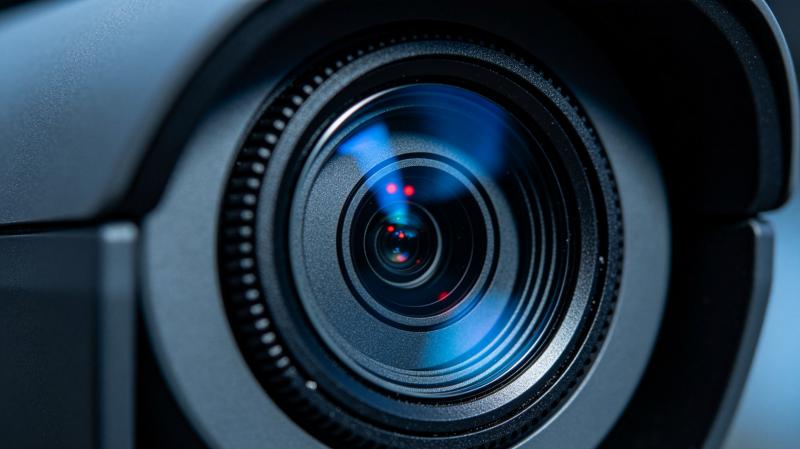
A lens anti-reflective coating is a functional coating applied to the internal surfaces of an optical system (such as the inner wall of a lens or the lens barrel). Its core function is to suppress the reflection and scattering of unwanted light (stray light), thereby improving image quality.
– Working Principle: By absorbing or scattering stray light, it blocks secondary reflection paths, preventing ghosting and glare, and improving image contrast.
– Application Scenarios: Precision optical systems such as camera lenses, endoscopes, microscopes, and lidar.
– Performance Requirements: Low reflectivity (ideally <2%), high absorption rate, uniform density, strong adhesion, wear resistance, and durability.
Working Principle of Ultrasonic Spraying Technology
Ultrasonic spraying is an advanced coating technology that utilizes high-frequency sound wave energy to atomize liquids, making it particularly suitable for the precision coating needs of the optical field.
Core Working Mechanism:
1. High-Frequency Vibration Generation: A piezoelectric transducer converts electrical energy into high-frequency mechanical vibrations of 20-180kHz, which are transmitted to a titanium alloy vibrating plate at the nozzle end.
2. Cavitation Effect: Ultrasonic waves form microbubbles in the liquid. The bursting of these bubbles generates localized high temperature and pressure, refining the material to the nanoscale and dispersing it uniformly.
3. Acoustic Flow Effect: Ultrasonic waves drive the liquid to generate directional microflows, causing nanoparticles to be adsorbed onto the substrate surface at a constant speed (approximately 0.1μm/s), forming a uniform coating.
4. Precise Deposition: A low-pressure carrier gas gently delivers atomized droplets (5-50μm in diameter) to the substrate, avoiding the splashing and rebound issues of traditional spraying.
Application of Ultrasonic Spraying in Lens Matte Coating Preparation
1. Process Flow
Core Steps of Ultrasonic Spraying Matte Coating:
Material Preparation: Matte material formulation and ultrasonic dispersion | Viscosity <50cP, solid content <5%, low surface tension. Substrate Treatment: Cleaning and activation (e.g., plasma treatment) | Ensure the surface is free of oil to improve adhesion. Spraying Operation: Ultrasonic atomization, precision deposition | Frequency 20-120kHz, power 5-20W, distance 30-80mm, flow rate 0.5-20ml/min
Curing Treatment: Thermal curing (80℃/30min) or UV curing (≥800mJ/cm²) | Selected according to material characteristics to ensure coating stability
2. Applicable Material Systems
Ultrasonic spraying is compatible with various high-performance matting materials:
– Composite matting system:
- Resin matrix: Modified polyurethane acrylate (30-50%), providing adhesion and mechanical strength
- Matting agent combination: Porous silica (5-15%) provides light scattering, nano carbon black (0.1-0.5%) enhances light absorption
- Auxiliary components: Fluorine-modified wax powder (1-3%) adjusts surface properties, fast-drying solvent (e.g., acetone: butyl acetate = 3:7)
– Special application materials:
- Endoscope lens: Special matting ink, good biocompatibility, sterilization resistant
- Spatial Optics: Inorganic potassium silicate resin-based ultra-black coating, high temperature resistance and strong weather resistance
Core Advantages of Ultrasonic Spraying Technology
Compared to traditional matte layer preparation processes (such as brushing, dip coating, and ordinary air pressure spraying), ultrasonic spraying has revolutionary advantages:
1. Leap in Coating Quality
- Improved Precision: Thickness control precision reaches the nanometer level (error <5nm), while traditional processes are only at the hundred-nanometer level.
- Breakthrough in Uniformity: Coating surface roughness <10nm, approaching optical mirror standards, nanoparticle uniformity >98%.
- Enhanced Adhesion: Acoustic energy causes particles to “embed” into the substrate surface (50-100nm), increasing adhesion by 5-8 times, with a wear resistance test loss of <1%.
2. Revolution in Materials and Efficiency
- Material Utilization Rate: Up to 95-99% (traditional spraying only 20-30%), significantly reducing the waste of expensive materials.
- Simplified Process: Traditional multi-layer coating (8-12 layers) → Ultrasonic coating requires only 3-5 layers, reducing costs and labor time.
- Environmental Advantages: Reduces volatile organic compound emissions, material waste is reduced by over 80%.
3. Adaptability to Complex Shapes
- Full Coverage of Curved Surfaces: Especially suitable for complex geometries such as endoscopes and telephoto lenses, ensuring uniformity throughout.
- Precise Edge Control: No drips or edge thickening, ensuring uniform light transmission in the optical system.
- Microstructure Compatibility: Can form continuous coatings on micropores, grooves, and other fine structures without clogging.
Practical Application Cases
1. Endoscope Lens Matting
Medical endoscopes are a typical application scenario for ultrasonic spraying technology:
– Technical Challenges: Small lens diameter (1-10mm), complex curvature, requiring high-temperature and high-pressure sterilization.
– Ultrasonic Solution: Atomizes special matting ink into micron-sized particles, and forms a uniform coating (10-30μm thickness) on the inner and outer surfaces of the lens using a precision robotic positioning system.
– Actual Results:
- Stray light suppression rate improved by >70%, image contrast increased by 3-5 times
- Coating withstands over 100 cycles of high-pressure steam sterilization at 134℃ without peeling
- Material utilization rate increased from 30% in traditional processes to 92%, significantly reducing production costs
2. High-end Photographic Lenses
In professional camera lens manufacturing, the performance improvements brought by ultrasonic spraying of matte coatings are particularly significant:
- Backlight performance: Flare spot area reduced by 73%, contrast loss reduced from 5-8% to 1.2%
- Low-light environment: Light transmittance reaches over 99.5% (traditional 95-98%), dark noise reduced by 2 stops at the same ISO
- Durability: Resistant to wiping and climate change, lifespan extended by 3-5 times, especially suitable for outdoor professional equipment
Summary and Outlook
Ultrasonic spraying technology is fundamentally changing the way lens matte coatings are prepared, moving from traditional “experience-based processes” to “precision science.” This technology not only significantly improves the performance of optical systems but also provides a new path for sustainable development in the industry through material savings and environmental advantages.
With further technological advancements and cost reductions, ultrasonic spraying is expected to become a standard process in the manufacturing of high-end optical equipment, and even expand into emerging fields such as VR/AR displays, automotive LiDAR, and semiconductor testing, opening up broader application possibilities for “micron-level light control.”
Key technologies: Selecting a matching matting material system, precisely controlling ultrasonic parameters (frequency, power, flow rate), and combining this with a precision motion control system are the core elements for achieving high-performance lens matting layers.
About Cheersonic
Cheersonic is the leading developer and manufacturer of ultrasonic coating systems for applying precise, thin film coatings to protect, strengthen or smooth surfaces on parts and components for the microelectronics/electronics, alternative energy, medical and industrial markets, including specialized glass applications in construction and automotive.
Our coating solutions are environmentally-friendly, efficient and highly reliable, and enable dramatic reductions in overspray, savings in raw material, water and energy usage and provide improved process repeatability, transfer efficiency, high uniformity and reduced emissions.
If you have any technical questions, customization demands, or procurement inquiries about ultrasonic atomization nozzles, feel free to contact our professional sales and technical team for detailed parameters, customized solutions, and industry application support.
Email: market2@cheersonic.com