
Coating Polymer on Sensors
Application of Ultrasonic Spray Coating Technology in Polymer Coatings for Sensors (Including Conductive Polymers)
Against the backdrop of technological advancements in the Internet of Things, medical diagnostics, industrial monitoring, and other fields, optimizing sensor performance remains a core challenge. As polymer coatings play a critical role in enabling sensor functionality and ensuring operational longevity, the coating process directly determines device reliability and application value. Ultrasonic spray coating systems, leveraging their unique atomization mechanism, demonstrate irreplaceable advantages in the field of sensor polymer coatings—particularly suitable for depositing conductive polymer coatings required for signal transmission, protection, and functional interface construction—thus providing efficient solutions for high-precision sensor manufacturing.
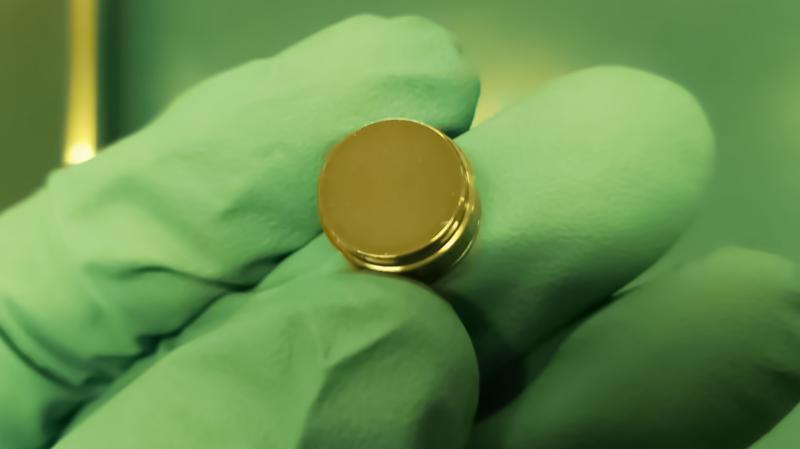
Compared with conventional spray technologies, ultrasonic spray coating systems atomize polymer solutions into micron- or even nanometer-scale droplets through high-frequency vibration, fundamentally eliminating coating non-uniformities caused by airflow disturbances. In sensor coating applications, this technology offers three major advantages that precisely meet the manufacturing requirements of precision devices.
First, the technology enables conformal thin-film coatings on surfaces with complex geometries. Whether on micro‑/nano‑scale trenches of MEMS sensors, curved surfaces of flexible sensors, or three-dimensional arrays of multi‑channel sensors, the fine droplets generated by ultrasonic atomization, owing to their excellent fluidity and adhesion, spread uniformly along substrate contours. This avoids the skipping or accumulation issues common at corners and gaps in conventional spraying, ensuring complete coverage of critical functional areas and laying a solid foundation for stable sensor operation.
Second, it maintains a stable deposition rate even at extremely low flow rates—a feature particularly valuable for expensive nano‑polymer suspensions and conductive polymer materials. Sensor coatings typically require only micron-level thickness, and conventional processes often waste materials due to insufficient flow‑rate control precision. Ultrasonic spraying, however, can precisely regulate flow rates at the microliter‑per‑minute level, improving material utilization by over 30% while maintaining coating quality, thereby significantly reducing manufacturing costs for high‑end sensors.
Third, it enables uniform film formation on thermally sensitive or flexible substrates. Many emerging sensors use flexible materials such as polyimide or thermally sensitive semiconductor substrates. The high‑temperature airflow in conventional thermal spraying can easily cause substrate deformation or performance degradation. In contrast, ultrasonic spraying involves no high‑temperature interference throughout the process; atomization relies solely on mechanical vibration, allowing uniform coating deposition at room temperature—perfectly suited for manufacturing next‑generation devices such as flexible electronic sensors and wearable medical sensors.
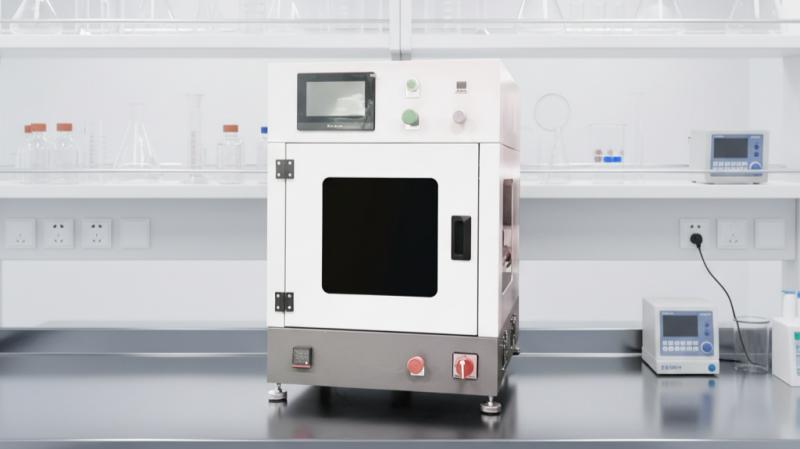
By precisely adjusting core parameters—including nozzle vibration frequency (which directly determines droplet size), liquid deposition rate, and spray width—technicians can flexibly tailor coating microstructures. Fine droplets generated at high frequencies produce dense, glossy coatings suitable for anti‑corrosion protection of sensors, while larger droplets under low‑frequency conditions can create porous matte structures that enhance mass‑transfer efficiency and response speed in gas sensors. This tunability enables ultrasonic spray technology to precisely match the functional requirements of diverse sensors—from conductive polymer signal layers in biosensors to protective coatings in environmental sensors—simultaneously ensuring performance optimization and long‑term stability, thereby driving sensor technology toward higher precision and extended service life.
About Cheersonic
Cheersonic is the leading developer and manufacturer of ultrasonic coating systems for applying precise, thin film coatings to protect, strengthen or smooth surfaces on parts and components for the microelectronics/electronics, alternative energy, medical and industrial markets, including specialized glass applications in construction and automotive.
Our coating solutions are environmentally-friendly, efficient and highly reliable, and enable dramatic reductions in overspray, savings in raw material, water and energy usage and provide improved process repeatability, transfer efficiency, high uniformity and reduced emissions.
Chinese Website: Cheersonic Provides Professional Coating Solutions