
Complete Analysis of Coatings for Touch-Controlled Products
What kind of coating is applied?
Based on their functions, they can be mainly divided into the following major categories:
1. Anti-Reflective Coating
What it is: A very thin coating that utilizes the principle of optical interference to eliminate reflected light. It is typically composed of multiple layers of metal oxides (e.g., silicon dioxide, zirconium dioxide, etc.).
What it does:
Improves visibility: Significantly reduces screen glare under bright light, resulting in clearer images and more vivid colors.
Reduces visual fatigue: Users do not need to squint or increase brightness to combat reflections, making prolonged use more comfortable.

2. Anti-Fingerprint / Oleophobic & Hydrophobic Coating
What it is: A very thin coating, typically based on fluorosilane compounds, that creates a low-surface-energy surface.
What it does:
Resists stains: Makes it difficult for fingerprints, sweat, and oils to adhere to the screen surface.
Easy to clean: Even when stained, it can be wiped clean very easily.
Maintains smooth tactile feel: Provides a dry, smooth touch experience, preventing the finger from feeling “draggy.”
3. Anti-Wear / Hard Coating
What it is: A coating typically based on silica (e.g., polysiloxane) or high-hardness resins, which forms a tough protective layer upon curing. Well-known products like Corning’s Gorilla Glass Victus series incorporate advanced protective layers built-in.
What it does:
Scratch resistance: Prevents daily objects such as keys and grit from scratching the screen. This is the first line of defense protecting the fragile glass substrate.
Enhances durability: Enables the screen to better withstand everyday friction and wear, extending product lifespan.
4. Anti-Newton-Ring Coating
What it is: A microstructured coating used to eliminate interference fringes generated when pressure is applied to multilayer film structures (such as in some older touchscreens).
What it does:
Eliminates interference patterns: Prevents colored rings or water-like ripples from appearing on the screen under pressure, ensuring a clean and uniform display. This type is less common in modern highly integrated displays.
5. Conductive Coating
What it is: The most well-known is ITO (Indium Tin Oxide), a transparent conductive film. Although newer materials such as metal mesh and silver nanowires are now available, ITO remains a foundational material.
What it does:
Enables touch functionality: This is the core of touchscreens. It forms an invisible electric field on the screen surface; when a finger (a conductor) touches it, the electric field changes, allowing precise positioning.
The glass used in modern high-end electronic products is typically not coated “after the fact.” Instead, a tough compressive stress layer is formed during the glass manufacturing process through ion exchange, and multiple functional coatings are integrated on top of this, creating an integrated protective surface. You can consider all these technologies as “functional surface layers” applied to achieve the aforementioned purposes.
In summary, the coatings on electronic touch products constitute a carefully designed “invisible guardian” system. They allow you to enjoy clear displays and smooth touch control without worrying about scratches, stains, or glare—an indispensable and important component of modern smart devices.
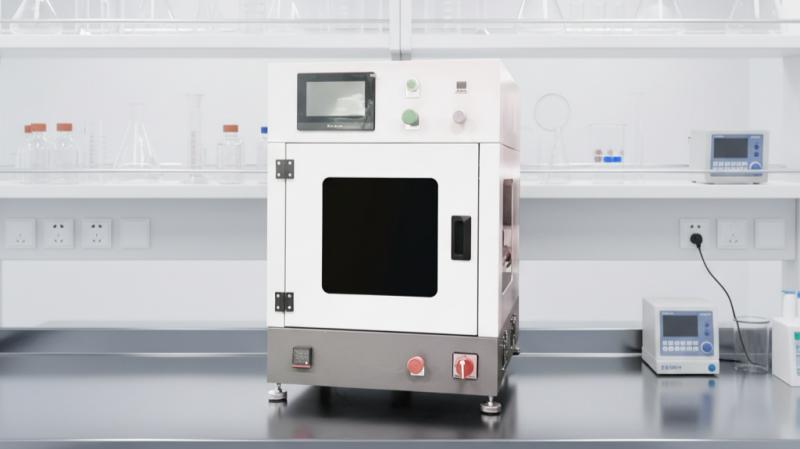
Ultrasonic spray coating technology provides high-precision coating solutions for touch-controlled products (smartphones, tablets, wearables, etc.), perfectly matching their stringent requirements for coating uniformity, optical transparency, and touch compatibility. With micron-level atomization capabilities, it can precisely apply functional coatings such as anti-fingerprint, scratch-resistant, conductive, and anti-reflective layers, achieving coating thickness accuracy of ±1 μm, with no pinholes, strong adhesion, and no interference with touch signal transmission.
This technology is compatible with a wide range of coating materials, including ITO, silver nanowires, fluoropolymers, silicon dioxide, and more, and is adaptable to both flexible and rigid touch substrates. It reduces material waste (utilization rate exceeding 90%). Its non-contact spraying avoids substrate damage, and process parameters can be precisely controlled to meet the functional requirements of different touch products. It helps enhance touch smoothness, durability, and display performance, providing stable process support for performance upgrades in high-end touch devices.
About Cheersonic
Cheersonic is the leading developer and manufacturer of ultrasonic coating systems for applying precise, thin film coatings to protect, strengthen or smooth surfaces on parts and components for the microelectronics/electronics, alternative energy, medical and industrial markets, including specialized glass applications in construction and automotive.
Our coating solutions are environmentally-friendly, efficient and highly reliable, and enable dramatic reductions in overspray, savings in raw material, water and energy usage and provide improved process repeatability, transfer efficiency, high uniformity and reduced emissions.
Chinese Website: Cheersonic Provides Professional Coating Solutions