
Ultrasonic Coating of Doped Carbon Materials
Ultrasonic Coating of Doped Carbon Materials: Empowering Upgrades in Fuel Cell Electrode Materials
Fuel cells, as highly efficient and clean energy conversion devices, occupy a crucial position in the new energy field. The performance improvement of alkaline membrane fuel cells (AEMFC) and proton exchange membrane fuel cells (PEMFC) hinges on the conductivity, catalytic activity, and stability of the electrode materials. Ultrasonic coating technology for doped carbon materials, with its unique process advantages, provides an effective path to solve problems such as low efficiency of non-precious metal catalyst supports and electrode material corrosion, driving the development of core fuel cell materials towards high performance and low cost.

Ultrasonic coating technology, based on the cavitation effect of ultrasound, exhibits significant advantages in the coating process of doped carbon materials. Traditional coating processes easily lead to carbon material agglomeration, forming conductive blind spots and coating defects. However, under the action of ultrasound, the liquid medium generates high-frequency vibrations, forming microbubbles. The energy released when these bubbles burst can disperse the agglomerated doped carbon material into nanoscale particles, ensuring their uniform distribution on the substrate surface. Simultaneously, ultrasonic energy enhances the adhesion between the coating and the substrate, avoiding conductivity degradation caused by excessive binder, and forming a functional coating with controllable thickness and a dense structure, laying the foundation for building a continuous and efficient conductive network for the electrode material. In the field of non-precious metal catalysts for AEMFC cathodes, ultrasonic coating technology for doped carbon materials has achieved dual optimization of support and catalyst performance. Doped carbon materials (such as nitrogen-doped graphene and phosphorus-doped carbon nanotubes) form numerous active sites through heteroatomation, possessing both high conductivity and catalytic assist properties, making them ideal supports for non-precious metal catalysts. After ultrasonic coating, the doped carbon support forms a uniform porous structure on the electrode substrate surface, providing ample loading sites for transition metal-based catalysts (such as Fe-N-C and Co-N-C) and accelerating electron transfer through a continuous carbon framework. Experimental data show that the nitrogen-doped carbon-supported Fe-N-C catalyst coated ultrasonically exhibits a 40-60 mV increase in the oxygen reduction reaction half-wave potential and a 15%-20% increase in limiting current density compared to traditional coating processes. Furthermore, after 1000 hours of continuous operation under alkaline conditions, the performance degradation rate is less than 8%, solving the problem of insufficient activity and stability of non-precious metal catalysts.
Addressing the need for low-corrosion electrode materials in PEMFCs, ultrasonic coating technology for doped carbon materials has achieved breakthroughs in electrode performance through structural design and composition optimization. During PEMFC operation, the acidic environment and high potential easily lead to oxidative corrosion of traditional carbon electrodes, causing catalyst detachment and damage to the conductive network. Ultrasonic coating technology combines more corrosion-resistant boron-doped carbon materials with an antioxidant coating to construct a composite structure on the electrode surface: an inner doped carbon layer ensures high conductivity, while the outer anti-corrosion layer blocks the penetration of corrosive media. This composite coating not only reduces the corrosion rate of the electrode by more than 60% at an operating potential of 0.8-1.0V but also maintains a conductivity of over 95%, effectively improving the long-term operational stability of PEMFCs. Furthermore, the precise control capability of ultrasonic coating can reduce the amount of carbon material used, lowering electrode fabrication costs and creating conditions for the industrial application of PEMFCs.
The application value of ultrasonic coating technology for doped carbon materials is also reflected in the customization advantages brought about by the adjustability of process parameters. By adjusting the ultrasonic power, coating speed, and concentration of doped carbon material, the coating thickness and pore structure can be precisely controlled to meet the operating conditions of different fuel cells. For example, in high-power-density AEMFCs, increasing ultrasonic power can create a high-porosity coating, enhancing mass transfer efficiency; while in long-life PEMFCs, optimizing the coating rate forms a dense coating, improving corrosion resistance. This flexible process characteristic allows the technology to be adapted to different electrode material systems, showing broad application prospects.
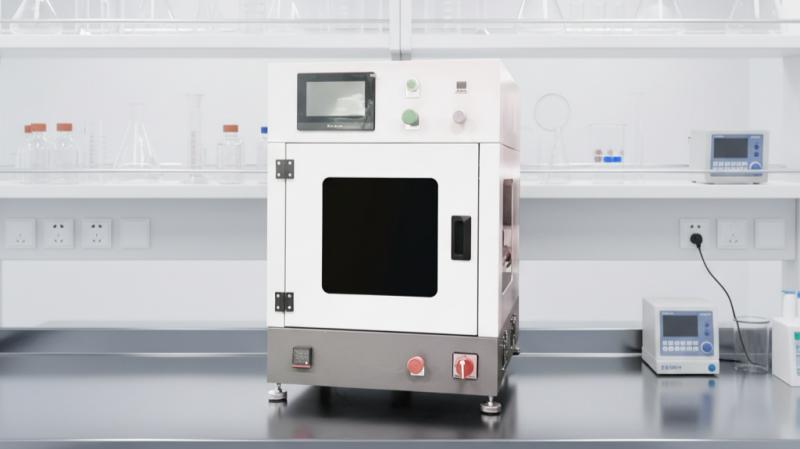
In summary, ultrasonic coating technology for doped carbon materials effectively solves key problems such as low efficiency of non-precious metal catalyst supports in AEMFCs and electrode corrosion in PEMFCs by optimizing the microstructure and interfacial properties of electrode materials, significantly improving the performance and economics of fuel cells. Further breakthroughs in doping element combinations and coating equipment integration will undoubtedly drive the upgrading and iteration of core fuel cell materials, providing strong support for the high-quality development of the new energy industry.
About Cheersonic
Cheersonic is the leading developer and manufacturer of ultrasonic coating systems for applying precise, thin film coatings to protect, strengthen or smooth surfaces on parts and components for the microelectronics/electronics, alternative energy, medical and industrial markets, including specialized glass applications in construction and automotive.
Our coating solutions are environmentally-friendly, efficient and highly reliable, and enable dramatic reductions in overspray, savings in raw material, water and energy usage and provide improved process repeatability, transfer efficiency, high uniformity and reduced emissions.
Chinese Website: Cheersonic Provides Professional Coating Solutions