
Ultrasonic Spraying Antireflective Film (AR Film)
Analysis and Application of Ultrasonic Spraying Antireflective Film (AR Film) Technology
Antireflective films (AR films), as functional thin films that reduce optical surface reflection and improve light transmittance, are widely used in optical devices, electronic displays, photovoltaic energy, and other fields. Ultrasonic spraying technology, with its precise control, high efficiency, and environmental friendliness, has become one of the core processes for preparing high-performance AR films, significantly promoting the expansion of AR film applications in industrial settings.
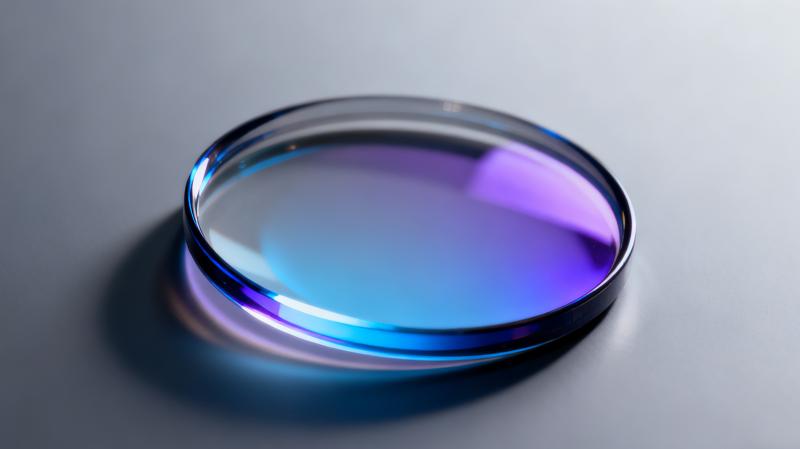
The core principle of ultrasonic spraying for AR film preparation is to utilize high-frequency ultrasonic vibration to achieve precise atomization and deposition of materials. A piezoelectric transducer converts electrical signals into high-frequency mechanical vibrations, causing the AR film precursor solution to form an extremely thin liquid film at the nozzle, which is then torn into uniform micron-sized droplets. These low-velocity droplets are directionally deposited on the substrate surface under the guidance of a carrier gas, and subsequently cured or pyrolyzed to form a dense and uniform antireflective film layer. Compared to traditional air spraying, this process does not require high-pressure airflow, reducing droplet splashing and material waste from the source, while ensuring nanometer-level precision control of the film thickness.
Optimizing process parameters is crucial for ensuring the performance of ultrasonically sprayed AR films. Amplitude, frequency, liquid flow rate, and substrate temperature constitute the core control system: When the amplitude is in the 10–30 μm range, the droplet diameter distribution is narrowest, resulting in optimal deposition uniformity. Frequency balances precision and efficiency by controlling the atomization scale; high frequencies (>100 kHz) are suitable for nanoscale ultrathin AR films, while low frequencies (<50 kHz) are suitable for high-viscosity precursors. Liquid flow rate must be matched with atomization energy; low flow rates (<0.1 ml/s) achieve high-precision thin coatings, while high flow rates improve production efficiency. Furthermore, substrate temperature significantly affects film crystallinity; for example, when preparing SiO₂/TiO₂ AR films, a substrate temperature of 500℃ yields a high-performance crystalline structure.
Ultrasonic spraying technology provides AR film preparation with many unique advantages. First, material utilization is more than four times higher than traditional processes, significantly reducing production costs and aligning with green manufacturing requirements. Second, the coating exhibits excellent uniformity, enabling consistent coating of large-area substrates (such as photovoltaic glass), with film transmittance reaching up to 99%. Third, it boasts strong process compatibility, applicable to various substrates such as glass, plastics, and metals, and can prepare single-layer and multi-layer composite AR film systems to meet the optical needs of different scenarios. Fourth, equipment costs are only a fraction of those for processes like vacuum evaporation and CVD, making it particularly suitable for large-scale mass production.
In practical applications, ultrasonic spraying of AR films has become a core supporting technology in multiple fields. In the photovoltaic field, the SiO₂/TiO₂ antireflective film prepared using this technology can increase glass transmittance by more than 10%, significantly improving the photoelectric conversion efficiency of solar cells. In the electronic display field, AR films applied to mobile phone screens and LED displays can effectively reduce glare and enhance the visual experience in strong light environments. In the optical device field, eyeglass lenses and projection lenses coated with AR films prepared using this technology can significantly reduce reflection loss and enhance image clarity. Furthermore, the application of this technology in high-precision fields such as biomedicine is gradually expanding.
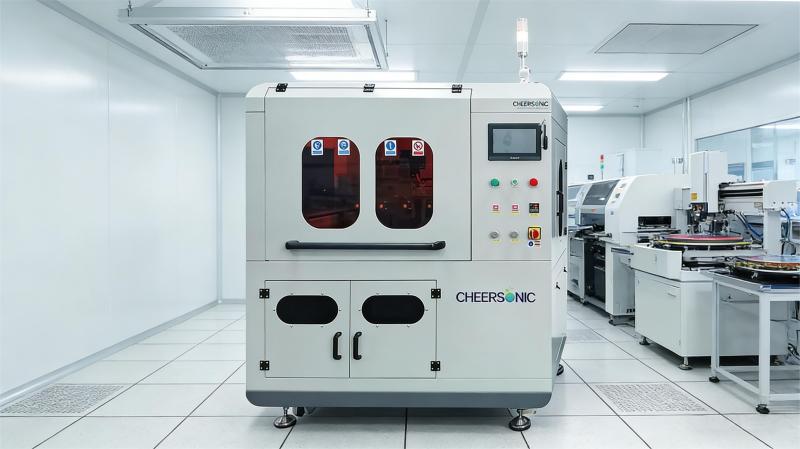
With the development of new energy and electronic technologies, ultrasonic spraying AR film technology is evolving towards multi-layer composites and functional integration. In the future, through process optimization and material innovation, it is expected to achieve the efficient preparation of multi-functional integrated films with anti-reflection, wear resistance, and anti-fouling properties, further expanding its application boundaries in emerging fields such as high-end optics and flexible electronics, and injecting continuous momentum into the high-quality development of the optical thin film industry.
About Cheersonic
Cheersonic is the leading developer and manufacturer of ultrasonic coating systems for applying precise, thin film coatings to protect, strengthen or smooth surfaces on parts and components for the microelectronics/electronics, alternative energy, medical and industrial markets, including specialized glass applications in construction and automotive.
Our coating solutions are environmentally-friendly, efficient and highly reliable, and enable dramatic reductions in overspray, savings in raw material, water and energy usage and provide improved process repeatability, transfer efficiency, high uniformity and reduced emissions.
Chinese Website: Cheersonic Provides Professional Coating Solutions
