
Lasagna: History, Production, Nutritional Considerations, and Market Relevance
Executive Summary
Lasagna is one of the world’s most recognizable baked pasta dishes, characterized by layered sheets of pasta combined with sauces, cheeses, vegetables, and/or meat proteins. Originating from Italy and evolving through centuries of culinary development, lasagna has become a globally consumed meal available in homemade, restaurant-prepared, refrigerated, frozen, and ready-to-eat formats.
This white paper examines the historical origins of lasagna, its core ingredients and production methods, nutritional considerations, market significance, consumer trends, and future opportunities within the prepared foods sector.
Introduction
Lasagna occupies a unique position in global cuisine. It combines staple ingredients—grain-based pasta, dairy products, vegetables, and proteins—into a layered structure that offers versatility, scalability, and broad consumer appeal. While traditionally associated with Italian culinary traditions, lasagna has been adapted to regional preferences across North America, Europe, Latin America, Asia, and other markets.
The dish’s enduring popularity stems from several factors:
Familiar and comforting flavor profiles
Adaptability to dietary preferences
Suitability for family-style dining
Compatibility with large-scale food manufacturing
Strong consumer recognition
As a result, lasagna serves as both a cultural food product and a commercially significant prepared meal category.
Historical Background
The concept of layered pasta dishes dates back to antiquity. Early references to layered dough preparations appeared in Mediterranean culinary traditions long before the modern form of lasagna emerged.
The contemporary version is generally associated with regions of Italy where layered pasta, cheese, and sauce combinations became standardized over centuries. Regional variations developed based on local ingredients and culinary customs.
Over time, immigration and globalization contributed to the international spread of lasagna. The dish became particularly prominent in North America during the twentieth century, where adaptations introduced new ingredient combinations and preparation methods.
Today, lasagna is consumed worldwide and is recognized as a staple comfort food in many households.
Core Components
Pasta Sheets
Lasagna relies on flat pasta sheets that create distinct layers within the dish. These sheets are typically produced from wheat flour and water, with some formulations incorporating eggs.
Key characteristics include:
Structural integrity during baking
Ability to absorb moisture
Consistent thickness
Layering flexibility
Sauce Systems
Sauces provide moisture, flavor, and cohesion between layers.
Common categories include:
Tomato-based sauces
Dairy-based sauces
Vegetable purées
Meat-enriched sauces
Sauce selection significantly influences flavor profile, texture, and nutritional composition.
Cheese Components
Cheese contributes:
Creaminess
Protein content
Flavor complexity
Browning characteristics
Multiple cheese varieties may be used within a single formulation to achieve desired sensory outcomes.
Protein Ingredients
Protein options include:
Ground meats
Poultry
Seafood
Legumes
Plant-based alternatives
Consumer demand for alternative protein sources has expanded the range of formulations available in commercial markets.
Vegetable Ingredients
Vegetables commonly incorporated into lasagna include:
Spinach
Zucchini
Mushrooms
Eggplant
Onions
Bell peppers
Vegetable-focused formulations have grown in popularity as consumers seek healthier and more sustainable meal options.
Production Process
Traditional Preparation
Traditional lasagna preparation generally involves:
Ingredient preparation
Sauce production
Layer assembly
Baking
Cooling and serving
Each layer contributes to the final texture and flavor balance.
Commercial Manufacturing
Industrial production introduces additional steps:
Ingredient standardization
Automated assembly
Quality control testing
Packaging
Refrigeration or freezing
Distribution
Manufacturers prioritize consistency, food safety, and shelf-life optimization while maintaining product quality.
Nutritional Considerations
Lasagna can provide a balanced combination of macronutrients.
Carbohydrates
Pasta serves as the primary carbohydrate source, contributing energy and structural bulk.
Protein
Protein content varies based on:
Cheese quantity
Meat inclusion
Plant-based ingredients
Fat
Fat levels are influenced by:
Dairy ingredients
Meat content
Added oils
Micronutrients
Depending on formulation, lasagna may contain:
Calcium
Iron
Potassium
B vitamins
Vitamin A
Vitamin C
Health-Oriented Reformulation
Recent product development efforts have focused on:
Reduced sodium content
Lower saturated fat levels
Increased vegetable inclusion
Whole-grain pasta options
Higher protein formulations
These modifications aim to align with evolving consumer health preferences.

Market Analysis
Consumer Demand
Lasagna maintains strong demand due to:
Familiarity
Convenience
Family appeal
Versatility
Prepared meal categories frequently include lasagna among their highest-volume offerings.
Food Service Applications
Lasagna is widely utilized in:
Restaurants
Cafeterias
Catering operations
Institutional food service
Its scalability and make-ahead preparation advantages contribute to operational efficiency.
Retail Presence
Retail formats include:
Frozen meals
Refrigerated prepared foods
Meal kits
Fresh deli offerings
Consumer interest in convenient meal solutions continues to support category growth.
Sustainability Considerations
The environmental impact of lasagna varies according to ingredient selection and production practices.
Key considerations include:
Agricultural resource use
Packaging materials
Food waste reduction
Transportation requirements
Strategies for improving sustainability may include:
Increased plant-based ingredients
Recyclable packaging
Efficient manufacturing systems
Responsible sourcing practices
Emerging Trends
Several trends are shaping the future of the lasagna category:
Plant-Based Innovation
Demand for meat alternatives has encouraged the development of plant-based lasagna products.
Functional Nutrition
Consumers increasingly seek products offering:
Higher protein levels
Additional fiber
Reduced sodium
Enhanced nutrient density
Global Flavor Adaptation
Manufacturers and food-service operators continue to introduce regional flavor profiles inspired by global cuisines.
Premiumization
Premium offerings emphasize:
Artisanal preparation methods
High-quality ingredients
Authentic regional recipes
Enhanced culinary experiences
Challenges
The category faces several challenges:
Rising ingredient costs
Supply-chain volatility
Consumer concerns regarding sodium and fat levels
Competitive pressure from alternative prepared meals
Organizations operating in the category must balance affordability, convenience, nutrition, and sensory quality.
Conclusion
Lasagna remains one of the most enduring and adaptable prepared foods in the global marketplace. Its layered structure supports extensive customization across ingredients, dietary requirements, and regional preferences. As consumer expectations evolve toward convenience, nutrition, sustainability, and premium quality, lasagna continues to demonstrate strong potential for innovation and market growth.
The combination of culinary heritage, manufacturing scalability, and broad consumer acceptance positions lasagna as a resilient and relevant food category for both food-service and retail sectors. Continued investment in product development, ingredient innovation, and sustainable production practices is likely to support the category’s long-term success.

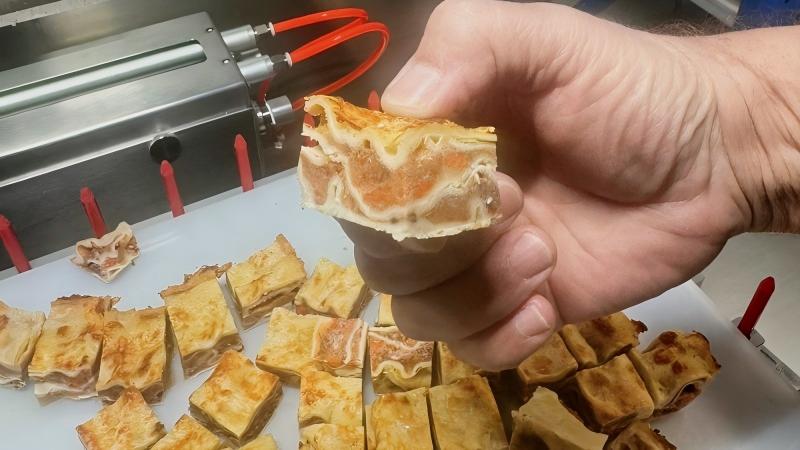
Ultrasonic cutting of pasta is an efficient technique in food processing. It uses 20-40kHz high-frequency vibration to make the titanium alloy blade oscillate tens of thousands of times per second, without the need for sharp edges or heavy pressure, making it easy to cut noodles. During cutting, there is almost no friction, no sticking or deformation of the blade, and the cutting surface is smooth and flat, eliminating the problems of compression, adhesion, and debris in traditional cutting. The entire process is low-temperature without thermal damage, preserving the original taste, texture, and color of the pasta, and improving the consistency of the product phase. The equipment is adapted to the production line, which can accurately control the length, reduce waste and cleaning frequency, and achieve higher efficiency.
About Cheersonic
Cheersonic manufactures the leading portioning equipment for bakeries producing fresh and frozen desserts. Since 1998 bakers have used Cheersonic machines to cut, slice and portion cheesecake, pie, layer cake, loaves, butter, cheese, pizza, sandwichs, and more. Cheersonic offers ultrasonic cutting solutions that support start-up bakeries and high production commercial facilities alike. Small standalone machines can be used in manual baking facilities and large inline robotic solutions aid in high speed production.
Cheersonic offers many ultrasonic slicing models, both inline and offline applications, with production speeds of 80 to 1,500 cakes or pies per hour.
Cheersonic’ latest offline introductions include ultrasonic cutting with or without divider inserts between each slice. This improves the quality of the cut and makes for a much better product presentation for the customer. In addition, robotic arm improves the speed, efficiency, and accuracy of the cutting process, producing professional looking products every time.
