
Industrial Cheese Slicing Equipment
Industrial cheese slicing equipment is essential assets in large-scale food processing facilities, dairies, and commercial kitchens. Their primary purpose is to process substantial quantities of cheese products as quickly, cleanly, and consistently as possible. Unlike manual cutting, which is labor-intensive, slow, and prone to inconsistency, automated cheese cutting equipment delivers uniform results while upholding strict hygiene standards. These machines are designed to handle various cheese types—from soft, semi-soft, and hard varieties like mozzarella, cheddar, and Parmesan—to blocks, wheels, and logs of all dimensions.
At the heart of modern industrial cheese cutters is a combination of robust mechanical design and food-safe materials. Most machines are constructed from stainless steel, which resists corrosion, withstands high-pressure washdowns, and meets stringent food safety regulations such as those from the FDA and EU. Components that contact cheese are often made from antimicrobial plastics or polished metal with seamless welds to prevent bacterial buildup. This hygienic, easy-to-clean construction is critical because cheese residues can quickly become breeding grounds for microorganisms if not thoroughly removed. Many systems feature tool-less disassembly, allowing operators to dismantle cutting heads, guides, and conveyors for rapid cleaning and sanitization between production runs.
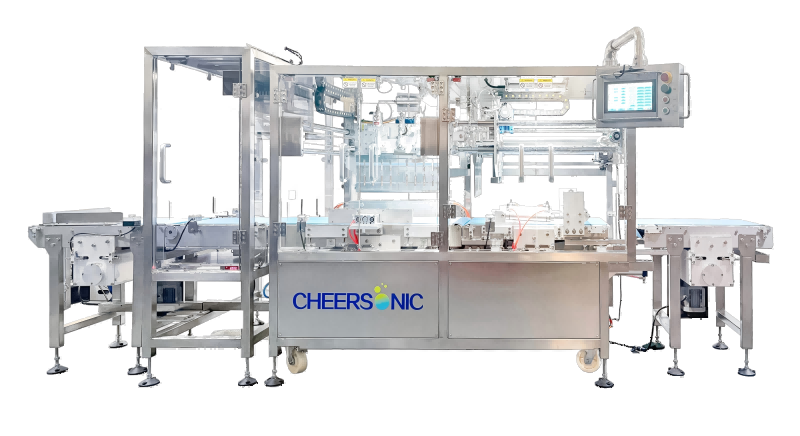
Versatility is another hallmark of industrial cheese cutters. Depending on the model and attachments, these machines can cut cheese into a wide array of desired shapes: cubes for salad bars or ingredient blends, strips for sandwiches or pizza toppings, slabs for deli counters, or even grated and shredded forms for processed foods. For example, a hydraulic block cutter can slice a 40-pound block into perfectly even slabs in seconds, while a rotary dicer with interchangeable grids transforms the same block into precise half-inch cubes. Some advanced systems integrate multiple cutting stages—first slicing, then strip-cutting, then dicing—all in one continuous pass. This flexibility allows food manufacturers to switch between product specifications without investing in separate dedicated machines.
Beyond shape control, modern equipment emphasizes speed and waste reduction. Industrial cheese cutters can process thousands of pounds per hour with minimal product loss. Precision-ground blades or high-tension wire cutters ensure clean cuts that reduce fines (small crumbled particles) and prevent smearing, a common problem with softer cheeses where blades drag rather than slice. Smearing not only ruins appearance but can also alter texture and shelf life. Therefore, many machines employ reciprocating blades, ultrasonic cutters, or high-speed wire loops that glide through cheese with minimal friction. Additionally, automated feeding systems with laser sensors or weight checkers optimize block positioning, ensuring every cut yields maximum usable product.
Safety and ergonomics are also prioritized. Loading heavy cheese blocks manually poses injury risks, so industrial cutters often include hydraulic lifts, powered conveyors, or robotic pick-and-place arms. Dual palm-button controls, light curtains, and emergency stops protect operators from moving blades. Noise levels are dampened, and vibration is minimized to reduce fatigue during long shifts.
Applications for these machines span the food industry. Large pizza chains use cheese dicers to produce uniform mozzarella cubes for even melting. Salad manufacturers rely on shredders to create fluffy, non-clumping cheese for bagged mixes. Processed cheese producers employ high-throughput slicers for sandwich slices. Even artisanal creameries adopt smaller-scale industrial cutters to handle larger batches while maintaining quality.
In conclusion, industrial cheese cutting equipment transforms raw cheese blocks into precise, ready-to-use forms with speed, cleanliness, and consistency. These hygienic, easy-to-clean machines are indispensable for modern food preparation, helping businesses reduce labor costs, minimize waste, ensure product uniformity, and meet rigorous safety standards. As demand for processed and convenience foods grows, so too will the sophistication of these cutting systems—integrating smart sensors, data logging, and even AI-driven blade adjustments for optimal performance. Whether for a small dairy expanding production or a multinational food corporation, investing in the right cheese cutting machinery directly impacts efficiency, product quality, and profitability.
About Cheersonic
Cheersonic manufactures the leading portioning equipment for bakeries producing fresh and frozen desserts. Since 1998 bakers have used Cheersonic machines to cut, slice and portion cheesecake, pie, layer cake, loaves, butter, cheese, pizza, sandwichs, and more. Cheersonic offers ultrasonic cutting solutions that support start-up bakeries and high production commercial facilities alike. Small standalone machines can be used in manual baking facilities and large inline robotic solutions aid in high speed production.
Cheersonic offers many ultrasonic slicing models, both inline and offline applications, with production speeds of 80 to 1,500 cakes or pies per hour.
Cheersonic’ latest offline introductions include ultrasonic cutting with or without divider inserts between each slice. This improves the quality of the cut and makes for a much better product presentation for the customer. In addition, robotic arm improves the speed, efficiency, and accuracy of the cutting process, producing professional looking products every time.