
Ultrasonic Spray Electrolytic Membranes
Ultrasonic Spray Electrolytic Membranes – Cheersonic
1. Definition and Classification of Electrolytic Membranes
Definition: An electrolytic membrane is a thin film material that separates the electrolyte and selectively conducts ions during electrolysis. It allows specific ions to pass through while preventing the free passage of other substances (such as electrons, gases, or other ions), thus enabling the electrolytic reaction to proceed in different regions, improving electrolysis efficiency and selectivity.
Classification:
Proton Exchange Membrane : Primarily used for proton conduction, widely used in fuel cells and proton exchange membrane water electrolysis. Its structure typically contains polymers with acidic functional groups such as sulfonic acid groups, like perfluorosulfonic acid resins. These functional groups can dissociate protons, which can be conducted within the membrane via hydrogen bonds, for example, in a PEM fuel cell, protons pass from the anode through the proton exchange membrane to the cathode to participate in the oxygen reduction reaction.
Anion Exchange Membrane :Primarily used for conducting anions, such as hydroxide ions (OH⁻). It is generally composed of polymers with basic functional groups such as quaternary ammonium salts. In alkaline water electrolysis systems or anion exchange membrane fuel cells, it plays a crucial role by enabling the transfer of hydroxide ions between membranes, thus achieving electrolysis or battery reactions.
Bipolar membranes (BPMs): Composed of a cation exchange layer and an anion exchange layer. Under the influence of an electric field, bipolar membranes can cause water to dissociate, producing hydrogen ions and hydroxide ions, which move to the electrode regions on both sides, respectively. They are used in some special electrolysis processes, such as electrodialysis acidification and alkalization.
2. Preparation methods of electrolytic membranes
Solution casting method: The electrolytic membrane material is dissolved in a suitable solvent to form a homogeneous solution. This solution is then cast onto a mold or support, and the electrolytic membrane is formed through solvent evaporation, drying, and curing. This method is simple and easy to implement, and can produce electrolytic membranes with a certain thickness and performance. For example, in the preparation of some polymer-based proton exchange membranes, perfluorosulfonic acid resin can be dissolved in a specific organic solvent, cast onto a plate, and dried to obtain the proton exchange membrane.
Phase inversion method: This method prepares electrolytic membranes by changing the phase state of a polymer solution. Typically, the polymer solution undergoes phase separation under certain conditions (such as immersion in a non-solvent) to form a membrane with a porous structure. This method can produce electrolytic membranes with high porosity and good mass transfer performance. For example, in the preparation of anion exchange membranes, the phase inversion method can be used to obtain a porous structure that facilitates hydroxide ion transport.
Hot pressing method: This method involves pressing powdered or pre-fabricated electrolytic membrane materials under high temperature and pressure to form a dense electrolytic membrane. This method is suitable for preparing electrolytic membranes that require high mechanical strength and density. For example, in the preparation of bipolar membranes, hot pressing can tightly bond the cation exchange layer and anion exchange layer, improving the performance of the bipolar membrane.
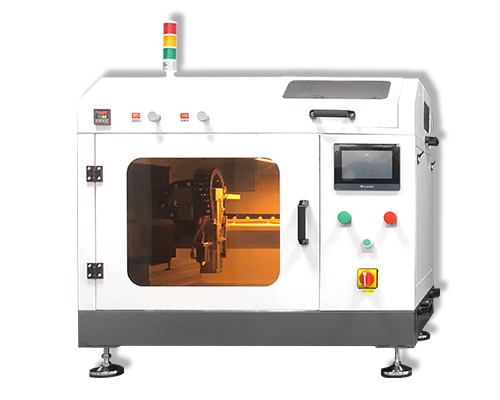
Ultrasonic spray technology has emerged as a cutting-edge and cost-efficient approach for fabricating electrolytic membranes and their catalyst layers, which are core components in water electrolysis systems for green hydrogen production, fuel cells, and other electrochemical devices. This technology effectively addresses the limitations of traditional coating methods, enabling high-precision and high-performance membrane manufacturing.
The working principle of ultrasonic spray lies in utilizing ultrasonic vibration (ranging from 20 to 120 kHz) to atomize the membrane polymer solution or catalyst ink into tiny, uniform droplets (0.5–40 μm in diameter). Unlike high-pressure spray methods, these droplets are gently deposited onto the substrate, forming a thin, dense, and well-adhered coating without damaging the fragile membrane structure, which is crucial for maintaining membrane integrity.
Compared with conventional techniques, ultrasonic spray offers distinct advantages. Firstly, it ensures exceptional coating uniformity with a thickness error of only ±2%, far superior to the ±10% error of air spray, guaranteeing consistent ion conduction and catalytic activity across the membrane. Secondly, it achieves high material utilization (85–95%), significantly reducing the consumption of precious metals such as Pt and Ir, thus lowering production costs. Additionally, its low-impact deposition is compatible with ultra-thin membranes (30–50 μm), preserving their mechanical strength and chemical stability.
This technology is widely applied in manufacturing proton exchange membranes (PEM) and anion exchange membranes (AEM). For PEM electrolyzers, it precisely coats IrO₂ (anode) and Pt/C (cathode) catalysts; for AEM electrolyzers, it deposits non-precious metal catalysts like NiFe-LDH. It also facilitates membrane functionalization by adding composite coatings to enhance durability and conductivity.
In summary, ultrasonic spray technology promotes the scalable production of high-performance, low-cost electrolytic membranes, playing a vital role in advancing the commercialization of green hydrogen energy and electrochemical technologies.
About Cheersonic
Cheersonic is the leading developer and manufacturer of ultrasonic coating systems for applying precise, thin film coatings to protect, strengthen or smooth surfaces on parts and components for the microelectronics/electronics, alternative energy, medical and industrial markets, including specialized glass applications in construction and automotive.
Our coating solutions are environmentally-friendly, efficient and highly reliable, and enable dramatic reductions in overspray, savings in raw material, water and energy usage and provide improved process repeatability, transfer efficiency, high uniformity and reduced emissions.
Chinese Website: Cheersonic Provides Professional Coating Solutions
