
Ultrasonic Spraying Machine Spraying Heparin Lithium Coating
Analysis of the process of ultrasonic spraying machine spraying heparin lithium coating
Heparin lithium, as a classic anticoagulant in the medical field, is widely used for surface modification of medical devices such as blood collection and interventional therapy. The quality of its coating directly determines the clinical safety and effectiveness of the product. The ultrasonic spraying machine, with its core advantages of precision atomization and low-temperature deposition, has become the preferred equipment for preparing heparin lithium coatings, effectively solving many drawbacks of traditional spraying processes and promoting the upgrading of medical coatings towards precision and efficiency.
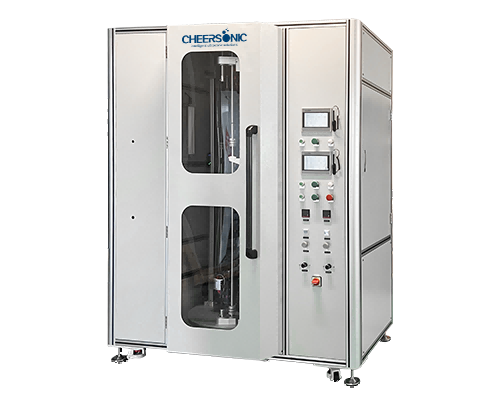
The core principle of ultrasonic spraying machine for heparin lithium coating is to use high-frequency ultrasonic vibration to atomize heparin lithium aqueous solution into uniform droplets of 13-40 microns, which are accurately deposited on the surface of medical device substrates under the guidance of airflow, forming an ultra-thin and dense anticoagulant coating. Unlike traditional dip coating and brush coating processes, this technology uses non-contact atomization to avoid substrate damage, while achieving precise control of coating thickness through precise parameter regulation. The error can be controlled within ± 5%, ensuring consistent concentration of heparin lithium throughout the entire area.
The outstanding advantages of this process are reflected in multiple aspects. Firstly, the utilization rate of materials has been greatly improved. As a high-value bioactive substance, heparin lithium has a utilization rate of less than 30% in traditional processes, while ultrasonic spraying can increase the utilization rate to over 85% through directional atomization and precise deposition, significantly reducing production costs and minimizing waste of biological materials. Secondly, it can preserve the biological activity of heparin lithium to the greatest extent possible by adopting a low-temperature atomization mechanism, without the generation of high temperature or high pressure, avoiding the degradation of heparin lithium molecular structure. Its antithrombin III binding ability is increased by more than 20% compared to traditional processes, ensuring stable anticoagulant effect.
The implementation of the process requires strict control of key links. Firstly, the substrate needs to be pre treated and modified through plasma and other methods to enhance the adhesion between the substrate and the heparin lithium coating, avoiding coating detachment during use. Secondly, optimize the spraying parameters, such as ultrasonic frequency, solution flow rate, and spraying distance, which need to be accurately matched. Typically, the frequency is 20-40kHz and the flow rate is 0.1-2mL/min to ensure even droplet spreading. Finally, low-temperature drying is performed to avoid the aggregation of heparin lithium and ensure the compactness and stability of the coating.
At present, this process has been widely used in the medical field, covering products such as peripheral blood collection tubes, arterial blood gas needles, dialysis catheters, cardiovascular guide wires, etc. For example, the blood collection tube sprayed with heparin lithium by ultrasound can avoid blood coagulation, do not affect blood composition, and is suitable for various testing items; The coating on the dialysis catheter can prevent thrombus formation and ensure a smooth dialysis process. This process complies with the GMP standards for medical device production, with no VOC emissions, safe and environmentally friendly operation, and is suitable for large-scale industrial production.
The ultrasonic spraying machine sprays heparin lithium coating, achieving precise and efficient preparation of anticoagulant coatings, which not only improves the clinical performance of medical devices but also reduces production costs, promoting the upgrading of medical biomaterials coating technology. With the continuous optimization of the process, its application in interventional therapy, blood purification and other fields will become more extensive, providing safer and more reliable anticoagulant solutions for clinical medicine.
About Cheersonic
Cheersonic is the leading developer and manufacturer of ultrasonic coating systems for applying precise, thin film coatings to protect, strengthen or smooth surfaces on parts and components for the microelectronics/electronics, alternative energy, medical and industrial markets, including specialized glass applications in construction and automotive.
Our coating solutions are environmentally-friendly, efficient and highly reliable, and enable dramatic reductions in overspray, savings in raw material, water and energy usage and provide improved process repeatability, transfer efficiency, high uniformity and reduced emissions.
Chinese Website: Cheersonic Provides Professional Coating Solutions