
Nanomaterial Dispersion Technology
Nanomaterial Dispersion Technology: the key to breaking through application bottlenecks
Currently, new types of nanomaterials are emerging one after another, demonstrating enormous potential in many fields due to their excellent physical and chemical properties. However, in practical scenarios, the application effects of these high-performance materials are far from industry expectations, and the core issue lies in the dispersion problem of nanomaterials. The enthusiasm for the research and development of nanomaterials in the field of scientific research far exceeds the deep cultivation of dispersion technology, which is precisely the core link in promoting the industrialization of nanomaterials. If the scientific application method of dispersants is not mastered, it is like facing a roadblock but lacking a pry bar to pry it, making it difficult to realize the essential value of the material.
Dispersion and flocculation are essentially contradictory and unified relationships, forming a dynamic and reversible equilibrium system. The prepared nano dispersion is prone to failure, and particles that have undergone precision crushing treatment often exhibit coarsening. From a scientific perspective, there are unsaturated valence bonds on the surface of solid particles, and nanomaterials, as high-energy substances, naturally have a tendency to lower their energy state – flocculation is an important manifestation of particle energy state reduction. Generally speaking, particles with a diameter of less than 200 nanometers require professional dispersion technology intervention, especially when the particle size is reduced to several tens of nanometers. In addition to selecting suitable polymer dispersants, the supporting role of high-performance dispersion equipment is more critical.
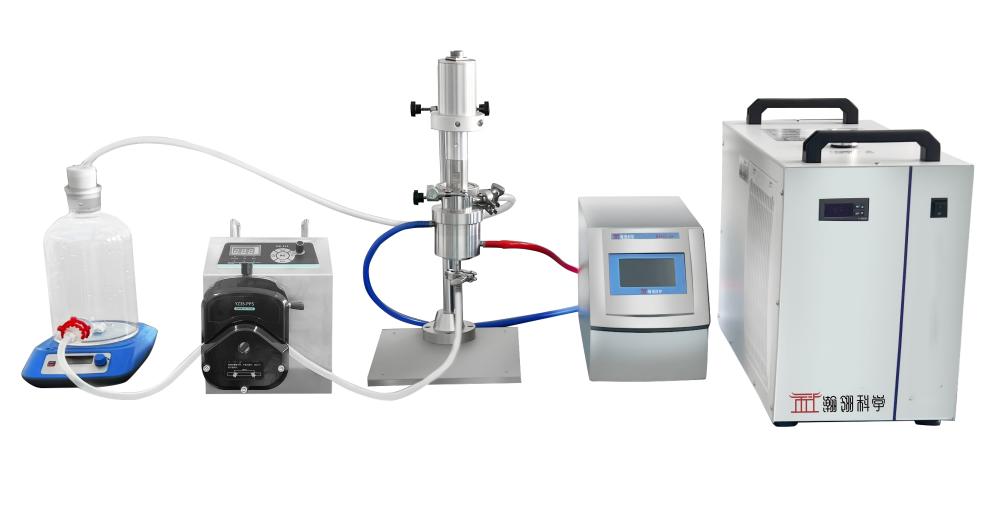
The ideal dispersion equipment needs to be able to generate a linear velocity impact of over 20m/s, and the common high-energy density zirconium bead sand mill is a typical choice. The opposed high-speed jet dispersion equipment with jet velocity close to the speed of sound has more advantages in dispersion efficiency. Among various dispersion techniques, ultrasonic dispersion occupies an important position due to its unique mechanism of action. The core principle is to utilize the cavitation effect generated by the propagation of ultrasonic waves in liquid media. When the ultrasonic energy reaches a certain threshold, tiny bubbles will continuously form in the medium and quickly burst, instantly releasing extremely strong shock waves and microjets. This force can effectively break down the van der Waals forces between nanoparticles and break down aggregates into monodisperse particles. Compared with traditional mechanical dispersion, ultrasonic dispersion can not only achieve a more uniform particle size distribution, but also reduce the damage to the particle crystal structure. It is especially suitable for the dispersion treatment of sensitive materials such as precious metal nano powder and ceramic nano particles. Moreover, the equipment is simple to operate and has relatively low energy consumption. It is widely used in laboratory research and development and small and medium-sized production.
The viscosity reducing properties of dispersants have significant value in practical production – they can uniformly disperse 75 grams of titanium dioxide or other powder materials in 25 grams of solvent, while maintaining a smooth low viscosity state of the system. With this characteristic, the production efficiency of dispersion grinding can be greatly improved, and high solid content dispersion products can be prepared; On the contrary, without suitable dispersants, even a mixed system with a solid content of 50% may become difficult to stir. It can be said that dispersants provide core technical support for the industrial application of nanomaterials. If nanomaterials are not completely dispersed in application systems such as coatings, their nanoscale performance will not be reflected. Some people often question whether nanomaterials live up to their name, but in most cases, the materials have not been effectively dispersed and still exist in the form of micrometer sized aggregates.
It should be noted that the detection of the dispersion effect of nanomaterials cannot rely on conventional fineness meters, only electron microscopes or laser particle size analyzers can achieve sufficient analytical accuracy. There are various types of dispersants, and there are significant differences in product formulas among different enterprises. Each manufacturer highly keeps their core technology confidential, forming a unique product system with almost no homogenization issues. This has also led to the lack of unified industry standards for dispersants to this day. From a technical perspective, the performance of dispersants is mainly determined by three major physical and chemical parameters: polarity, relative molecular weight, and chemical composition. However, companies usually do not disclose these core data and only use vague descriptions in commercial promotion.
Dispersants must be in the carrier medium to fully exert their effects, as polymer dispersants need to stretch their molecular chains in the carrier and achieve stable particle dispersion through steric hindrance effects – the carrier here is essentially a solvent, and water is the most common natural solvent. The application of pigments is the main field of dispersants, and almost all pigments used in coatings, inks and other products belong to the nanometer level. For example, the bright black paint surface of household cars has a core component of carbon black with a particle size of only about 10 nanometers. It is the efficient effect of dispersants that achieves the delicate luster and stable performance of the paint surface.
If you want to purchase equipment, please click here.