
Ultrasonic Dispersion for Uniform Platinum Nanoparticles
In the field of nanomaterial preparation, the dispersibility of metal nanoparticles is one of the key factors determining their performance, especially for platinum nanoparticles with high catalytic activity. Uniform dispersion can not only maximize their specific surface area, but also significantly improve catalytic efficiency, stability, and service life. In recent years, ultrasonic technology has shown outstanding potential in the field of uniform dispersion of platinum nanoparticles due to its unique physical properties, and has become an important technical means to promote the industrial application of nanomaterials.
The core principle of ultrasonic dispersion technology originates from the cavitation effect. When ultrasound propagates in a liquid medium, a series of alternating compression and sparsity regions are generated, resulting in the formation of a large number of tiny bubbles in the medium. These bubbles rapidly grow and expand under the action of sound waves, and eventually collapse violently when they reach a critical size, releasing extremely high energy instantly, including local high temperature, high pressure, as well as strong micro jets and shock waves. This extreme physical environment can effectively break the van der Waals forces and electrostatic attraction between platinum nanoparticles, dissociating the agglomerated particles into smaller units. At the same time, the stirring effect of microjets can evenly distribute the dissociated particles in the dispersion medium, avoiding the occurrence of secondary agglomeration.

Compared with traditional dispersion methods such as mechanical stirring and high-speed shearing, ultrasonic dispersion of platinum nanoparticles has significant advantages. Firstly, the dispersion efficiency is higher, and the energy generated by cavitation can penetrate deep into the particle aggregates, achieving efficient dissociation, especially suitable for processing platinum nanoparticles in high concentration and high viscosity systems; Secondly, the dispersion uniformity is better, and the energy distribution of ultrasound is relatively uniform, which can avoid the problem of uneven dispersion caused by insufficient local shear force in mechanical stirring. It can prepare platinum nanoparticle suspensions with narrow particle size distribution and strong dispersion stability; In addition, the ultrasonic dispersion process has little effect on the physical and chemical properties of platinum nanoparticles, and does not introduce impurities like chemical dispersants, ensuring the intrinsic properties of the nanoparticles.
In practical applications, ultrasonic dispersion technology has become a key step in preparing high-performance platinum based catalysts. For example, in proton exchange membrane fuel cells, platinum nanoparticles serve as the core catalyst, and their dispersibility directly affects the power density and durability of the cell. Through ultrasonic treatment, platinum nanoparticles can be uniformly loaded on the surface of the carbon carrier, and each particle can fully contact the reaction gas and electrolyte, increasing the catalytic efficiency by more than 30%. Meanwhile, uniformly dispersed platinum nanoparticles are subjected to more uniform forces during the reaction process, which can reduce particle detachment and agglomeration, significantly extending the service life of the catalyst.
In addition to the energy sector, platinum nanoparticles dispersed by ultrasound have also shown broad application prospects in environmental governance, fine chemicals, and other fields. In wastewater treatment, uniformly dispersed platinum nanoparticles can fully contact pollutants, greatly improving catalytic degradation efficiency; In organic synthesis reactions, its high dispersibility can enhance the selectivity of the reaction and reduce the generation of by-products.
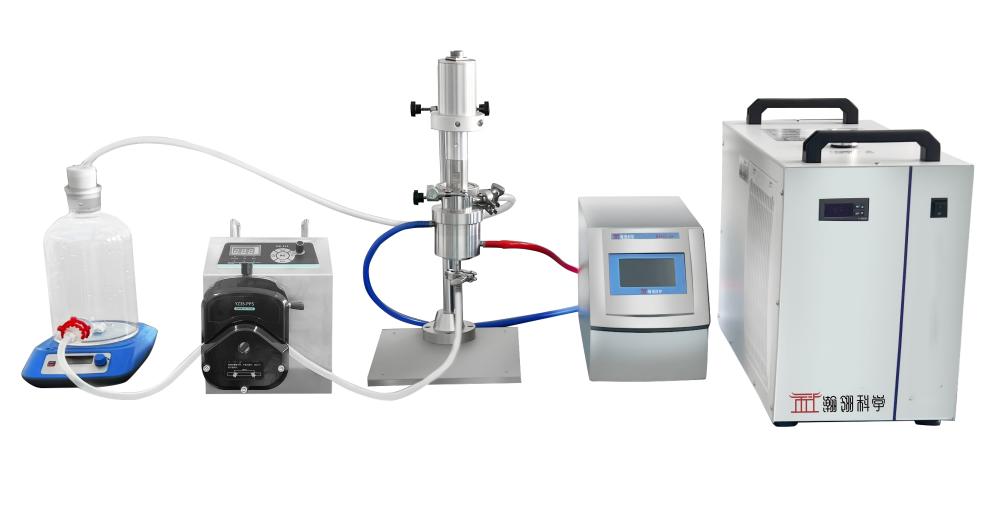
With the continuous development of nanomaterial preparation technology, ultrasonic dispersion technology is also continuously optimized. By precisely controlling the frequency, power, and duration of ultrasonic waves, precise control of the dispersion state of platinum nanoparticles can be achieved to meet the needs of different application scenarios. In the future, combined with intelligent control systems, ultrasonic dispersion technology is expected to achieve automated and continuous production, further promoting the industrial application of platinum nanoparticles.
Ultrasonic technology provides an efficient and reliable solution for the uniform dispersion of platinum nanoparticles, and its role in improving material properties and expanding application fields is becoming increasingly prominent. With the continuous deepening of research, it is believed that ultrasonic dispersion technology will play a more important role in the field of nanomaterials, injecting new impetus into the development of industries such as new energy and environmental protection.
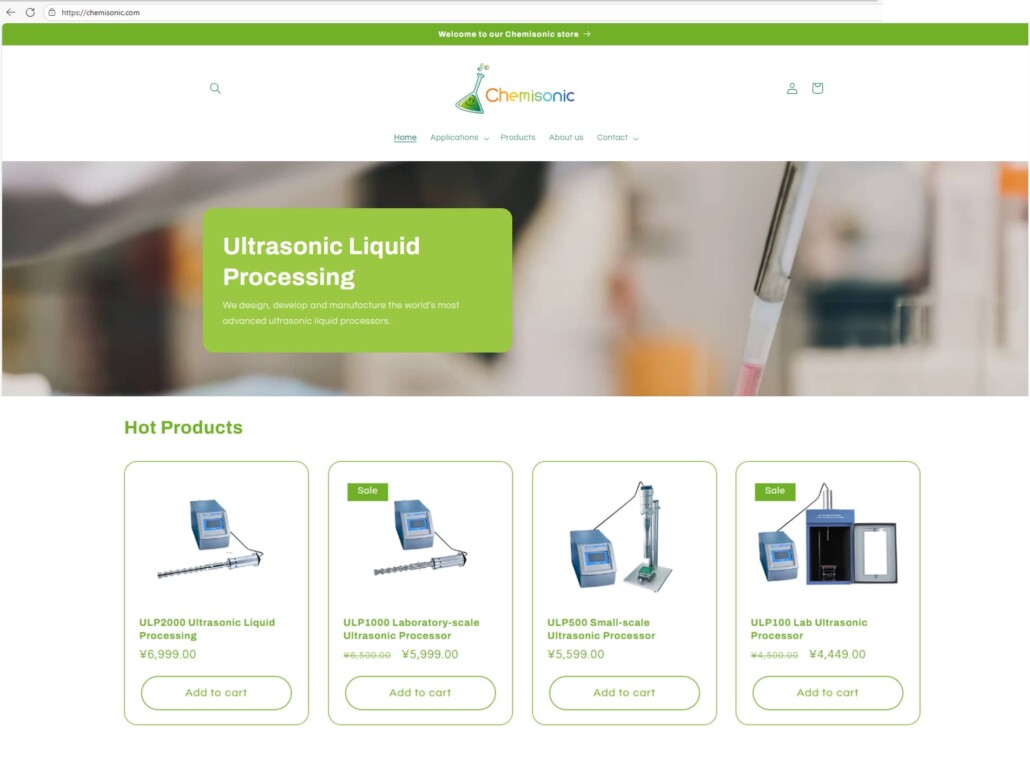
Chemisonic specializes in ultrasonic liquid processing technology. For decades, we have dedicated to designing, developing, and manufacturing ultrasonic liquid processors independently, from laboratory application to industrial level. Cutting-edge ultrasonic technology, high quality device and easy-to-use operating system are the fundamentals for our company to achieve continued business growth.