
Ultrasonic Aging of Wine
Moderate ultrasound treatment can accelerate the maturation process of wine through various physical and chemical effects, improve its sensory quality, and may bring some beneficial changes in health components. But it is not omnipotent and requires precise control of parameters, otherwise it may have negative effects.
The following are the detailed mechanisms, applications, and precautions of how ultrasound treatment enhances wine quality:
The main mechanism of ultrasonic treatment improving wine quality
Ultrasonic waves (typically at frequencies of 20-100 kHz) propagate in liquids and produce the “acoustic cavitation” effect, which is the core of all their effects.
1. Physical effects:
- Accelerated maturation and fusion: The strong cavitation effect generates microscopic shock waves and microjets, which can greatly promote the mixing and reaction of various molecules (such as phenols, aldehydes, esters) in wine. This simulates the effect of slow intermolecular interactions over long periods of time in traditional aging processes, accelerating the “aging” process of wine and making the body smoother and more harmonious.
- Improving color and stability: Cavitation can break the aggregation of pigment molecules (such as anthocyanins), making them more evenly dispersed, thereby enhancing and stabilizing the color of wine. At the same time, it can also promote the aggregation of colloidal particles, which is helpful for subsequent clarification and filtration.
- Promoting immersion: During the pre-treatment of grape juice before fermentation, ultrasound can effectively break down the cell walls of grape skins, accelerate the extraction of phenolic substances, pigments, and aroma precursors, thereby improving immersion efficiency.

2. Chemical effects:
- Promote oxidation and esterification: Cavitation generates local high temperature and pressure, and generates free radicals (such as · OH). This will gently accelerate the oxidation reaction, similar to the trace oxidation in oak barrel aging, which helps to dissipate unpleasant flavors and form complex aromas. At the same time, it can also promote the esterification reaction of acids and alcohols, increasing the pleasant fruity ester substances.
- Modified polyphenolic substances: Ultrasonic waves can alter the structure and degree of polymerization of polyphenols (tannins) in wine. It can break down large, rough tasting aggregated tannins into small molecules, significantly reducing the bitterness and astringency of wine, making the taste more rounded and smooth. This is one of the most striking effects of ultrasound aging.
3. Microbial effects:
- Sterilization effect: The strong cavitation effect can destroy the cell walls of microorganisms such as yeast and lactic acid bacteria, playing a certain role in sterilization. This can be used to control the microbial stability after fermentation, prevent secondary fermentation or biological diseases, while avoiding the adverse effects of traditional heat sterilization on flavor.
The specific application stages of ultrasonic treatment in wine making
1. Before fermentation (processing grape juice/grape slurry):
- Objective: To improve the extraction rate of pigments and phenolic substances.
- Effect: The wine produced has a darker and fuller color, and a higher content of phenolic substances.
2. After fermentation/before aging (processing new wine):
- Goal: Accelerate aging and improve taste.
- Effect: This is the most common application. After several minutes to tens of minutes of ultrasonic treatment, the sharpness, greenness, and astringency of the new wine can be quickly reduced, the body of the wine becomes softer, and the aroma becomes more open. Equivalent to shortening the natural aging process from months to years to a few hours.
3. Before bottling:
- Objective: To improve microbial stability and colloidal stability.
- Effect: Replace or reduce the use of chemical preservatives (such as sulfur dioxide) and prevent tartrate precipitation.
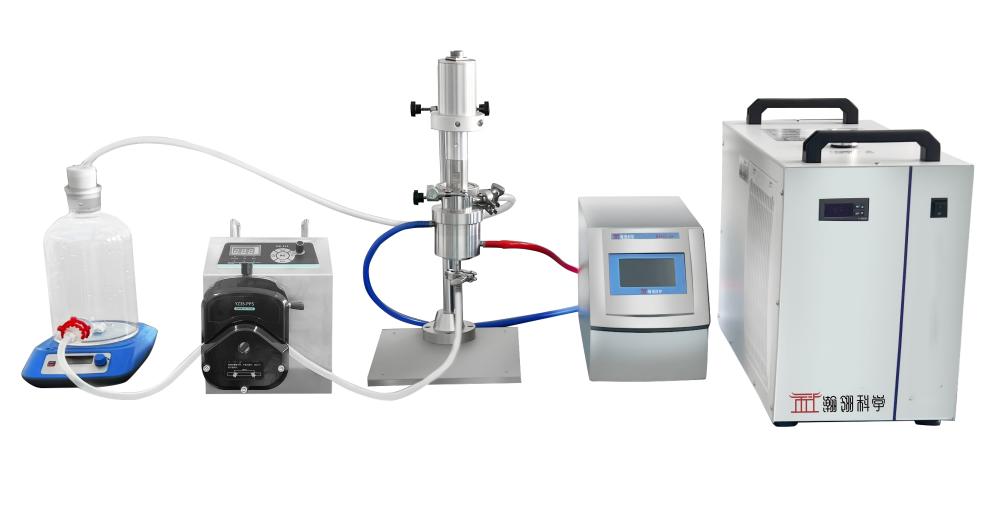
Advantages and Potential
* Shortening aging time: significantly reducing time and storage costs.
* Improve quality consistency: reduce quality fluctuations caused by differences in vintage and oak barrels.
* Environmental protection and energy conservation: It belongs to non thermal processing, with lower energy consumption than traditional heat treatment.
* Reduce additives: It is possible to reduce the amount of preservatives such as sulfur dioxide used.
Challenges and Precautions
* Parameter control is crucial: ultrasound power, frequency, processing time, and temperature must be precisely optimized. Excessive processing can lead to:
* Excessive oxidation: produces a taste similar to “cooked”, causing the wine to lose its fresh fruity aroma.
* Aroma loss: Volatile aroma components may be destroyed or released.
* Odor generation: Free radical reactions may produce unwanted byproducts.
* The impact on flavor complexity: Critics argue that this “fast food style” aging may not fully replicate the extremely complex and subtle flavor layers brought by traditional oak barrel aging.
* Equipment cost and scalability: Large and efficient ultrasound equipment suitable for industrial production requires high investment.
* Regulatory acceptance: The legal status of ultrasonic treatment as a wine making auxiliary technology may vary in different production areas and countries, and it needs to comply with local regulations.
Conclusion
Ultrasonic treatment is a highly promising modern wine making technique. It efficiently enhances the quality of wine from multiple levels including physics, chemistry, and microbiology through the cavitation effect, especially in accelerating aging, improving taste, and stability.
However, it is a ‘tool’ rather than a ‘magic’. The key to success lies in how winemakers skillfully utilize it, combining it with traditional craftsmanship rather than completely replacing it. Under precise control of parameters, ultrasonic treatment can produce higher quality and more stable wines, while bringing innovation to the winemaking process. But for top wineries that pursue ultimate tradition and expression of terroir, their application may be more cautious.
Chemisonic specializes in ultrasonic liquid processing technology. For decades, we have dedicated to designing, developing, and manufacturing ultrasonic liquid processors independently, from laboratory application to industrial level. Cutting-edge ultrasonic technology, high quality device and easy-to-use operating system are the fundamentals for our company to achieve continued business growth.