
The Future of Prefilled Syringes
As a new, high-end packaging material that can be directly filled with liquid medication for injection, prefilled syringes offer numerous advantages, including ease of use, reduced drug waste, reduced workload for healthcare professionals, and reduced aseptic risks for patients. They hold broad prospects for emergency medication use and patient self-medication.
This article aims to introduce the components of prefilled syringes, their advantages over traditional injection methods, key considerations for prefilled syringes, their functionality, and their application scenarios. This article provides a deeper understanding of this new, high-end packaging material. Clinical use of prefilled syringes can enhance the clinical benefits of injectables while ensuring drug safety and quality control.
Prefilled Syringes
Prefilled syringes are a new type of high-end packaging material that can be directly filled with liquid medication and used for injection. They combine the functions of a pharmaceutical packaging container and a syringe. They can be directly filled with liquid medication during production and injected directly at the time of use, eliminating the traditional step of using a syringe to remove medication from an ampoule or vial. This makes them extremely convenient for both healthcare professionals and patients.
Components of Prefilled Syringes
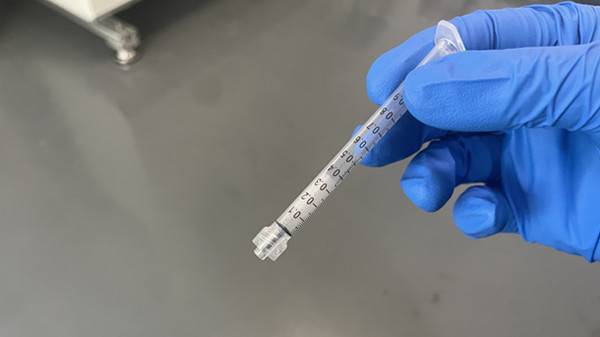
Prefilled syringes are available in two types: with and without needles. Prefilled syringes with needles consist of a syringe barrel, needle, needle cap, piston, and plunger. Prefilled syringes without needles consist of a syringe barrel, screw-on cap, cap, piston, and plunger, requiring a separate needle for injection.
Syringe barrel
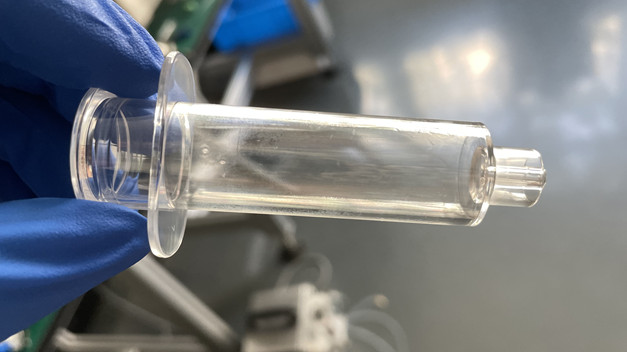
Syringe barrel: usually made of glass or polymer. Glass syringe barrels can provide excellent inertness and sealing, and have good compatibility with most drugs, but there is a risk of glass desquamation and breakage; polymer syringe barrels are mainly divided into cycloolefin polymer and cycloolefin copolymer, which have excellent ductility and anti-shattering properties, but poor gas barrier properties.
Injection needle
Injection needle: usually made of stainless steel, with excellent sharpness and rigidity.
Needle cap
Needle cap: usually made of polypropylene and polyisoprene rubber, used to protect the needle; caps without needles are usually cone caps and spiral caps, usually made of butyl rubber.
Piston
Piston: usually made of halogenated butyl rubber, divided into coated pistons and non-coated pistons. The piston is in direct contact with the liquid medicine and needs to have good compatibility with the liquid medicine. The piston is filled in the syringe barrel through natural expansion, and is in direct contact with the liquid medicine and the outside world at the same time. It also needs to have excellent sealing properties.
Push rod
Push rod: usually colorless push rod and colored push rod. Colorless push rod is usually made of polystyrene, and colored push rod is usually made of polypropylene, polyethylene and masterbatch.
Advantages of prefilled syringes
Convenient to use
Convenient to use is the biggest advantage of prefilled syringes. In clinical use, it saves more than half of the time compared to the traditional ampoule or vial packaging plus syringe combination. It is particularly suitable for outpatient emergency medication and home emergency medication.
Prevent contamination
Prefilled syringes are directly used for injection. Compared with the traditional combination of ampoule or vial packaging and syringe, the number of steps for transferring the drug solution is reduced, which can prevent cross-contamination and secondary contamination during the injection process.
Reduce drug waste
Prefilled syringes are accurately filled with drug solution, which reduces the number of steps for transferring the drug solution with the syringe. There is no residual drug solution in the ampoule or vial, which can effectively avoid drug waste and is suitable for expensive biochemical preparations and vaccine products.
Accurate dosage
Prefilled syringes use a quantitative filling method for drug solution, which is more accurate than manual extraction of drug solution by medical staff, reducing the safety risks caused by the dosage exceeding the labeled amount and the risk of insufficient drug use and reduced efficacy caused by the dosage below the labeled amount.
Concerns about prefilled syringes
Stoppering method
The stoppering methods of prefilled syringes are divided into ventilated stoppering and vacuum stoppering. Ventilated stoppering is to first place the rubber stopper in the stoppering sleeve of the filling equipment for compression, then insert the stoppering sleeve into the syringe, and use the stoppering rod to push the rubber stopper out of the stoppering sleeve. The rubber stopper naturally expands and fills the syringe to seal. Vacuum stoppering is to evacuate the syringe through the equipment. The rubber stopper is sucked into the syringe under the pressure difference between the external atmospheric pressure and the vacuum inside the syringe. The rubber stopper then naturally expands and fills the syringe to seal.
Bubble size
No matter what stoppering method is used for prefilled syringes, bubbles will always be generated inside the syringe. If the bubbles are too large, they may cause gas embolism when injected into the human body. The type of gas in the bubbles may have a significant impact on the physical and chemical properties of the drug. Therefore, it is necessary to study the size of bubbles in prefilled syringes and the type of gas in the bubbles to reduce the corresponding risks.
Starting force and sliding force
Starting force and sliding force affect the clinical use of prefilled syringes. Excessive starting force and sliding force will lead to difficulties in clinical use. Excessive starting force and sliding force may cause the stopper to slide in the syringe, affecting the sealing performance. Therefore, an appropriate starting force and sliding force is required to reduce the corresponding risks.
Sterilization sealing performance
Some injection varieties require terminal sterilization. If prefilled syringes are used, the sealing performance after sterilization needs to be examined during the product development stage.
Functionality of prefilled syringes
Sealing performance
Prefilled syringes are sealed by the natural expansion of the stopper to fill the syringe, which can effectively prevent the loss of contents, microbial invasion, and the entry of gas or other substances to ensure the safety and effectiveness of the drug.
Compatibility
The components of prefilled syringes that come into contact with the drug solution are usually made of inert glass and rubber materials, which have good compatibility with the drug and have low risks of extraction, migration, element introduction, and adsorption of active drug ingredients.
Application scenarios of prefilled syringes
First aid
Prefilled syringes are different from traditional ampoules or syringes. They can be used directly for injection without removing the liquid. Prefilled syringes have absolute advantages in clinical first aid and home emergency medication.
Self-medication by patients
Prefilled syringes are convenient for medication. Patients can self-administer medication, which reduces the number of visits to the hospital and has little impact on their normal work and life.
Meet the future of injections
The unique design of prefilled syringes, which integrates drug storage and injection functions, has had a great impact on traditional injection packaging. Prefilled syringes are gradually replacing traditional injection packaging for expensive drugs and emergency drugs. With the continuous improvement of medical and health levels and the diversified development of prefilled syringe application scenarios, prefilled syringes will surely have a broader prospect in the future.
Ultrasonic spraying technology plays a key role in the preparation of precision coatings on the inner walls of medical syringes, mainly used for coating lubricating layers such as silicone oil or special drug compatibility coatings to ensure smooth piston sliding and ensure drug stability.
Compared with traditional soaking or air pressure spraying, this technology utilizes high-frequency sound waves to atomize the coating liquid into micrometer sized, uniformly sized fine droplets. Through precise programming control of the robotic arm, the nozzle can penetrate deep into the inner wall of the syringe body for uniform, non-contact spraying. This process can form ultra-thin and highly consistent thin films, effectively avoiding the aggregation or dripping of coating liquids, thereby precisely controlling the coating amount.
This advantage is crucial for ensuring the safety and performance of syringes. A uniform silicone oil coating can provide stable and minimal sliding friction, ensuring smooth hand feel for medical staff and preventing excessive silicone oil from migrating into the medication, reducing potential risks. At the same time, the extremely high material utilization rate significantly reduces production costs, meeting the economic and quality requirements for large-scale production of medical devices.
Therefore, ultrasonic spraying technology provides a reliable precision coating solution for manufacturing high-performance and high safety standard medical syringes, and is an important part of advanced manufacturing of modern medical devices.
About Cheersonic
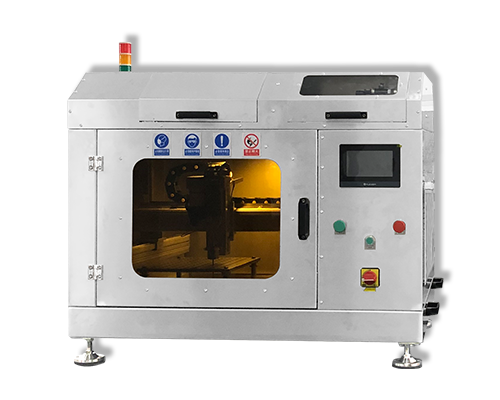
Cheersonic is the leading developer and manufacturer of ultrasonic coating systems for applying precise, thin film coatings to protect, strengthen or smooth surfaces on parts and components for the microelectronics/electronics, alternative energy, medical and industrial markets, including specialized glass applications in construction and automotive.
Our coating solutions are environmentally-friendly, efficient and highly reliable, and enable dramatic reductions in overspray, savings in raw material, water and energy usage and provide improved process repeatability, transfer efficiency, high uniformity and reduced emissions.
Chinese Website: Cheersonic Provides Professional Coating Solutions