
Ultrasonic Soldering Battery Module
Ultrasonic soldering battery module: industrial path and reliability verification to reduce backside silver consumption by 40%
In the rapid development of the photovoltaic industry, the sustainability of materials is becoming a key challenge in achieving the goal of fully renewable energy. Among them, the consumption of precious metal silver is particularly prominent. Especially in the current mainstream double-sided PERC+solar cells, silver is not only used for the front electrode, but also often appears in the form of back silver pads as a connecting bridge between the aluminum metallization layer and the external copper wire. However, the dense oxide layer naturally formed on the surface of aluminum hinders the effective implementation of conventional welding processes, making silver solder pads an irreplaceable part of traditional technology routes.

Technological breakthrough: precise intervention of ultrasonic welding
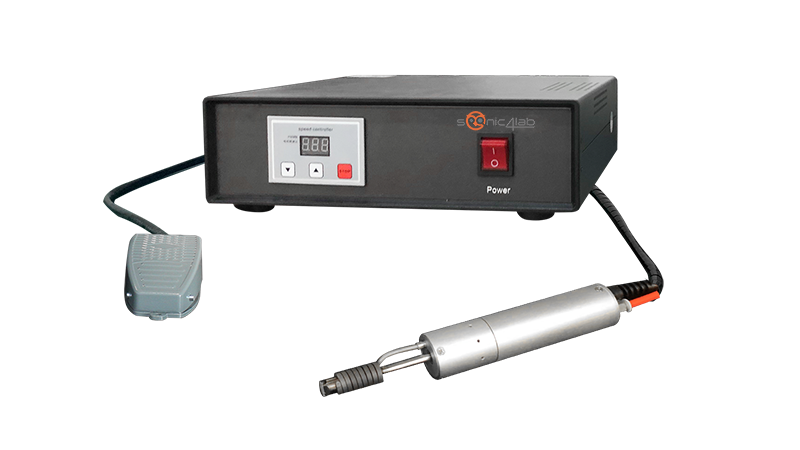
Ultrasonic welding technology provides an innovative solution to this bottleneck. The core of this technology lies in utilizing the “cavitation effect” generated by high-frequency vibration – when ultrasonic waves act on molten solder (such as SnZn10 alloy), a large number of microbubbles will form and collapse locally, generating extremely strong impact force. This force can precisely destroy the oxide layer on the surface of aluminum, allowing the solder to form a reliable intermetallic bond directly with the pure aluminum substrate, thereby creating a directly weldable area on the back of the battery.
The advantages of this process are significant:
– Significantly reduce silver consumption: completely avoid the use of backside silver pads, expected to reduce overall silver consumption by 20% to 40%;
– Improve conductivity: The contact interface between tin aluminum alloy and aluminum has a significantly lower electrical resistivity than traditional silver aluminum composite layers;
– Strong process compatibility: seamlessly integrated into standard welding processes without the need to modify existing core equipment on the production line.
Experimental verification: from microstructure to component performance
To evaluate the feasibility of this technology, researchers designed a systematic experiment. They selected specific areas on the aluminum busbars on the back of PERC+cells with three different grid line layouts for ultrasonic tin plating treatment, and used lead-free solder to complete welding under controlled temperature and power parameters.
- In terms of damage control, the comparison of photoluminescence imaging before and after tin plating shows that the photoelectric performance loss in the active area of the battery is less than 1%, indicating that this process has minimal impact on the battery body.
- The mechanical strength test results are even more impressive: under optimized parameters (such as power ≥ 10 W), the median peel strength of the welding point can reach more than 1.5 times the industry standard requirement, and fracture mostly occurs at the interface between the aluminum slurry and the silicon substrate, indicating that the strength of the welding point itself has exceeded the bonding force inside the material.
- Microstructure analysis reveals clearly through scanning electron microscopy that sufficient power of ultrasonic waves can achieve complete penetration of solder into aluminum busbars, forming dense metal interconnects, effectively eliminating pores, and reducing interface resistance.
- In terms of electrical performance, components connected by ultrasonic tin plating have significantly lower initial path resistance values than traditional silver pad schemes, and maintain better stability even after accelerated aging testing. The efficiency attenuation rate of the components fully meets international standard requirements.
Application prospects: A greener and more efficient photovoltaic future
Comprehensive experimental data shows that ultrasonic welding technology has not only successfully achieved a “silver free” connection on the back of photovoltaic cells, but also demonstrated potential beyond traditional solutions in terms of mechanical strength, conductivity, and long-term reliability. This technology provides a practical and feasible path to solve the problem of precious metal dependence in the photovoltaic industry, and is expected to help the global energy transition towards a lower carbon and more sustainable future. With the further optimization of processes and the improvement of automation, ultrasonic welding may become one of the standard processes for the next generation of efficient photovoltaic cell manufacturing.
If you want to purchase equipment, please click here

