
Ultrasonic Soldering of Double-sided PERC+Solar Cells
Application of Ultrasonic Soldering Technology on Aluminum Bars on the Back of Double sided PERC+Solar Cells
In the global trend of pursuing carbon neutrality, the solar photovoltaic industry is developing at an unprecedented speed. However, with the expansion of production capacity, a long-standing cost and environmental issue has become increasingly prominent – the extensive use of precious metal silver in battery manufacturing. Especially in mainstream PERC+cells, silver paste is a key material that constitutes the conductive network of the front and rear electrodes. The metal bars on the back of the battery usually require silver solder pads to achieve electrical interconnection, which not only increases manufacturing costs but also conflicts with the sustainable development concept of green energy.
Industry pain points: Silver consumption and stubborn oxide layer
Silver has excellent conductivity, but it is expensive and has limited resources. Reducing “single watt silver consumption” has become one of the core goals of photovoltaic technology iteration. On the other hand, in order to reduce costs, the industry hopes to use more abundant reserves of aluminum to undertake some conductive functions, such as the conductive bars on the back of batteries. But aluminum instantly forms a dense layer of aluminum oxide film in the air, which has extremely stable chemical properties, like putting an “insulating armor” on aluminum parts, making it difficult for traditional welding processes to achieve reliable connections between aluminum and other metals. It is precisely this problem that forces battery design to retain the silver solder pads on the back, forming a path dependence on silver.

Innovative solution: How can ultrasound solve the problem of oxidation?
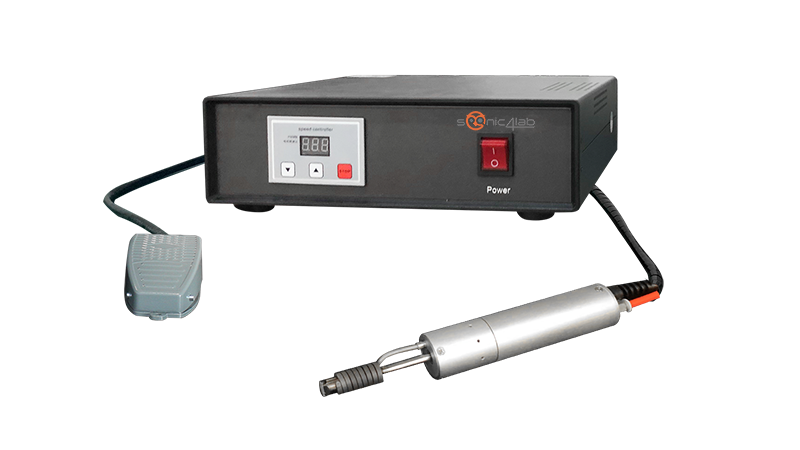
An innovative process called ultrasonic soldering has brought hope for solving this dilemma. Its principle is clever and efficient: when molten tin alloy is applied to the surface of aluminum bars, high-frequency ultrasonic vibration is introduced simultaneously. This vibration generates the so-called “cavitation effect” in liquid tin, forming countless tiny vacuum bubbles that instantly collapse, releasing enormous local energy.
This force is enough to shatter the strong oxide layer on the surface of aluminum and wash away the debris, exposing the pure aluminum substrate. Subsequently, liquid tin comes into direct contact with the fresh aluminum surface, forming a strong metallurgical bond and excellent electrical connection. In this way, the back of the battery no longer needs to rely on silver solder pads, and it is possible to directly use tin solder pads to achieve electrical interconnection on the aluminum bars.
Experimental verification: Dual affirmation of performance and reliability
To verify the feasibility of this technology, researchers conducted systematic experiments. They selected PERC+cells with different layouts and applied ultrasonic soldering technology on the back aluminum bars.
- Non destructive testing: Precise photoluminescence imaging technology shows that the welding process has minimal impact on the sensitive passivation layer of the battery, and the core performance indicators of the battery have almost no attenuation, proving that this process is mild and safe.
- Firm adhesion: Mechanical tensile testing shows that the adhesion of solder pads far exceeds industry standards. When the ultrasonic power is optimized to 10W, the peel strength can reach more than 1.5 times the traditional requirement, ensuring that the welding point can withstand long-term mechanical stress.
- Better electrical performance: Surprisingly, the battery module using ultrasonic soldering has significantly lower series resistance than modules using traditional silver solder pads. This is because tin and aluminum form a direct connection with lower resistance. In the accelerated aging test simulating extreme environments, these modules demonstrated excellent stability with lower efficiency degradation rates.
Microscopic scanning electron microscopy analysis intuitively revealed the source of the advantage: under optimized ultrasonic power, tin alloy can fully penetrate into the pores of aluminum bars, achieving thorough intermetallic bonding and effectively removing the oxide layer.
Outlook: Promoting the photovoltaic industry towards a lower carbon future
This study fully demonstrates that ultrasonic soldering technology is not only a feasible alternative to silver solder pads, but also an advanced process that can improve product performance. It has successfully reduced silver consumption in photovoltaic cell manufacturing by 20% to 40%, while also reducing the use of harmful substances such as lead.
More importantly, it solves the material connection problem that has plagued the industry for many years through a clever physical solution, opening up a practical and feasible new path for the photovoltaic industry to further reduce costs and increase efficiency, and achieve purer green manufacturing. With the continuous maturity and promotion of technology, we are expected to use solar power with lower cost and more environmentally friendly lifecycle in the future.
If you want to purchase equipment, please click here