
Ultrasonic Soldering and Bonding
Ultrasonic Soldering and Bonding – Active Solder – Sonic4Lab
Soldering is similar to welding. Soldering is a welding method that uses low melting point metal solder to heat and melt, and then infiltrate and fill the gaps at the joints of metal parts. Ultrasonic soldering iron is usually used for soldering. Ultrasonic Soldering and Bonding System is mainly used for soldering materials and has advantages such as environmental protection, energy saving, and convenience. Soldering irons are commonly used for delicate tasks involving electronics and on circuit boards. The heating head can precisely heat, making it particularly suitable for work where excess heat can damage adjacent components in the surrounding area. Iron has a very light weight, so it can be used comfortably for a long time.
Ultrasonic soldering technology uses the energy emitted by ultrasonic vibration to heat and melt the filler metal material (i.e. solder) to form a joint. Special soldering iron can be used for product processing. This process can be automated for large-scale production or manually completed for prototyping or maintenance work. Initially, the purpose of soldering was to connect tin and other metals. However, with the emergence of active solder, more types of metals, ceramics, and glass can be welded.
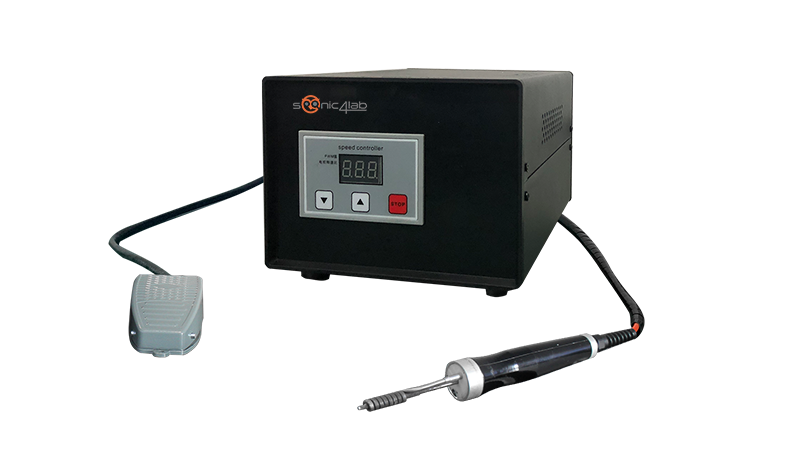
The shortcomings of traditional soldering irons
Processing oxide film has an impact
When using a traditional soldering iron for metal surface soldering, it is usually necessary to heat it above a certain temperature to melt the filler material, and even higher temperatures are required for nickel based filler metals. When heated to these temperatures, the flux or atmosphere that chemically or physically reduces the formation of metal surface oxides is essential for soldering work. In order to “wet” the melted filler metal, make it flow uniformly and adhere in liquid form, the metal surface must be free of oxides. Once the molten filler metal is dispersed or pulled into the joint by capillary action, the heat source is removed to solidify the filler metal and form a bond with the metal.
Need soldering flux
The purpose of soldering flux is to clean the surface of the base alloy and filler metal, and prevent oxidation during the soldering process. The type of flux will affect its reaction mode with the metal being soldered and the effective temperature range of the flux. Due to the heating and depletion of flux during the soldering process, the amount of flux used will affect whether the solder joint is formed before oxidation occurs. The consumption of flux also affects the final time temperature curve experienced by the joint during the welding process. In some cases, nitrogen, argon, or other protective gases are used to help prevent oxidation of the flux. Flux produces visible smoke during the soldering process. Contact with soldering flux rosin can cause irritation to the eyes, throat, and lungs, nosebleeds, and headaches. Repeated exposure can cause respiratory and skin allergies, leading to and exacerbating asthma. Some fluxes contain lead, which can cause serious chronic health effects.
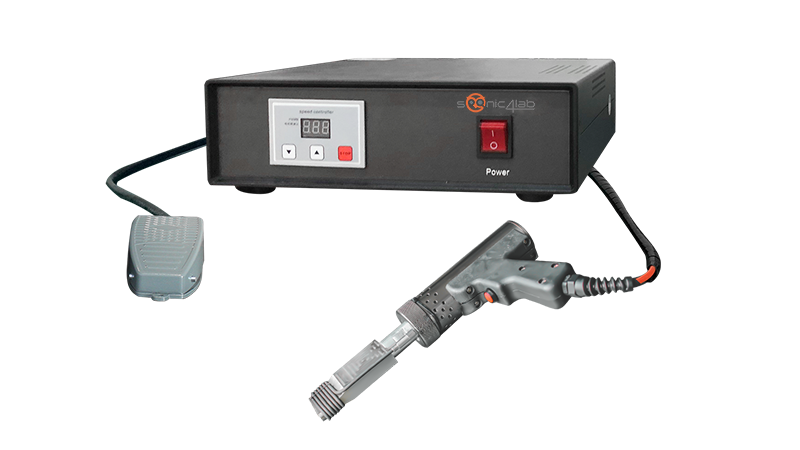
The advantages of ultrasonic soldering iron
Efficient and environmentally friendly
Ultrasonic soldering iron equipment can generate high-quality adhesive force and clean, tightly sealed. There is no filling material and no excessive heat, which means there is no potential introduction of pollutants or thermal deformation. There are no visible seams between the parts, creating a smooth and visually striking surface. The result is a durable bond that is superior to many other methods of connecting parts. Hygiene and reliable sealing make ultrasonic soldering particularly suitable for precision electronic products. The only possible limitation on the use of ultrasonic welding is the thickness of the parts involved. As long as the parts are not too thick, this method is an economical and effective choice.
Eliminate the oxide film on the surface of the processed object
Ultrasonic soldering is a unique process that utilizes the cavitation effect of ultrasonic waves to destroy the oxide on the surface of the soldering material and bond two surfaces that are usually not weldable together. Therefore, ultrasonic soldering does not require additional treatment of the oxide film on the surface of the processed object, nor does it affect the soldering effect.
Eliminate bubbles during the soldering process
During the soldering process, bubbles may appear due to the melting of the processed material, which can affect the final soldering effect. The ultrasonic soldering process is achieved through the cavitation effect of ultrasonic waves, and ultimately all bubbles will disappear without affecting the entire soldering effect.
No need for soldering flux
Ultrasonic soldering iron equipment does not require the use of soldering flux during the soldering process, as some soldering fluxes can cause significant harm to the human body. Therefore, ultrasonic soldering avoids harm to the body to a certain extent.
Direct soldering
Traditional soldering iron equipment cannot directly solder materials such as glass, ceramics, titanium alloys, stainless steel, molybdenum alloys, etc., while ultrasonic materials can use their own cavitation effect to directly fuse these materials, thereby achieving the effect of soldering.
If you want to purchase equipment, please click here