
Ultrasonic Nickel Strip Welding is Used in Battery Manufacturing
In battery manufacturing, the quality of welding technology directly impacts battery performance and quality. Ultrasonic nickel strip welding, as an advanced welding process, is gaining increasing popularity within the industry.
Ultrasonic nickel strip welding relies on high-frequency vibration. An ultrasonic generator converts 50/60 Hz current into high-frequency electrical energy between 15 and 40 kHz. A transducer then converts this energy into mechanical vibrations of the same frequency, which are transmitted via a horn to the welding head. The welding head transmits the vibration energy to the joint between the nickel strip and the component to be welded. Under pressure, the vibration energy is converted into frictional heat, causing friction between the nickel strip and the other metal surface. This breaks down the oxide layer and contaminants on the metal surface, allowing atoms to diffuse into each other, forming a strong metallurgical bond and completing the welding process.
This welding technology offers many significant advantages. First, it is a solid-state welding process, eliminating the need for high-temperature melting of the metal. This effectively avoids high-temperature-related metal degradation, deformation, and the formation of intermetallic compounds. This is crucial for heat-sensitive materials in batteries and significantly improves battery stability and reliability. Second, ultrasonic nickel strip welding is highly efficient, with welding cycles often taking only a fraction of a second, meeting the efficiency demands of large-scale battery production. Third, the process has relatively low requirements for the metal surface being welded, achieving good welds even on metals with some degree of oxidation or plating. Furthermore, the welding process requires no flux, gas, or solder, reducing production costs while also avoiding potential corrosion issues caused by residual flux. It also produces no sparks, making it safer and more environmentally friendly.
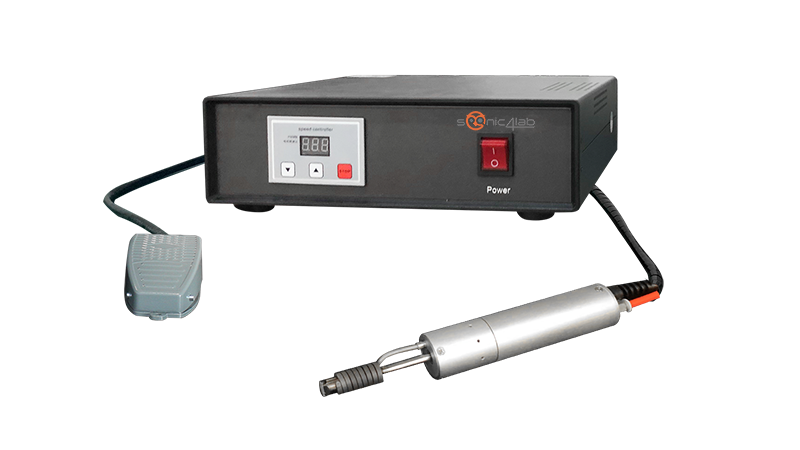
Ultrasonic nickel strip welding has a wide range of applications in battery manufacturing. In the tab welding process, the positive and negative tabs of a battery are typically made of materials such as copper, aluminum, or nickel. Ultrasonic welding securely connects the tabs to the nickel strip, ensuring efficient energy transfer, which plays a crucial role in the battery’s charge and discharge performance. For example, in lithium-ion battery production, a reliable connection between the tabs and the nickel strip effectively reduces the battery’s internal resistance, improving its charge and discharge efficiency and cycle life. When it comes to battery connector welding, whether between battery cells or between battery modules, the quality of the welds impacts the overall performance of the battery pack. Ultrasonic welding ensures high current transmission between the connector, the nickel ribbon, and other components, maintaining the stability of the battery pack structure. In some battery designs, the nickel ribbon also needs to be welded to components such as the aluminum casing to achieve electrical contact. Ultrasonic welding, with its excellent dissimilar metal welding capabilities, ensures a good electrical connection and weld strength between these metals, safeguarding battery safety and stability.
With the continuous advancement of battery technology, the requirements for welding processes are also continuously increasing. With its unique advantages, ultrasonic nickel ribbon welding plays a key role in promoting technological advancements in battery manufacturing and improving battery performance, and is expected to be widely used and developed in future battery production.
If you want to purchase equipment, please click here

