Lithium Battery Positive Electrode Slurry Carbon Black Dispersion
Carbon black is one of the most commonly used traditional conductive agents. Although its dispersion difficulty is usually lower than that of carbon nanotubes (CNT) or graphene, uneven dispersion can also seriously affect battery performance. Ultrasonic dispersion is one of the most effective methods for achieving perfect dispersion in laboratories.
The particularity of carbon black dispersion
* Structure: Carbon black is a chain or grape shaped aggregate formed by the aggregation of nanoscale primary particles.
*Objective: The goal of dispersion is not to break down native particles, but to open up these aggregates to form a good three-dimensional conductive network, while avoiding excessive dispersion that can damage the structure (although carbon black is more shear resistant than CNT).
*Difficulty: Carbon black has a light specific gravity, is prone to dust, and contains a large number of functional groups on its surface, making it easy to form macroscopic aggregates in solvents.
Standard Operating Procedure for Laboratory Ultrasonic Dispersion
It is strongly recommended to adopt a step-by-step method of “dispersing the conductive agent first, and then mixing other materials”, which is the key to obtaining high-quality slurries.
Step 1: Pre dispersion of carbon black (the most critical step)
1. Ingredients: Weigh the measured solvent (NMP) and carbon black.
- Tip: First, pour most of the NMP into a beaker, and slowly and gradually add the carbon black into the liquid vortex under low-speed stirring with a magnetic stirrer, allowing it to naturally wet and sink. This can minimize the flying and clumping of dry powder to the greatest extent possible.
2. Preliminary mixing: Continue magnetic stirring for 10-20 minutes to form a preliminary, uniformly distributed suspension of carbon black NMP. At this time, there are still a large number of micrometer sized aggregates that are invisible to the naked eye.
3. Ultrasonic treatment (core):
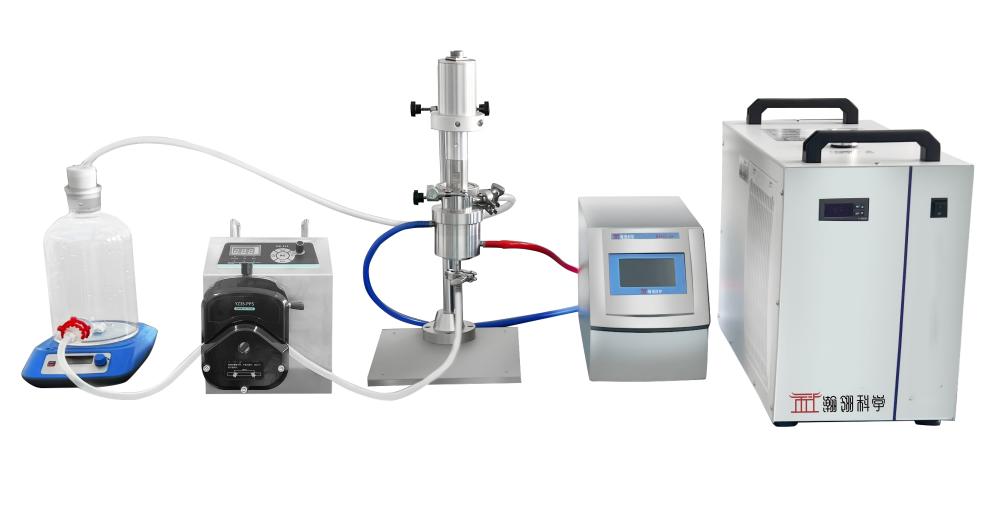
- Equipment: Transfer the beaker into a probe type ultrasonic cell grinder.
- Cooling: The beaker must be placed in an ice water bath! Although NMP has a high boiling point, an increase in temperature can seriously affect the solubility and slurry stability of subsequent PVDF.
- Parameter settings:
*Mode: Use intermittent mode (such as working for 3 seconds with a 2-second interval) to effectively control temperature rise and provide buffering.
*Power: For processing volumes of 50-100mL, the power can be set to 40% -60% of the total power (e.g. for a 500W instrument, set to 200-300W). Power density is a key indicator, typically targeting 50-150 W/cm ² (based on probe tip area).
*Time: The total time is usually 5-15 minutes. Specific optimization needs to be carried out through experiments, and it can be observed that the slurry becomes dark and shiny, with a significant increase in fluidity.
*Process: Immerse the probe 1-2cm below the liquid level and gently move the beaker or probe to ensure even energy distribution and avoid “processing dead corners”.
Step 2: Add adhesive
1. In another container, dissolve the PVDF binder in the remaining NMP in advance and stir in a 50-60 ℃ water bath until completely dissolved and transparent.
2. Slowly add the dissolved PVDF solution to the carbon black suspension that has been ultrasonically dispersed.
3. Use a planetary mixer (Thinky) or mechanical mixer to mix at medium low speed (500-1000 rpm) for 15-30 minutes to evenly mix the carbon black with the binder solution.
Step 3: Add active substance
1. Add positive electrode active materials (such as NMC, LFP, LCO, etc.) in batches to the above mixture.
2. Mixing process:
*First choice: Use a planetary mixer (Thinky), first dry mix at low speed (~500 rpm) for 1-2 minutes, then switch to high speed (1500-2000 rpm) for 10-20 minutes, and use strong shear force to achieve final dispersion and homogenization.
*Secondary option: Use a mechanical stirrer and stir at high speed (1000-1500 rpm) for 30-60 minutes.
3. Defoaming: Finally, low-speed stirring is carried out under vacuum conditions (Thinky comes with defoaming function, or transferred to a vacuum mixing tank) to remove bubbles from the slurry.
Key parameters and precautions
1. Temperature! Temperature! Temperature! This is the lifeline for the dispersion of positive electrode slurry. The entire ultrasound process must be controlled at a temperature below 35 ℃, preferably below 30 ℃. Too high temperature will cause PVDF to cross link and gel, resulting in a sharp rise in slurry viscosity, loss of liquidity and scrapping.
2. Ultrasound power and time balance:
*Shortcomings: The carbon black aggregates have not been opened, the slurry has a granular feel, and the conductivity is poor.
*Excessive: Although not easily sheared like CNT, it generates excess heat and may damage the structure of carbon black, thereby reducing its conductivity. Excessive ultrasound can also cause damage to the device probe.
3. Energy input: The total ultrasound energy (power x time) can be used as a reference indicator to optimize the process, but the primary basis is still the performance of the final slurry and the electrochemical test results of the electrode.
4. Do not ultrasonicate the final slurry: It is absolutely forbidden to perform high-intensity ultrasonication on the final slurry containing PVDF and active substances! The strong shear force can damage the PVDF molecular chain and may cause the active material particles to break, which is not worth the loss.
Effect evaluation
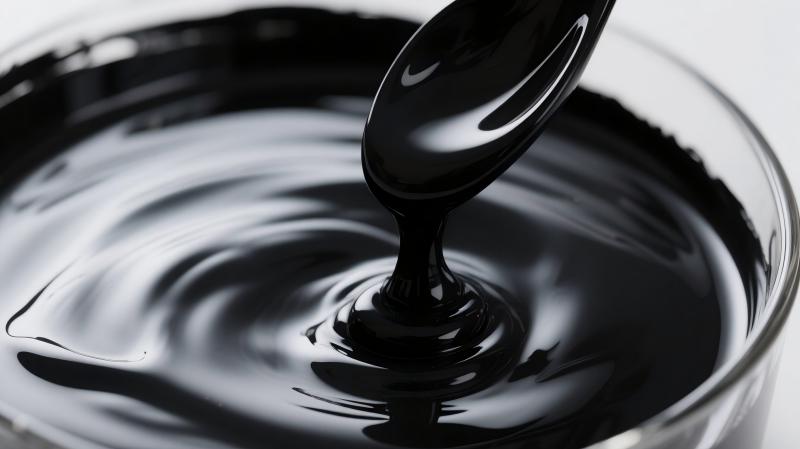
*Appearance: A well dispersed carbon black slurry should be as black and shiny as ink, delicate and uniform, without any graininess, and have good fluidity.
*Scraper fineness meter: Take a small amount of slurry and test it with a scraper fineness meter. A well dispersed slurry usually has a fineness of less than 20 μ m.
*Viscosity: Measured using a viscometer, its viscosity should be stable and within an appropriate range.
*Electrode performance: The ultimate evaluation criteria are the resistance of the electrode (DCIR or EIS testing) and the rate performance of the battery.
Summary: For lithium battery positive electrode slurry, ultrasonic dispersion is a powerful tool to overcome the problem of carbon black dispersion, but its application is limited to the pre dispersion step of conductive agents. By strict temperature control and optimized ultrasonic parameters, the dispersion of carbon black can be significantly improved, thereby preparing high-performance battery electrodes.